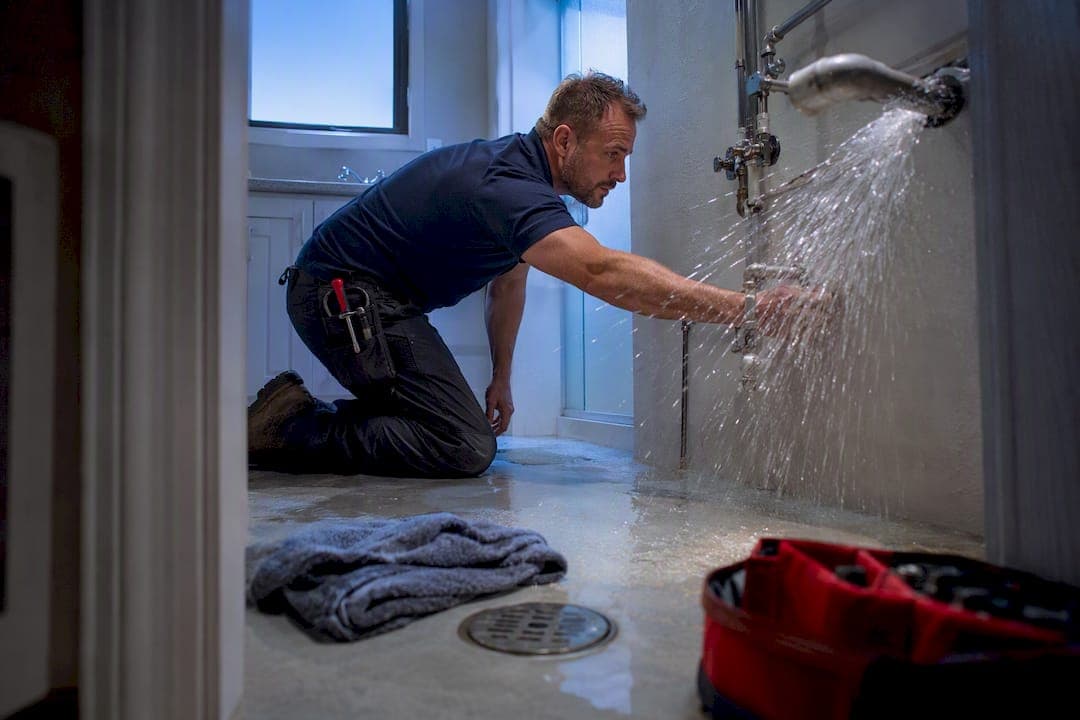
Shut off the main water supply the moment you spot a burst pipe. If you cannot reach it, close the fixture shutoffs instead. Stay out of standing water near outlets or panels, and only cut power if the floor is dry. Snap timestamped photos, then call a 24/7 emergency plumber.
TL;DR:
- The main water shutoff should be tested and labeled annually to ensure quick access during emergencies and prevent extensive water damage.
- Emergency responders advise calling immediately if water is flowing steadily, pooling on large areas, or near electrical outlets, panels, or appliances, especially if leaks are unreachable or worsening.
- Plumbers typically contain the leak temporarily with repair clamps or push-fit couplings before repairing the pipe permanently, which involves replacing or soldering the damaged section.
- Emergency repair costs are higher than standard fixes, with mitigation, water extraction, and drying often making up the largest part of expenses, making prompt response cost-effective overall.
- Preventive measures include replacing aging shutoff valves, insulating pipes in unheated spaces, and installing leak detection systems, especially for properties that sit empty for extended periods.
Table of Contents
- What Immediate Steps Stop a Burst Pipe From Causing More Damage?
- When Should You Call an Emergency Plumber Right Now?
- What Does the Plumber Actually Do When They Arrive?
- Can You Make a Temporary Repair Before the Plumber Gets There?
- What Does Emergency Pipe Repair Typically Cost?
- How Do You Prevent the Next Burst Pipe?
- A Local Plumber's Take on Burst Pipe Emergencies
- How USA Plumbing and Septic LLC Handles Your Burst Pipe Emergency
- Where to Learn More Before the Next Emergency
- Sources
- FAQ
What Immediate Steps Stop a Burst Pipe From Causing More Damage?
A burst pipe does not wait for you to think it over. A standard 3/4-inch supply line running at normal city pressure can dump 100 gallons or more in 15 minutes, and flow rates on a full break are typically several gallons per minute. Every minute you spend deciding is a minute of water finding its way into subfloors, drywall, and wiring.
Work through these steps in order:
- Find and close the main shutoff. In most Bullhead City area homes, it sits near the water meter, in the garage, or where the supply line enters the house. If it will not turn or feels seized, do not force it. Instead, head to the meter shutoff or leave it for the plumber.
- Open faucets from highest to lowest. Once the main is off, this drains the remaining pressure out of the pipes and gets standing water moving toward a drain instead of a wall cavity, a technique confirmed by emergency plumbing guidance on draining supply lines.
- Check for electrical risk before doing anything else. If the affected floor is dry and the breaker panel is accessible, cut power to that zone. If water is anywhere near outlets, cords, or the panel itself, leave the area and skip to calling for help.
- Document everything. Photograph the leak source, the wet flooring, soaked furniture or belongings, and any water pooling near electrical fixtures. Timestamp the images and keep receipts for anything you buy in the process, like a shop vac or fans.
- Start pulling water out. Towels and a wet-dry vac handle shallow puddles fine. Once water sits deeper than 2 inches or covers a wide area, stop and wait for a crew with commercial extractors.
For a printable version of this sequence, the 24-hour plumbing emergency checklist is worth keeping saved on your phone before you ever need it.
Pro Tip: Older gate valves seize with mineral buildup over time. If yours will not budge with gentle pressure, do not muscle it, because a snapped valve stem turns a bad leak into a worse one.
When Should You Call an Emergency Plumber Right Now?
Not every leak justifies an emergency call, but plenty of them do. Call immediately when you see any of the following:
- Water flowing steadily rather than dripping, or pooling above floor drains.
- Water running from a ceiling, light fixture, or spreading across a large floor area.
- Any water near an electrical panel, outlet, or major appliance. Do not go back into that room; call for help and let a professional handle power isolation.
- A shutoff valve that will not fully stop the flow no matter how far you turn it.
If the damage is small and isolated, say a burst supply hose under a bathroom sink, and the fixture shutoff stops it cold, you have more breathing room. Photograph it, close off the area, and a regular appointment usually covers it. Property managers juggling this during business hours can lean on a pipe burst response plan built for commercial settings to triage tenant calls quickly.
What Does the Plumber Actually Do When They Arrive?
The first thing a plumber does on-site is confirm the main is fully closed and locate exactly where the pipe failed. From there, the work splits into stopping the leak now and repairing it properly.
- Temporary containment first. A repair clamp or slip coupling can isolate the broken section within minutes, buying time to plan the permanent fix without the whole house sitting on manual shutoff.
- Permanent repair second. Depending on the pipe's age and material, that means replacing the damaged run, repiping a corroded section, or soldering and coupling a code-compliant joint.
- Moisture mapping follows. Restoration crews use thermal imaging and moisture meters to find water that has already migrated into walls or under flooring, since water moves into hidden cavities faster than most people expect, and skipping this step is how mold shows up six weeks later.
- Extraction and drying. Industrial dehumidifiers and air movers run until moisture readings drop to normal, not until the floor looks dry to the eye.
- Opening walls or flooring, when needed. If a cavity stayed wet too long, the crew will explain why it needs to open drywall or subfloor to dry it properly, and that reconstruction becomes part of the repair plan, not a surprise add-on.
Pro Tip: Ask your plumber to show you the moisture meter readings before and after drying. A number you can see is a lot more reassuring than someone telling you it's "probably fine now."
Can You Make a Temporary Repair Before the Plumber Gets There?
A few products buy you time, but none of them replace a proper repair. A pipe repair clamp or a layer of self-fusing silicone tape can hold back a straight, accessible section of pipe for a few hours, occasionally a day or two, while you wait for a scheduled slot. Push-fit couplings like SharkBite work similarly on exposed copper or PEX runs, and they require no soldering or special tools.
That said, know the limits:
- These fixes work only on straight, reachable sections of pipe, not on joints, elbows, or anything buried in a wall.
- Never attempt a temporary repair inside a ceiling cavity or anywhere near electrical wiring or fixtures.
- If you cannot access the pipe safely, leave the main off and wait. A dry house with the water off beats a rushed fix that fails at 2 a.m.
The step-by-step guide to temporary burst pipe fixes walks through exactly which tool fits which situation if you want more detail before attempting anything yourself.
What Does Emergency Pipe Repair Typically Cost?
Emergency plumbing often involves additional fees and higher rates for off-hours services, reflecting the cost of immediate response. Repair-only costs for an accessible pipe run low; costs climb fast once the break sits behind a wall, under a slab, or in a hard-to-reach crawl space.
Mitigation, including water extraction and structural drying, often accounts for a larger portion of the overall repair cost than the pipe repair alone. Emergency dispatch fees exist because faster response typically shrinks the total remediation bill by limiting how far water spreads before it gets pulled out.
That trade-off is worth sitting with for a second. Paying for emergency service to get prompt repair is generally more cost-effective than delaying repairs and facing extensive water damage and mold remediation. For a fuller cost breakdown by scenario, the burst pipe repair cost guide covers what to budget for common situations around Bullhead City.
How Do You Prevent the Next Burst Pipe?
Most burst pipes give warning signs long before they fail completely. A few habits catch that warning early.
- Test your main shutoff once a year. If it feels stiff, replace it with a ball valve before you actually need it in a hurry.
- Swap aging braided supply lines under sinks and toilets before they fail, and insulate any pipe running through an unheated garage or crawl space.
- Consider a whole-home leak detection system with automatic shutoff, especially if the property sits empty for stretches, which describes plenty of Laughlin vacation properties.
- After any repair, schedule a follow-up inspection to confirm no hidden moisture remains and to plan reconstruction if walls or flooring were opened. Commercial property managers dealing with recurring failures should also review what actually causes commercial pipes to burst before the next one happens.
A Local Plumber's Take on Burst Pipe Emergencies
Every burst pipe call we take in the Bullhead City area follows the same pattern: the homeowner who shut off the main before calling has a far smaller mess waiting for us than the one who spent twenty minutes trying to find the leak's source first. Test your shutoff valve today, and save an emergency number where you can actually find it at 3 a.m.
— JOHN
How USA Plumbing and Septic LLC Handles Your Burst Pipe Emergency
A local company answers burst pipe calls around the clock, not just during business hours, which matters most at exactly the moment a pipe fails. Emergency crews operate 24/7 across several local areas, so a call placed at any hour reaches a licensed plumber, not a voicemail.

When you call, tell dispatch three things right away: where the burst is happening, whether you already got the main shut off, and whether there's any water near outlets or your panel. That information lets us send the right crew with the right equipment the first time, instead of guessing on-site. If your situation fits, our emergency plumbing service is ready to dispatch now, and property owners nearby in Needles can find local coverage details on our Needles service page as well. Save our number in your phone today, before you need it at 2 a.m.
Where to Learn More Before the Next Emergency
For deeper technical background beyond this guide, restoration standards come from the Institute of Inspection Cleaning and Restoration Certification and general safety codes from the National Fire Protection Association. Our own temporary fix guide and emergency checklist cover the practical side in more detail.
Sources
- Burst Pipe: What to Do Immediately | AlertPlumber
- Burst Pipe: 60-Second Emergency Steps + Location-Specific Fixes (2026)
- What To Do Immediately When a Pipe Bursts in Your Home or Business | NCRI
FAQ
Does Homeowners Insurance Typically Help With Burst Pipe Damage?
Coverage details depend entirely on your specific policy and provider, so review your policy documents or call your insurance agent directly for your situation. What matters immediately is stopping the water and calling a plumber, since the extent of damage often determines how any coverage question plays out.
How Fast Does USA Plumbing and Septic LLC Respond to Emergency Calls?
24/7 emergency dispatch is offered across several local areas. Call as soon as you spot active flooding or water near electrical fixtures, and have your main shutoff status ready to share with dispatch.
Can I Just Turn Off the Water Heater Instead of the Main?
No. Turning off the water heater does nothing to stop a burst pipe on the cold or main supply line; you need the whole-house main shutoff closed to stop flow completely. Only close the water heater's supply separately if the burst is specifically on that line.
How Long Does Drying Out a House After a Burst Pipe Take?
Extraction and initial drying usually run over several days, since equipment needs time to bring moisture readings back to normal rather than just making the surface look dry. Standing water should come out within the first 24 hours to limit the risk of microbial growth setting in.
Is a Temporary Pipe Clamp Safe to Leave in Place Long Term?
No, a repair clamp or push-fit coupling is meant to hold for hours or a day or two at most, not as a permanent fix. Schedule a certified repair as soon as possible, since temporary fittings are not code-compliant long-term solutions.