Extreme heat, shifting desert soil, and mineral-heavy water are the three forces behind almost every desert climate plumbing challenge, and they rarely announce themselves with a burst pipe on day one. They work slowly, stressing joints, cracking slab foundations, and coating water heaters in scale until something finally gives out. If you own or manage property in a desert region, take these steps this week:
- Check your static water pressure with a $10 gauge from a hardware store. Anything reading near or above 80 PSI during summer months means your system is under real stress.
- Confirm you have a pressure-reducing valve (PRV) and thermal expansion tank installed, or schedule a plumber to check.
- Book an annual inspection before peak summer heat arrives, not after a problem shows up.
The rest of this guide walks through why heat, soil, and hard water cause these failures, and exactly what to do about each one.
Key Takeaways
Desert plumbing fails slowly through heat cycling, soil movement, and mineral scale, so scheduled inspections catch damage before it becomes a costly emergency.
| Point | Details |
|---|---|
| Check pressure regularly | Summer heat can push pressure past 80 PSI, so test with a gauge each season and after heat waves. |
| Protect attic and exposed lines | Insulate attic copper and PEX runs, since daily temperature swings loosen joints first. |
| Install a PRV and expansion tank | Replace PRVs every 8 to 12 years and size an expansion tank to your water heater. |
| Address hard water early | Water testing 12 to 20 grains per gallon calls for softening plus routine heater flushing. |
| Watch for slab-leak signs | A rising water bill, warm floor spots, or new cracks warrant a professional survey from Usaplumbingseptic. |
Table of Contents
- Thermal Expansion and Extreme Heat: Failure Mechanics and Fixes
- Soil Desiccation, Caliche, and Slab Leaks: Detection and Fixes
- Hard Water and Scale: What It Does to Heaters, Pipes, and Fixtures
- Pressure Control, Water Hammer, and Backflow: What You Need Installed
- Outdoor Plumbing and Irrigation: Sun, Valves, and What Wears Out First
- Inspection and Maintenance Priority Checklist
- How USA Plumbing and Septic Diagnoses Desert Plumbing Problems
- Sand and Dust Infiltration: Protecting Plumbing Components
- A Field Note on Desert Plumbing
- Get Ahead of Desert Plumbing Problems Before They Cost You
- Sources
- FAQ
Thermal Expansion and Extreme Heat: Failure Mechanics and Fixes
Municipal water lines in desert regions sit close to the surface, and summer ground temperatures push supply water into homes already pre-heated. Add the water heater's own heating cycle on top of that, and internal pressure can spike past 80 PSI, well above the 60 to 70 PSI most residential systems are built to handle comfortably. That constant pressure swing fatigues joints faster than a stable, cooler climate ever would.
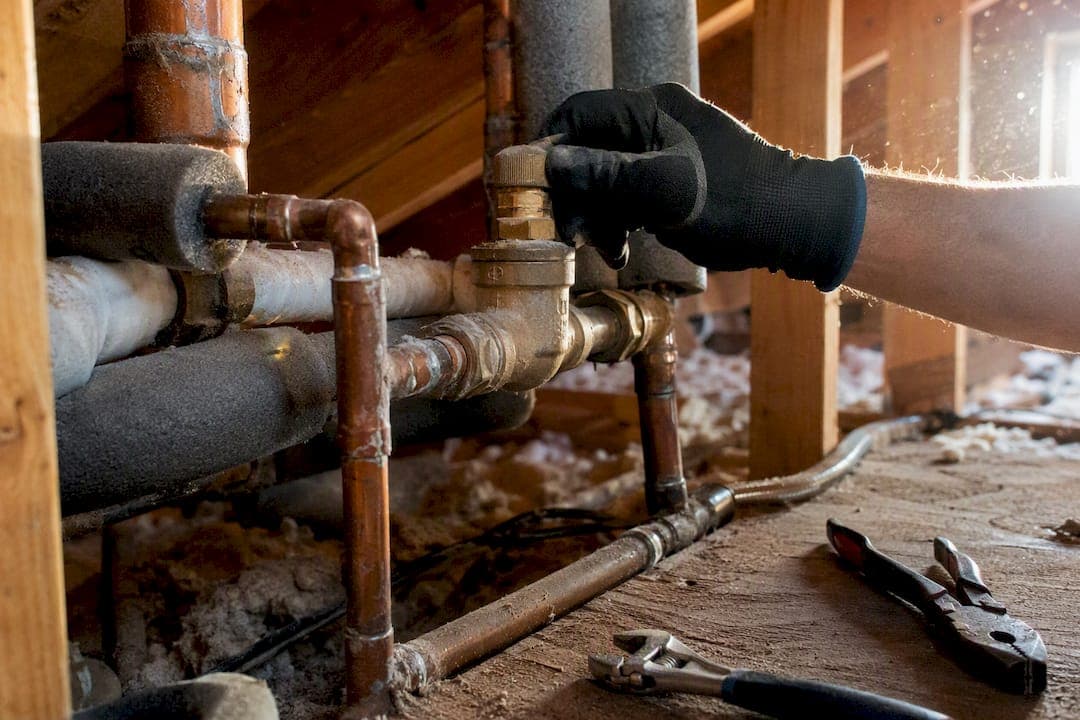
Attic copper runs usually show damage first. Daily attic swings between blazing afternoon heat and cooler nights force pipes to expand and contract repeatedly, which loosens soldered joints long before the copper itself wears out. PEX fittings in exposed runs face similar stress, just with different failure signs, often a slow weep at the fitting rather than a sudden split.
Watch for:
- Small mineral stains or dampness near attic pipe joints
- A hissing or ticking sound from walls right after hot water use
- Fixtures that spray harder than they used to, especially right after the water heater cycles
Pro Tip: Test your pressure gauge reading twice, once in the early morning and once in late afternoon during a heat wave. A gap of 15 PSI or more between readings tells you thermal expansion is actively straining your system.
Mitigations worth prioritizing: attic pipe insulation, a properly sized expansion tank, and PRV replacement if yours is more than 10 years old. For any new attic run, PEX-A tubing flexes better under thermal cycling than rigid copper.
Soil Desiccation, Caliche, and Slab Leaks: Detection and Fixes
Desert soil doesn't behave like soil anywhere else. It dries out, shrinks, and often sits over caliche, a cemented layer of calcium carbonate that can be nearly as hard as concrete in spots and crumbly a few feet away. That inconsistency means your slab foundation gets uneven support. When soil beneath one section shrinks faster than another, the slab flexes just enough to stress buried water lines and, eventually, crack them.
Signs you may have a hidden slab leak:
- A water bill that jumps without any obvious new usage
- A warm spot on the floor in a home with a slab foundation
- The sound of running water when every fixture is off
- Cracks in flooring or exterior stucco that appeared gradually
- Mildew smell or unexplained dampness along a baseboard
If two or more of these show up together, order a professional slab-leak survey before the leak undermines more of the foundation. On the prevention side, a shallow perimeter drip ring set six to twelve inches deep and offset a foot or so from the foundation, running a slow trickle during the driest weeks, helps keep the soil profile stable and reduces differential movement. Fix any failed irrigation line near the foundation immediately. A leaking irrigation valve that saturates one corner of your yard while the rest stays bone dry is exactly the kind of uneven moisture that cracks slabs.
Hard Water and Scale: What It Does to Heaters, Pipes, and Fixtures
Desert tap water is often loaded with dissolved calcium and magnesium, and Phoenix-area water routinely tests between 12 and 20 grains per gallon, a range classified as very hard. That mineral load doesn't just leave spots on your shower glass. It builds up inside your water heater tank as sediment, insulating the burner or element from the water it's supposed to heat.
The result: your heater works harder, recovers slower, and burns through anode rods faster than the same unit would in a soft-water region. USGS explains that this scale accumulation is a direct function of calcium and magnesium concentration, not a manufacturing defect or bad luck.
Reduced flow through scaled pipes and fixtures is the other cost. Showerheads clog, faucet aerators lose pressure, and narrow supply lines gradually choke down.
Your realistic options:
- A whole-home softener for comprehensive protection
- Point-of-use filters on key fixtures if a full system isn't in the budget yet
- Routine tank flushing and anode rod checks, which Energy as standard water-heater maintenance in hard-water regions
Pressure Control, Water Hammer, and Backflow: What You Need Installed
Three things converge to create pressure chaos in desert plumbing systems: thermal expansion heating up your supply water, municipalities delivering pre-heated water in the first place, and irrigation valves slamming shut and sending a shockwave back through the line. That shockwave, water hammer, is the banging noise you sometimes hear when a washing machine or irrigation valve cuts off suddenly.
Once pressure crosses roughly 80 PSI, the risk of joint failure climbs sharply. A few devices handle most of this:
- A PRV, replaced every 8 to 12 years since the internal diaphragm wears out
- An expansion tank sized to your water heater's tank capacity, absorbing the extra volume created by heating
- Water-hammer arrestors installed near washing machine valves and irrigation solenoids
- A tested backflow preventer, especially if you have an irrigation system tied into your potable supply
Pro Tip: Turn off every fixture in the house, then check if your water meter is still spinning. If it is, you have a leak somewhere in the system, pressure problem or not.
Outdoor Plumbing and Irrigation: Sun, Valves, and What Wears Out First
Sun exposure breaks down plastic and rubber components faster outdoors than almost anywhere else in your plumbing system. CPVC turns brittle under prolonged UV exposure, and rubber seals in irrigation valves dry out and crack years before they would in a milder climate. Irrigation systems that run aggressively at night can also destabilize the soil around them while triggering repeated water-hammer events every time a zone valve closes.
Practical fixes:
- Add a shade shroud or route exposed lines through conduit where possible
- Switch perimeter zones to low-volume drip instead of high-pressure spray heads
- Install arrestors at each irrigation valve manifold
- Run irrigation during off-peak hours rather than the hottest part of the afternoon, which also cuts evaporation waste
Inspection and Maintenance Priority Checklist
Desert plumbing rewards a rhythm. Catching small issues on a schedule beats discovering big ones by accident.
- Quarterly: Check static water pressure, visually inspect any exposed lines in the attic or crawlspace, and test hose bibs and irrigation zones for drips.
- Annually: Schedule a professional leak detection survey, have your PRV and expansion tank serviced, flush the water heater and inspect the anode rod, and get a water-quality test done.
- Immediate trigger events: Call a plumber right away if you notice a sudden pressure drop, a new wet spot on flooring or walls, or a water bill spike with no explanation.
Pro Tip: Keep a simple log of your quarterly pressure readings. A slow upward trend over a year is often the earliest warning sign of a developing thermal expansion problem, long before any visible damage shows up.
Backflow-preventer testing deserves its own line item too. Property managers overseeing multiple units should follow a documented backflow maintenance schedule rather than waiting for a municipal inspection notice to prompt action.
How USA Plumbing and Septic Diagnoses Desert Plumbing Problems
Across service calls throughout Bullhead City, Fort Mohave, Mohave Valley, and Laughlin, our technicians see the same patterns repeat: attic copper joints fatigued from heat cycling, irrigation valves triggering water hammer that eventually loosens fittings elsewhere in the house, and slab leaks that trace back to uneven soil moisture around the foundation perimeter.
Usaplumbingseptic handles the full range of fixes these patterns demand:
- Full-system inspections and pressure diagnostics
- PRV and expansion tank installation
- Leak detection and slab-leak repair
- Water softener and filtration system maintenance
- Water heater service, including flushing and anode replacement
Sand and Dust Infiltration: Protecting Plumbing Components
Desert air carries fine particulate that finds its way into plumbing systems more easily than most homeowners expect. Sand and dust enter through irrigation intakes, well equipment, hose bib connections, and even through minor gaps around outdoor spigots during dust storms. Once inside, that grit acts like sandpaper against moving parts.
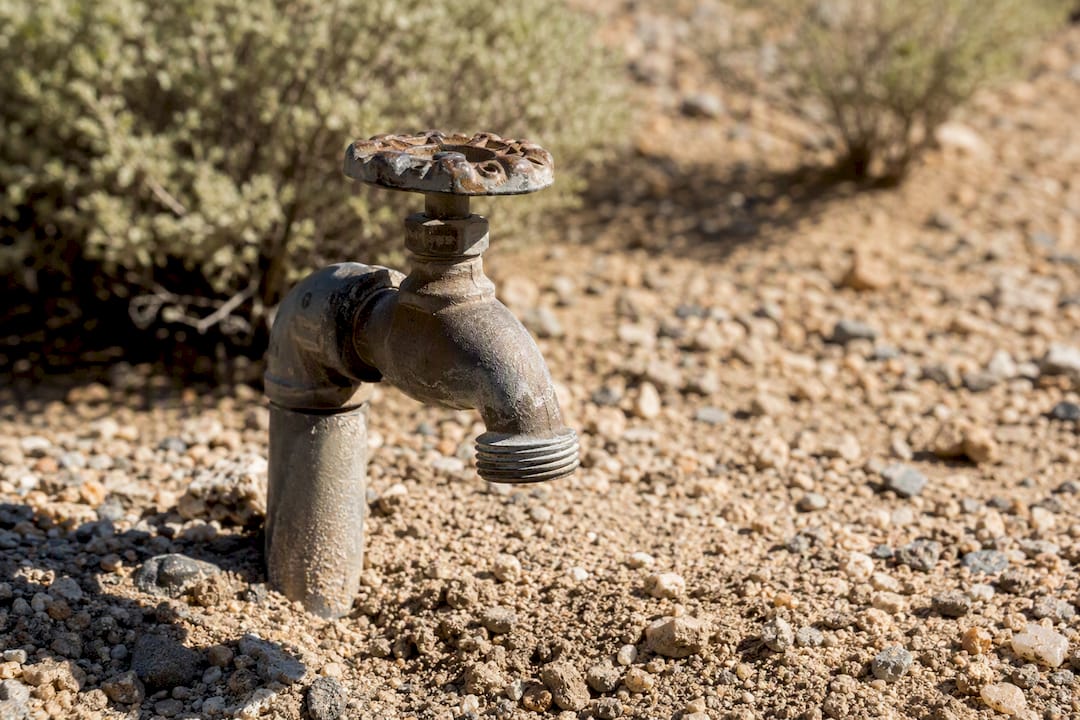
Faucet cartridges and valve seats take the brunt of it. Fine particulate lodges in the rubber or ceramic seating surfaces inside faucets, causing drips that no amount of tightening fixes, because the seal itself is scored. Well pumps and water well equipment face a rougher version of the same problem: sediment pulled up with well water accelerates impeller wear and can clog pressure switches over time.
Irrigation systems are especially exposed. Drip emitters clog easily when dust mixes with mineral sediment already present in hard water, and sprinkler valve diaphragms can jam when grit works its way past a worn seal.
A few practical defenses reduce this wear significantly:
- Install a sediment pre-filter on the main line ahead of sensitive fixtures and appliances
- Add a filter screen at well pump intakes and irrigation backflow assemblies
- Flush irrigation lines seasonally to clear accumulated sediment before it reaches emitters
- Have well equipment inspected annually if your property relies on groundwater, since dust and sediment ingestion is a leading cause of premature pump failure in desert regions
Combining sediment filtration with the softening measures already covered for hard water gives the most complete protection, since dust and dissolved minerals often compound each other's damage inside the same components.
A Field Note on Desert Plumbing
Years of service calls across Mohave County have taught me one thing above all: the homeowners who avoid emergency repairs are the ones who check their water pressure during the hottest week of summer, not the mildest one. Schedule an inspection before the heat peaks, not after something fails.
Get Ahead of Desert Plumbing Problems Before They Cost You
Usaplumbingseptic gives you one direct call for every desert plumbing risk covered in this guide, instead of juggling separate specialists for pressure issues, leak detection, and water quality. We install and service PRVs and expansion tanks, run full leak detection surveys for suspected slab leaks, maintain water softening and filtration systems, and handle water heater service from flushing to anode replacement.

We're available 24/7 across Bullhead City, Fort Mohave, Mohave Valley, and Laughlin, so a sudden pressure drop or new wet spot on the floor doesn't have to wait until Monday. If you noticed any of the warning signs in this article, from attic pipe staining to a climbing water bill, the next step is straightforward: schedule an inspection with our licensed plumbers and get a diagnosis before a slow-burn issue turns into an emergency repair.
Sources
FAQ
What are the most common plumbing challenges in desert climates?
The most common issues are thermal expansion causing pressure spikes and joint fatigue, soil movement leading to slab leaks, and hard water scaling water heaters and pipes.
Why does water scarcity affect plumbing decisions in the desert?
Declining regional water supplies, documented in Southwest reservoirs like Lake Mead, push homeowners toward low-flow fixtures and greywater systems to reduce demand on strained infrastructure.
What makes living in a desert climate hard on home systems?
Extreme heat, minimal rainfall, low humidity, and mineral-rich groundwater combine to stress building materials, plumbing, and irrigation systems in ways milder climates rarely experience.
How often should I have my desert home's plumbing inspected?
Check pressure and visible lines quarterly, and schedule a full professional inspection, including leak detection and water heater service, at least once a year.
Does Usaplumbingseptic install pressure-reducing valves and expansion tanks?
Yes, Usaplumbingseptic installs and services PRVs and expansion tanks as part of its standard plumbing repair and maintenance work throughout the Bullhead City area.