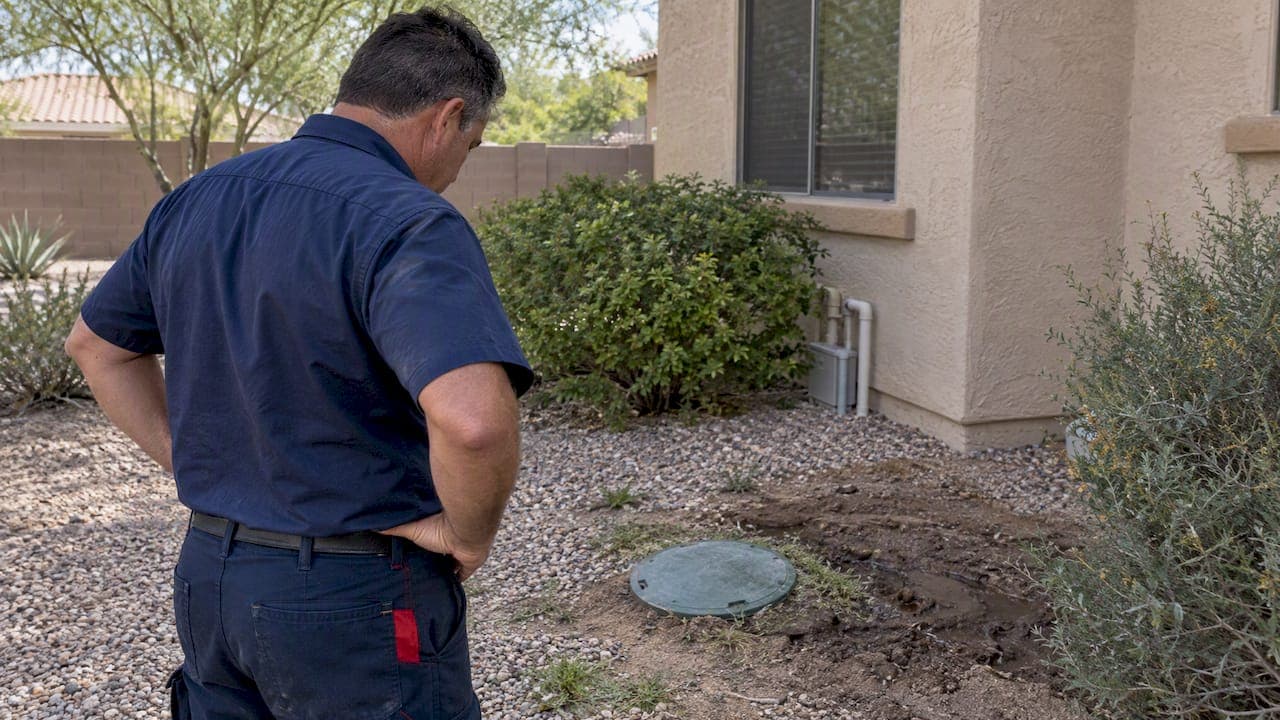
A rotten-egg smell outside usually means sewer gas, or hydrogen sulfide, is escaping somewhere between your house and your septic or sewer system, and it is not normal. The likely culprits are a septic tank issue, a cracked sewer line, a loose cleanout cap, or a dry outdoor trap. Walk your property to find the strongest spot, check lids and traps, and call a plumber right away if the ground is wet or you see sewage.
TL;DR:
- Refill outdoor or seldom used drains with about a quart of water; if the odor clears, a dry trap was likely the source.
- Call a plumber or septic technician promptly for soggy ground, pooled sewage, a loose tank lid, or an odor that persists after basic checks.
- Hydrogen sulfide may be detectable at 0.0005 parts per million, yet higher, more dangerous concentrations can dull your sense of smell.
- Never open a tank or buried cleanout; refill traps, tighten accessible caps, and clear only ground level vent openings, while avoiding ladders and chemical additives.
- If anyone feels dizzy, nauseous, confused, or has trouble breathing, leave the area immediately and call emergency services rather than waiting.
Table of Contents
- How to Locate Where the Smell Is Coming From
- Red Flags That Mean You Need a Professional Now
- Practical Fixes You Can Try Now
- When to Call a Licensed Plumber or Septic Technician
- What Pros Check First on the Job
- Our Take on Chasing Down Outdoor Sewer Smells
- How We Help You Track Down and Fix the Smell
- FAQ
- Sources
How to Locate Where the Smell Is Coming From
Pinpointing the source takes patience and a system, not guesswork. Still mornings tend to make outdoor odors easier to trace, since wind scatters the smell and makes it harder to track. Try checking on a few different days and conditions.
- Walk the perimeter of your house and yard slowly, pausing every few feet to note where the smell gets stronger or weaker.
- Refill any outdoor drains, floor drains, or rarely used fixtures with about a quart of water to restore the trap seal.
- Look at visible cleanout caps, riser lids, and tank lids for cracks or gaps, without opening anything buried or sealed.
- Check for soggy ground, unusually lush grass, or standing water near the suspected area.
- Note whether the smell gets worse after running the washing machine or dishwasher, or right after rain. That pattern often points straight to the cause.
Pro Tip: Keep a simple log with the time of day, weather, and what you smelled and where. That record speeds up diagnosis once a professional arrives.
Stay safe while you check. Avoid opening tanks or cleanouts on your own, avoid breathing directly over a suspected vent, and keep kids and pets away from any area where you smell gas strongly. Professionals rely on sealed inspection methods for a reason: opening a tank to "check" by smell can release a concentrated burst of gas.
Red Flags That Mean You Need a Professional Now
Some signs move an outdoor smell from "worth checking" to "call today." Wet or spongy ground over a drain field, or any visible effluent pooling near the system, means wastewater is surfacing. According to the EPA, odor paired with wet or soggy ground over the drain field signals that effluent is reaching the surface and needs prompt professional evaluation.
- Wet, spongy ground or standing liquid over the drain field
- A strong smell that persists across different weather and times of day
- Sudden lush, green patches growing over the leach field
- Odor that spikes right after using the washer or dishwasher
- A loose or missing tank lid that leaves the system exposed
Hydrogen sulfide is detectable by smell at concentrations as low as 0.0005 to 0.3 parts per million, yet ATSDR guidance notes that people can lose their sense of smell at higher, more dangerous levels. Smell alone is not a safety warning. If anyone feels dizzy, nauseous, confused, or has trouble breathing, get away from the area and call emergency services.
Practical Fixes You Can Try Now
A handful of low-risk steps can clear up simple causes or at least help confirm where the problem sits.
Pour a bucket of water down outdoor drains and any fixture you rarely use to refill a dry trap. If the smell disappears afterward, you have found your answer. Tighten a loose cleanout cap or swap out a cracked one, but never dig up or pry open a buried or sealed lid. Clear obvious debris from a vent opening you can safely reach from the ground. Skip the ladder and the roof unless you are trained for that kind of work.
If surface water keeps pooling near the septic area, a temporary trench or a gutter adjustment can redirect it away while you wait for an inspection. Avoid pouring bleach, harsh chemicals, or additives into a septic system as a fix. These can kill the bacteria your system needs to break down waste, according to Angi's guide to septic odor, which points to sealing lids, clearing vents, and refilling traps as the appropriate homeowner-level steps.
- Refill dry traps with a bucket of water in outdoor or seldom-used drains
- Tighten or replace a cracked cleanout cap, without opening buried lids
- Clear debris from ground-level vent openings only
- Redirect surface water away from the septic area temporarily
- Skip chemical additives, since they can damage system bacteria
- Photograph everything, with the time and weather noted
Pro Tip: Take a picture of any lid, cap, or wet patch you find. A technician can often narrow down the problem faster with a photo than with a description alone.
When to Call a Licensed Plumber or Septic Technician
Wet ground, visible sewage, a loose tank lid, or a smell that lingers after you have tried the basics all mean it is time to bring in a professional.
A technician typically starts with a camera inspection of the sewer line, a smoke test to trace where gas escapes, or a septic tank pump-and-inspect paired with a distribution box check and a liquid level reading. InspectApedia's overview of odor tracking describes smoke testing as a reliable way to find leaks without excavating the whole yard first.
- Lid or riser replacement: usually the least expensive fix
- Localized sewer line repair: a moderate cost, depending on access
- Distribution box repair: also moderate, tied to the extent of damage
- Drain field replacement: the most expensive outcome, reserved for field failure
Have your photos, the date of your last septic pump-out, and notes on when the smell worsens ready before the technician arrives. That inspection cost is small next to a drain field replacement.
What Pros Check First on the Job
We always start at the strongest point of the smell, then check the liquid level at the tank outlet before inspecting baffles, filters, and the distribution box. A level sitting above the outlet usually points downstream, toward the field or box, rather than the tank itself, according to SepticOwner's location-based diagnostic approach.

The most common mistakes we see are homeowners opening tanks themselves, pouring in chemical treatments, or waiting on wet ground instead of calling right away. Before we arrive, refill your traps, snap a few photos, and avoid the area if the ground feels soft.
Our Take on Chasing Down Outdoor Sewer Smells
Most advice on this topic treats every outdoor odor as a mystery that needs elaborate detective work. In practice, the location of the smell usually tells you most of what you need to know within the first few minutes of looking. A smell concentrated at a lid points one direction, a smell spread over soft ground points another, and that distinction matters more than any list of possible causes.

Where conventional advice falls short is in treating smell intensity as a safety gauge. Hydrogen sulfide does not get weaker as it gets more dangerous, and a homeowner who waits for the odor to "get bad enough" before calling someone is working against the wrong signal.
Prioritize two things: document what you observe (where, when, weather, what triggered it), and treat wet ground or visible sewage as an immediate call, not a wait-and-see situation. Everything else, caps, traps, vents, is worth checking, but those two habits protect you the most.
— JOHN
How We Help You Track Down and Fix the Smell
Once you have done the safe checks and the smell is still there, or the ground is wet, we take it from there. We offer emergency plumbing and septic services including camera inspections, septic tank pump-and-inspect visits, distribution box checks, and sewer line repairs, so the diagnostic step and the fix can often happen in one visit.

Our first response typically starts with a safety check of the area, a visual and camera inspection to confirm the source, and an estimate before any repair work begins. For readers dealing with a related issue indoors, our piece on fixing a sewer smell inside the house covers that side of the problem, and our drain field guide explains why soggy ground over a field is worth taking seriously.
- Emergency plumbing and septic diagnostics
- Camera inspection and smoke testing for sewer lines
- Septic tank pump-and-inspect with distribution box checks
- Estimates before repair work starts
Call us or book online through our main service page to get a technician out to your property.
FAQ
Can sewer smell in a house be harmful?
Yes. Sewer gas contains hydrogen sulfide, which is detectable by smell at very low concentrations but can become dangerous at higher levels, according to ATSDR. Prolonged exposure or high concentrations can cause headaches, nausea, or breathing trouble, so a persistent smell indoors or outdoors is worth addressing quickly.
How is sewer gas poisoning treated?
The first step is moving away from the exposure area into fresh air immediately. For anyone showing symptoms like dizziness, confusion, or trouble breathing, call emergency services right away rather than waiting to see if symptoms pass.
Why do I smell sewer smell even though no one else does?
Your sense of smell can vary from someone else's, and hydrogen sulfide detection thresholds differ from person to person, with some people noticing it at concentrations as low as 0.0005 parts per million according to ATSDR. Wind direction, your exact location in the yard, and proximity to a leak or vent can also make the difference.
Is it normal for a septic tank to smell?
A properly sealed and functioning septic tank should not produce a noticeable outdoor odor under normal conditions. A persistent smell usually points to a failed seal, a full tank, or a problem with the drain field, according to EPA guidance on septic systems.
Sources
Sewer gas has to come from somewhere specific, and narrowing down the source saves time and money before a technician ever shows up.
A failing or overloaded septic tank is one of the most frequent causes. A full tank, a failed baffle or effluent filter, or a saturated drain field can all push odors to the surface. Signs your septic system is failing tend to show up outdoors before they show up inside the house, so an outdoor smell deserves attention even if everything seems fine at the sinks.
A cracked or leaking sewer line between the house and the main line, or between the house and the septic tank, lets gas escape along its path rather than venting properly. Loose, cracked, or missing cleanout caps and riser seals create an easy exit point, and they are often the simplest fix once found. Vent stack problems, such as a roof vent that is clogged, too short, or poorly positioned, can also send gas back down toward ground level instead of dispersing it above the roofline.
Outdoor drains and rarely used fixtures can develop dry traps when water evaporates from the P-trap, breaking the seal that normally blocks gas. Our guide to how drain traps work explains why that water barrier matters so much.
- Septic smell outside: what the location tells you | SepticOwner
- How to get rid of the septic smell outside | Angi