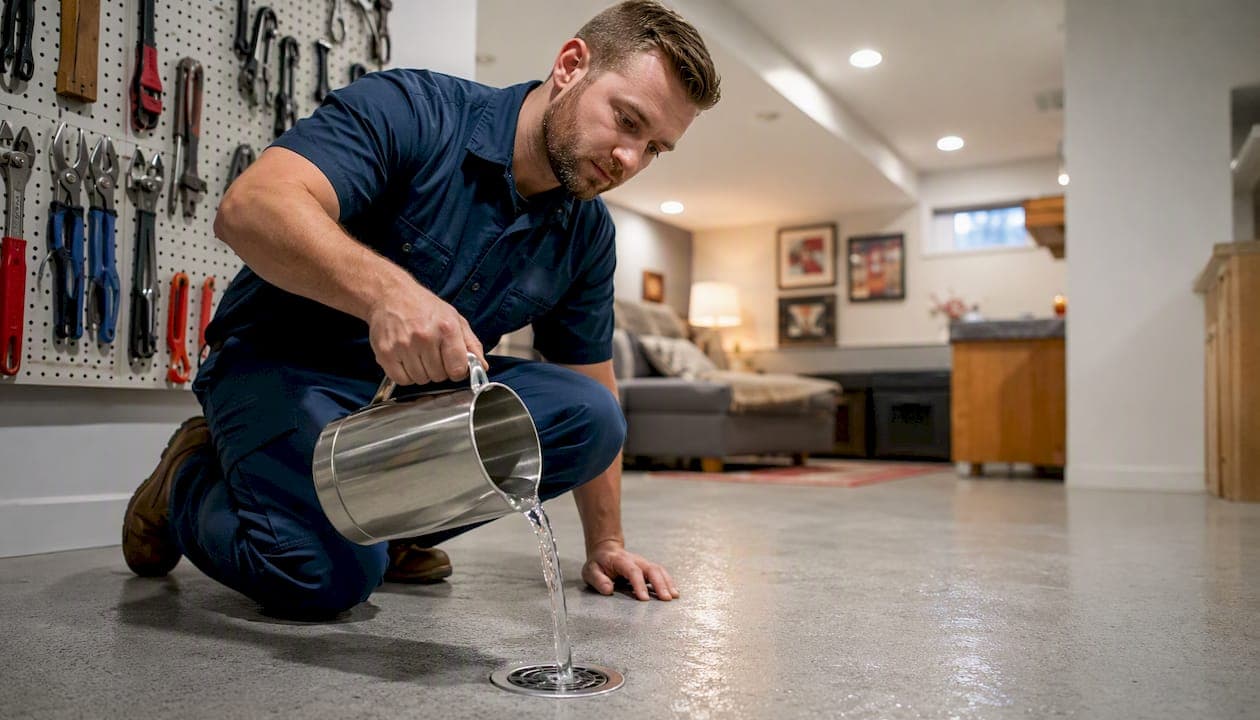
Start by opening windows, running water in every drain, and flushing every toilet. That sequence alone clears most indoor sewer odors within minutes because it restores the water seals inside your P-traps, the curved pipe sections under every sink and floor drain that physically block sewer gas from rising into your living space. According to South Davis Sewer District, P-traps hold a small reservoir of water that acts as a barrier against hydrogen sulfide and methane. When that water evaporates, the barrier disappears and the smell comes straight through.
After ventilating and re-priming traps, check the base of every toilet for moisture or wobble, and confirm that your main cleanout cap is tight. Those three steps resolve the majority of sewer odor complaints without any tools or professional help.
Immediate actions to take right now:
- Open windows and run an exhaust fan to push odors outside.
- Run cold water for 30 seconds in every sink, tub, and shower drain.
- Flush every toilet to refill the bowl trap.
- Pour a quart of water into any floor drain you rarely use.
- Check the cleanout cap (usually a threaded plastic or brass plug near the toilet or in the basement) and tighten it by hand or with a wrench if it is loose.
Pro Tip: For drains you use less than once a week, pour a tablespoon of mineral oil on top of the water after re-priming. The oil floats on the water surface and dramatically slows evaporation, keeping the seal intact for weeks longer than water alone.
Key Takeaways
Fixing a sewer smell inside your house starts with ventilating, re-priming every P-trap, and checking the toilet base and cleanout cap before assuming a serious pipe problem.
| Point | Details |
|---|---|
| Re-prime traps first | Run water in every drain and flush every toilet; this resolves most sewer odors immediately. |
| Mineral oil extends the seal | Add one tablespoon of mineral oil to rarely used drains to slow evaporation for weeks. |
| Bleach does not fix the source | Bleach masks odors temporarily and can create toxic gas when mixed with other cleaners. |
| Call a plumber for persistent smell | If odor remains after traps are refilled and caps are tight, a cracked pipe or vent breach is likely. |
| Usaplumbingseptic is available 24/7 | Camera inspection, hydro-jetting, and sewer line repair are available in Bullhead City and surrounding areas. |
Table of Contents
- What to do in the next 5–30 minutes
- What causes a house to smell like sewer?
- How to find where the sewer smell is coming from
- DIY fixes for each likely cause
- How to clean drains and neutralize odor safely
- When should you stop DIY and call a plumber?
- What plumbers do to diagnose and repair sewer odors
- A maintenance plan to prevent future sewer odors
- What we see most often on sewer odor calls
- Sewer odor at home? Here's how we can help
- Sources
- FAQ
What to do in the next 5–30 minutes
Speed matters here. Sewer gas contains hydrogen sulfide, which smells like rotten eggs, and in high concentrations it causes headaches, nausea, and dizziness. Methane, also present in sewer gas, is flammable. Neither is something to sit with while you figure out the source.
Work through this checklist in order:
- Ventilate immediately. Open every window and exterior door on the affected floor. Turn on bathroom and kitchen exhaust fans.
- Run all fixtures. Run water in every sink, tub, and shower for at least 30 seconds each. Flush every toilet.
- Fill floor drains. Pour a quart of water into basement floor drains, laundry room drains, and any drain in a guest bathroom that rarely gets used.
- Check the cleanout cap. Locate the main sewer cleanout (a capped pipe near the foundation or in the basement) and confirm it is fully threaded on. A loose or cracked cap is a direct sewer gas entry point.
- Look for active backups. If sewage is backing up into a tub or floor drain, stop using all fixtures immediately and call a plumber.
- Isolate the area if symptoms appear. If anyone in the house has a headache, nausea, or feels dizzy, leave the building and call 911 or your gas utility before re-entering.
Safety note: Never pour bleach into a drain and then add another cleaner. Bleach mixed with ammonia-based products releases toxic chloramine gas. Do not use aerosol sprays or flammable products in an enclosed, unventilated space where sewer gas may be present. Masking the smell with chemicals does not fix the source and can create a second hazard on top of the first.
For a full 24-hour plumbing emergency checklist, including sewer gas hazard guidance, keep that resource bookmarked before you need it.
What causes a house to smell like sewer?
Oatey identifies the most common structural causes of indoor sewer gas: dry P-traps, blocked sewer lines, failed toilet seals, damaged vent stacks, and sulfur bacteria in water heaters. Bleach does not fix any of them. Here is how each one shows up in your home:
-
Dry P-trap. Smell comes from a specific sink, tub, or floor drain. Strongest after the drain has not been used for several days. No gurgling, no backup. Fix: run water and add mineral oil.
-
Failed toilet wax ring. Smell is strongest near the toilet base. You may notice the toilet rocks slightly or there is moisture or staining around the base. The standard toilet wax ring creates an airtight seal between the toilet horn and the drain flange; when it fails, sewer gas escapes continuously.
-
Clogged or broken main sewer line. Smell affects multiple rooms or the whole house. Often accompanied by slow drains throughout the home, gurgling sounds from toilets when you run a sink, or sewage backing up into a tub.
-
Blocked or damaged vent stack. Smell appears after flushing or draining, often with a gurgling sound. Vent pipes run from your drain system through the roof and allow air in so water flows freely. A bird nest, debris, or a cracked vent pipe lets sewer gas escape into the attic or walls.
-
Loose or missing cleanout cap. Smell is strong near the cleanout location, often in a basement, crawl space, or near the foundation. A missing cap is an open sewer gas port.
-
Sulfur bacteria in the water heater. Smell is strongest at hot-water faucets and smells like rotten eggs specifically when hot water runs. The bacteria react with the magnesium anode rod inside the heater.
-
Failed ejector basin seal (basement). Basement bathrooms use a sealed ejector pit to pump waste upward. A cracked lid or failed gasket lets gas escape directly into the basement.
-
Washing machine standpipe issues. If the standpipe does not have a proper P-trap, or the trap has dried out, the laundry area will smell during or after wash cycles.
For a deeper look at why drains smell bad and how P-traps and vent pipes work together, that resource walks through each failure mode in detail.
How to find where the sewer smell is coming from
HomeFixer101 recommends starting with the simplest and cheapest checks before assuming a cracked pipe. Follow this diagnostic ladder in order:
-
Sniff-test every room. Walk through the house with your nose. The smell is almost always strongest closest to the source. Note which room, which fixture, and whether the smell is constant or appears only after flushing or draining.
-
Run water in every drain. If the smell drops significantly after running water, a dry P-trap is the likely cause. If it persists or gets worse, move to the next step.
-
Inspect toilet bases. Press down on each side of every toilet. Any rocking or movement suggests a loose wax ring. Look for discoloration, soft flooring, or moisture at the base.
-
Check floor drains and the ejector basin. Floor drains in basements, garages, and laundry rooms are common dry-trap culprits. The ejector basin lid should be fully sealed with no cracks.
-
Inspect accessible cleanout caps. A cleanout cap that is hand-tight but not wrench-tight can allow gas to seep past the threads. Check for cracks in plastic caps.
-
Listen for gurgling. Run a sink and listen at the nearest toilet. Gurgling indicates a venting problem or a partial blockage in the main line.
-
Note when the smell appears. Smell after heavy rain often points to a cracked sewer line or a flooded cleanout. Smell only when hot water runs points to the water heater. Smell in a specific room only after it has been closed for days points to a dry trap.
-
Inspect the roof vent (carefully). If you are comfortable on a roof and have a helper, look down the vent stack with a flashlight for debris, nests, or ice blockages. Do not attempt this on a wet or steep roof.
Pro Tip: Plumbers use a smoke pencil or a smoke machine to find hidden leaks. A DIY version: hold a stick of incense near suspect joints and watch for the smoke to get pulled in or pushed away. This works for accessible pipe joints under sinks but is not a substitute for professional smoke testing on the main line.
DIY fixes for each likely cause
Before you start, gather these tools: a plunger, a hand auger (drain snake), an adjustable wrench, a bucket, Teflon tape, and plumber's putty. Most hardware stores carry all of them for under $50 combined.
Dry P-trap
- Run water for 30 seconds to refill the trap.
- Pour one tablespoon of mineral oil on top of the water to slow evaporation.
- For floor drains you rarely use, consider an Oatey Drain Seal, a flexible rubber insert that sits in the drain and creates a physical barrier against sewer gas without relying on standing water. It is a practical solution for basement floor drains that go weeks without use.
Failed toilet wax ring
- Check for rocking by pressing firmly on each side of the toilet. If it moves, tighten the two floor bolts (closet bolts) at the base with an adjustable wrench. Do not overtighten on a porcelain base.
- If tightening the bolts does not stop the wobble, or if you see moisture at the base, the wax ring needs replacement. A standard toilet wax ring costs a few dollars at any hardware store. The Septic Guide notes that wax rings are among the least expensive fixes for indoor sewer smells, though labor adds to the total if you hire out.
- Replacing a wax ring means shutting off the water supply, draining the tank, disconnecting the supply line, unbolting the toilet, lifting it off the flange, scraping the old wax, pressing on a new ring, and resetting the toilet. It is a manageable DIY job for someone comfortable with basic plumbing, but call a plumber if the flange itself is cracked or sitting below the finished floor.
Loose or missing cleanout cap
- Locate the cleanout: a threaded plug, usually 3 or 4 inches in diameter, near the toilet, in the basement, or outside near the foundation.
- Tighten a loose cap with a pipe wrench. Wrap the threads with Teflon tape before reinstalling to improve the seal.
- Replace a cracked or missing cap with a matching threaded plug from the hardware store. For a more secure seal on a high-use cleanout, Cherne Gripper Plugs are a professional-grade option that expand inside the pipe to create a reliable mechanical seal.
- See the full cleanout guide for cap types and thread-sealing details.
Clogs and partial backups
- Try a cup plunger on slow sinks and a flange plunger on toilets. Use firm, steady strokes.
- For persistent clogs, run a hand auger 15–25 feet into the drain to break up or retrieve the blockage.
- Enzymatic drain cleaners (products containing live bacteria cultures) break down organic buildup without damaging pipes. Use them monthly as maintenance, not as an emergency fix.
- Avoid caustic chemical drain openers. They can damage PVC pipes, corrode metal fittings, and create a hazardous situation if a plumber later needs to work in the drain.
- If multiple fixtures are slow or backing up simultaneously, the blockage is in the main sewer line. Stop DIY attempts and schedule a sewer camera inspection.
Vent stack blockage
- Check the roof vent opening for visible debris, leaves, or animal nests. Remove debris with a gloved hand or a plumber's snake fed down from the roof.
- If you hear gurgling but see no visible blockage, the vent may be cracked inside the wall or attic. That requires a professional smoke test to locate.
- Do not attempt vent work on a wet, icy, or steep roof.
How to clean drains and neutralize odor safely
Cleaning a drain and eliminating sewer odor are two different problems. Confusing them leads to the most common homeowner mistake: pouring bleach down the drain and wondering why the smell returns in two days.
What actually works:
- Enzymatic cleaners. Products containing bacterial cultures digest grease, hair, and organic buildup that feeds odor-causing bacteria. Pour them in at night so they have time to work without being flushed away. Use monthly for maintenance.
- Baking soda and hot water. Pour half a cup of baking soda followed by a cup of hot (not boiling) water into a smelly drain. This neutralizes mild odors from surface buildup. It does not fix a dry trap or a cracked pipe.
- Activated charcoal odor absorbers. Place activated charcoal bags or containers near the affected drain or in the room. Activated charcoal binds hydrogen sulfide and other odor compounds and is effective for short-term symptom control while you address the root cause. Brands like Moso Natural and Breathe Green offer widely available charcoal bags. They treat the air, not the pipe.
- Ventilation. Running an exhaust fan continuously is the single most effective short-term odor reducer. It dilutes gas concentration and pushes it outside.
What does not work or causes harm:
- Bleach down the drain. As Oatey makes clear, bleach does not fix dry traps, cracked pipes, or vent failures. It kills surface bacteria temporarily but does nothing for structural causes. Mixed with ammonia-based cleaners, it creates toxic gas.
- Caustic chemical drain openers. These dissolve some clogs but damage pipes and make professional repairs more dangerous.
- Caulking around the toilet base. A common mistake: caulking the gap between the toilet and the floor traps moisture inside and hides a failing wax ring. It makes the underlying problem worse.
When should you stop DIY and call a plumber?
Some sewer odor situations are not DIY territory. InspectAPedia is direct on this: persistent odor that does not clear after re-priming traps often signals a vent breach or a cracked drain line, and masking it with chemicals only delays the correct diagnosis.
Call a licensed plumber when you see any of these:
- The smell persists after you have re-primed every trap and tightened every cleanout cap.
- Sewage is backing up into a tub, sink, or floor drain.
- Multiple fixtures are slow or gurgling at the same time.
- The smell appears or worsens after heavy rain (suggests a cracked or flooded sewer line).
- Anyone in the household has headaches, nausea, or dizziness that clears when they leave the house.
- You see moisture, staining, or soft spots in walls, ceilings, or floors near drain lines.
- The toilet rocks even after you tighten the floor bolts.
- You have a septic system and the smell is accompanied by wet spots in the yard above the drain field.
What to have ready when you call:
- The location where the smell is strongest and when it first appeared.
- A list of every fixture you have already checked and what you found (dry trap, loose cap, etc.).
- Photos of any moisture, staining, or visible damage at toilet bases or cleanouts.
- Your home's age and pipe material if you know it (cast iron, PVC, clay tile).
- Whether you have a municipal sewer connection or a septic system.
For emergency sewer response guidance while you wait for a plumber, that resource covers safety steps and what to tell the dispatcher.
What plumbers do to diagnose and repair sewer odors
Professional diagnosis goes well beyond what a homeowner can see or smell. Here is what a licensed plumber brings to the job and why each method matters.
Camera sewer inspection. A waterproof camera on a flexible cable travels through your drain line from a cleanout or toilet flange. It shows cracks, root intrusion, offset joints, grease buildup, and collapsed sections in real time. The plumber records the footage and can pinpoint the exact location and depth of any defect. This is the standard first step when the cause is not obvious from a visual inspection. A sewer line inspection gives homeowners a clear picture of what the camera finds and what the report means.
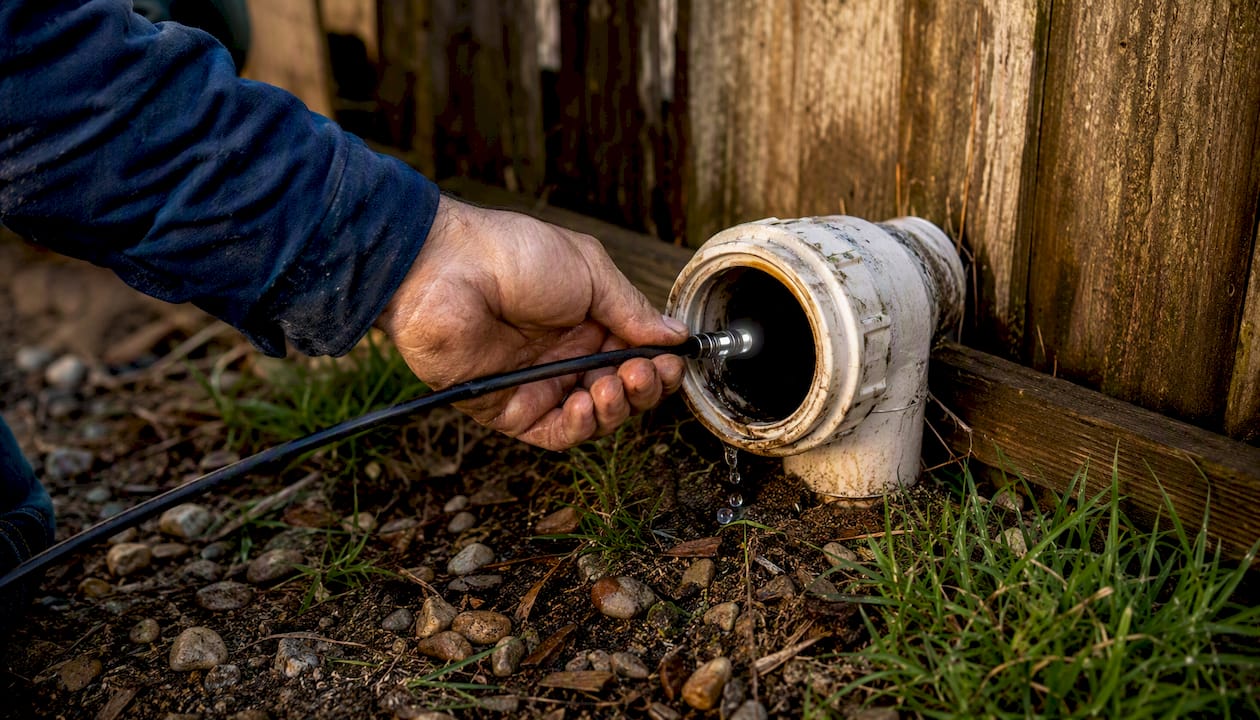
Smoke testing. The plumber pumps non-toxic smoke into the drain system through a cleanout and seals the other end. Smoke exits wherever there is a leak: a cracked pipe, a failed vent connection, a bad wax ring, or an unsealed joint. It is the fastest way to find multiple small leaks in one pass.
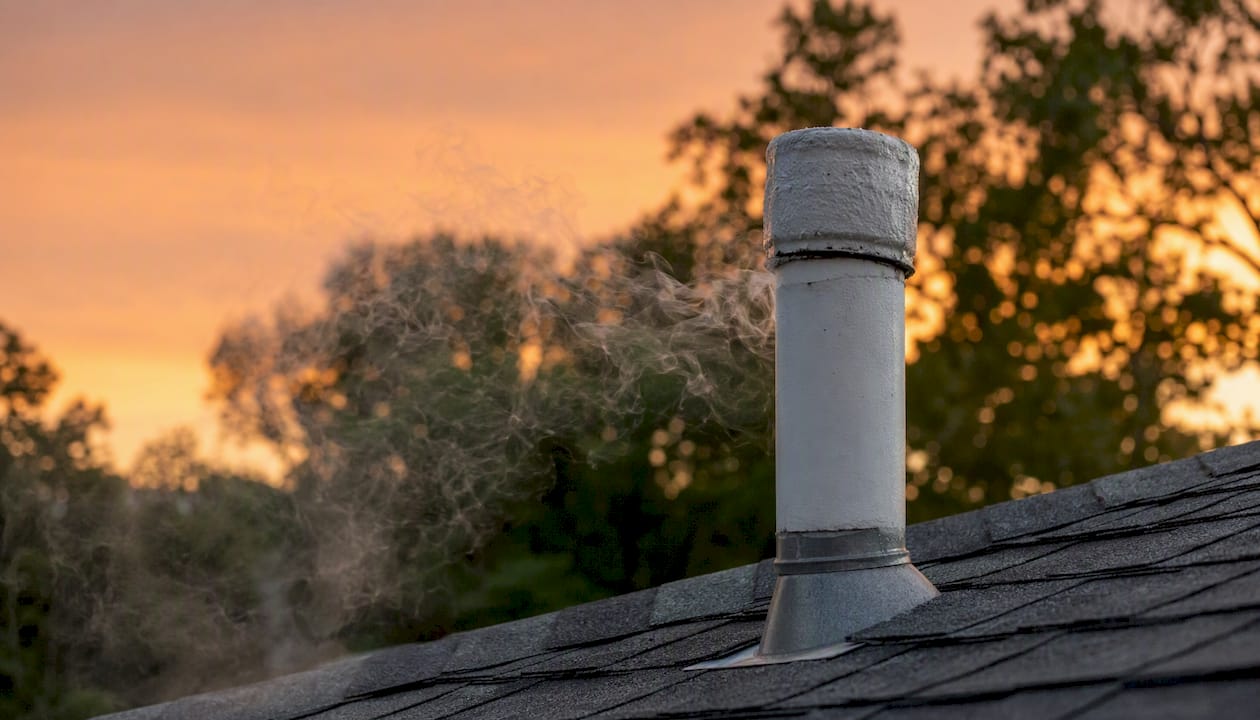
Tracer gas testing. For leaks that smoke cannot reach (inside walls or under slabs), plumbers use a hydrogen/nitrogen tracer gas mixture and a handheld detector. The gas escapes through the smallest crack and the detector finds it precisely. This method is used when camera and smoke tests do not locate the source.
Hydro-jetting. A high-pressure water stream (typically 3,000–4,000 PSI) clears grease, scale, and root intrusion from pipe walls. It is more thorough than mechanical augering and leaves the pipe clean rather than just punching a hole through the blockage. Hydro-jetting is appropriate for grease-heavy lines and recurring clogs; it is not used on pipes that are already cracked or fragile.
Mechanical augering. A motorized auger breaks up or retrieves solid blockages. Faster and less expensive than hydro-jetting for simple clogs, and safer for older or compromised pipes.
Repair options, from least to most invasive:
- Patching and lining. A small crack or joint failure can be repaired with a cured-in-place pipe (CIPP) liner, a resin-saturated sleeve that hardens inside the existing pipe. No excavation required.
- Sectional replacement. A short damaged section is cut out and replaced. Requires limited digging or access through a wall.
- Full excavation and replacement. For collapsed or severely offset pipe, the full line is dug up and replaced. This is the most disruptive and expensive option but is sometimes the only one.
Safety note: Hydrogen sulfide becomes dangerous at concentrations above 10 ppm and can be immediately life-threatening above 100 ppm. Professional plumbers use gas detectors before entering confined spaces like crawl spaces or ejector pits. Do not enter a crawl space or basement where sewer gas is strong without ventilation and a gas detector.
Key professional equipment includes sewer cameras, hydro-jetters, smoke machines, and Cherne Gripper Plugs, which expand inside the pipe to isolate sewer segments during pressure and smoke testing.
A maintenance plan to prevent future sewer odors
Preventing sewer odors is mostly about keeping traps wet and pipes clear. A simple schedule handles both.
Monthly tasks:
- Run water for 30 seconds in every sink, tub, and floor drain you do not use regularly.
- Top off rarely used floor drains with a quart of water and a tablespoon of mineral oil.
- Pour an enzymatic cleaner into kitchen and bathroom drains to control buildup.
- Inspect under sinks for moisture or slow drips that could indicate a trap or supply line issue.
Annual tasks:
- Check all cleanout caps for cracks and tighten any that have loosened.
- Inspect the toilet base for wobble or discoloration and tighten floor bolts if needed.
- Have a plumber inspect the vent stack if you have had recurring gurgling or slow drains.
- If you have a septic system, schedule pumping every 3–5 years depending on household size, and inspect the system annually.
Every 2–3 years (more often for homes over 30 years old):
- Schedule a professional sewer camera inspection to catch root intrusion, joint offsets, and scale buildup before they cause backups or odors.
Additional options worth knowing:
- Trap primers. Automatic trap primers connect to the water supply and periodically add a small amount of water to floor drain traps. They are code-required in some commercial settings and a practical upgrade for basement floor drains in homes.
- Air Admittance Valves (AAVs). Where local code allows, an AAV replaces a traditional vent pipe run through the roof. It opens to admit air when water drains and closes to block sewer gas. Useful for island sinks or additions where running a full vent is impractical.
- Tree root management. If large trees are within 10 feet of your sewer line, have the line inspected every two years. Root intrusion is one of the leading causes of cracked and offset pipes, and catching it early means a liner repair instead of full excavation.
A commercial plumbing maintenance schedule follows similar principles and is useful for landlords managing multiple units.
What we see most often on sewer odor calls
The most common mistake we see is homeowners spending money on chemical treatments before checking the obvious: a dry floor drain in the basement or a toilet that has been rocking for months. Nine times out of ten, the smell has a simple mechanical cause, and the fix costs less than a bottle of specialty drain cleaner. What makes it worse is when someone caulks around the toilet base to stop the smell, which traps moisture and turns a $20 wax ring replacement into a subfloor repair.
At USA Plumbing and Septic LLC, we serve Bullhead City, Fort Mohave, Mohave Valley, and Laughlin, and we hear the same story regularly: the smell started small, got ignored, and by the time we arrive, there is a cracked flange or a root-damaged line that has been leaking for a year. Early diagnosis genuinely matters. If your traps are wet and your caps are tight, and the smell is still there, that is the signal to call us before the problem gets bigger.
Sewer odor at home? Here's how we can help
When the DIY steps are done and the smell is still there, that is exactly when Usaplumbingseptic's team is ready to step in. We offer sewer line diagnostics and repair in Bullhead City and the surrounding area, including camera inspections, hydro-jetting, wax ring replacement, cleanout clearing, and full sewer line repair or replacement. We are available 24/7 for emergency calls, so a backup or a strong gas smell at 2 AM is not something you have to wait out.

A service visit starts with a thorough diagnosis: we find the source, explain what we found in plain language, and give you repair options with upfront pricing before any work begins. No guessing, no surprise charges. Whether you need a quick cleanout cap swap or a full camera inspection of your main line, we handle it the same day in most cases. Check our sewer system health page for more on what a healthy sewer line looks like, or call us now to schedule a visit.
Sources
- Why Does My House Smell Like Sewer Gas? (And How to Fix It) | Oatey
- Why Does My House Smell Like Sewer (And How to Find the Source), HomeFixer101
- Septic Smell Inside the House: 10 Causes and How to Fix Each One | The Septic Guide
- Sewer odor diagnosis and fixture vs. drain testing - InspectAPedia
- What’s That Smell? Understanding Sewer Odors and P-Traps - South Davis Sewer District
FAQ
How do I get my house to stop smelling like sewer?
Open windows, run water in every drain and flush every toilet to refill P-traps, and check that your main cleanout cap is tight. If the smell clears, a dry trap was the cause; if it persists, inspect the toilet wax ring and call a plumber for a camera inspection.
Can I fix a sewage smell myself?
Yes, for the most common causes. Dry P-traps, loose cleanout caps, and minor toilet wobble are all DIY-friendly repairs that cost little to nothing. A cracked sewer line, a failed vent inside a wall, or an active sewage backup requires a licensed plumber.
What neutralizes sewage smell?
Activated charcoal absorbers and continuous ventilation are the most effective short-term options because activated charcoal binds hydrogen sulfide and other odor compounds. Neither fixes the underlying source; they buy time while you identify and repair the cause.
Is it safe to stay in a house that smells like sewer?
A mild, intermittent odor from a dry trap is not immediately dangerous, but a strong or persistent sewer smell warrants caution. Hydrogen sulfide and methane are both present in sewer gas; if anyone experiences headaches, nausea, or dizziness, leave the house and call for professional help before re-entering.