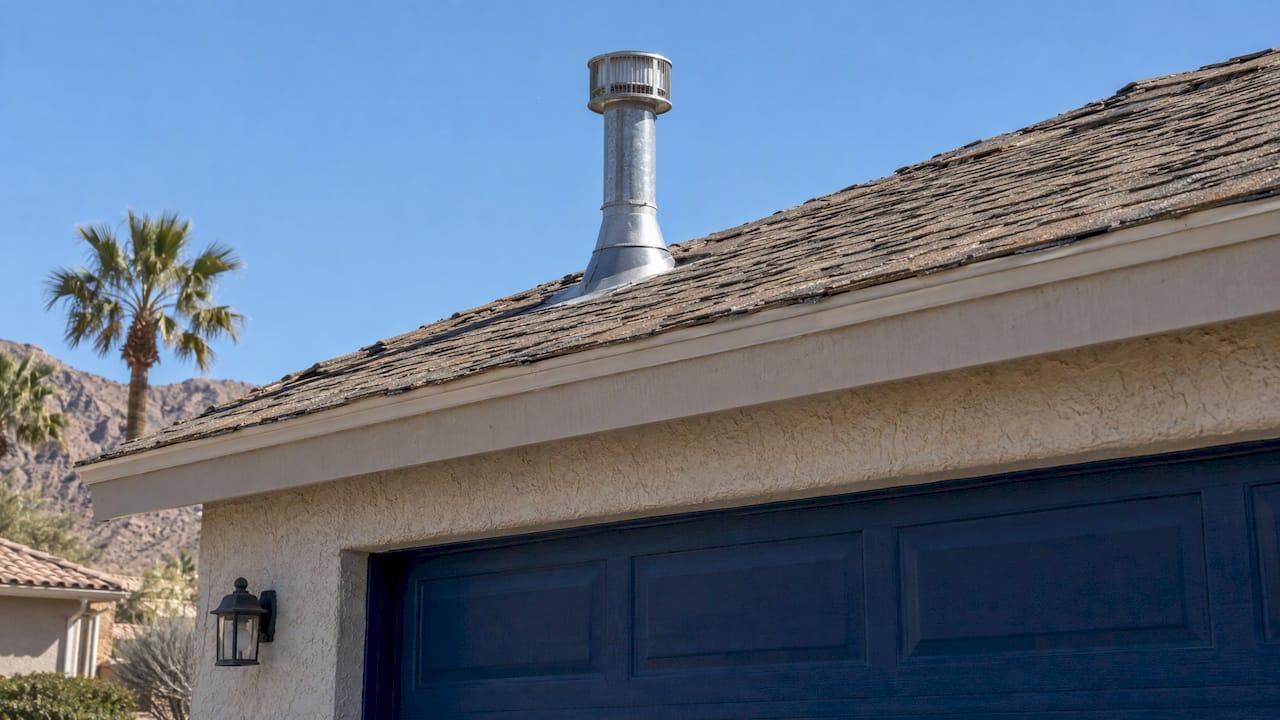
A gas water heater must send its exhaust outdoors through a listed vent that is the right size, rises correctly and ends in the right place. It also needs enough combustion air. Get any of these wrong and carbon monoxide can spill into your home or building. The details depend on the type of heater you own (atmospheric, power vent or direct vent), the vent manufacturer's instructions and the local code. In Bullhead City, Fort Mohave, Mohave Valley and Laughlin, a licensed plumber should set up or check the vent. We do that work every day, and we are available 24/7 for emergencies.
TL;DR
- Every gas water heater needs two things: air to burn the gas, and a vent that carries exhaust to the outdoors. The venting must follow the National Fuel Gas Code (ANSI Z223.1/NFPA 54) and local codes.
- Atmospheric heaters rely on natural draft and a mostly vertical vent. Power vent heaters use a fan and can run sideways. Direct vent heaters pull air from outside through a sealed pipe.
- Vent size comes from the heater's input rating, the vent height and the length of any horizontal run. It is never a guess or a match-the-old-pipe decision.
- Bullhead City uses the 2018 code cycle with local amendments, so pulling a permit and having the work inspected is part of a correct install.
- Smoke or scorch marks at the draft hood, rust on the vent, soot or a CO alarm all mean you should stop and call a plumber.
Table of Contents
- Why venting matters more than the heater itself
- Which type of vent does your water heater use?
- The core rules every gas vent has to meet
- Vent size: how it is really decided
- What to check on an existing vent
- Bullhead City code and permits
- Why a licensed plumber should handle the vent
- Our perspective
- Ready to have your venting checked or a heater installed?
- FAQ
- Sources
Why venting matters more than the heater itself
When a gas water heater burns fuel, it makes combustion gases. One of them is carbon monoxide (CO), which has no smell and no color. Properly venting these gases outside is what keeps them out of your living space.
Heater manufacturers say the same thing in their installation warnings. One tankless maker states that improper venting will result in excessive carbon monoxide levels that can lead to severe injury or death. It requires installation to local code and the latest NFPA 54, by a licensed professional, with working CO detectors outside each sleeping area.
That is why venting is not a place to save money or time. If you smell gas at any point, leave the building first and read our steps for what to do before technicians arrive.
Which type of vent does your water heater use?
Your first question is what kind of heater you have. The vent rules change with the type. American Water Heaters describes the three common gas setups this way.
| Type | How exhaust leaves | Where combustion air comes from | Needs electricity? |
|---|---|---|---|
| Atmospheric (natural draft) | Hot gases rise through a vertical or upward-sloping metal vent | The room around the heater | No |
| Power vent | A blower fan pushes exhaust out, vertically or horizontally | Usually the room | Yes, a nearby outlet |
| Direct vent | Coaxial or twin pipe through the side wall | Outside, through the same assembly | Often not for the basic type; power direct vent models do |
Atmospheric vent water heaters
This is the traditional tank heater. Exhaust rises by natural draft through a draft hood on top of the tank and into a metal vent. The vent can be dedicated to the water heater or shared with other atmospheric appliances. Because nothing pushes the gases, the vent must rise steadily, stay hot enough to pull and have a clear path to the outdoors.
That design is also why a blocked or leaking vent is dangerous. A blocked vent outlet sends vent gases from the appliances below the blockage out through the draft hood relief opening. That dumps them into the room while the appliances appear to run normally.
Power vent water heaters
A power vent heater adds an electric blower. That fan lets the vent run horizontally through a wall or over a longer distance. Because the exhaust is cooler, PVC pipe can be used for the vent. That makes power vent a common choice where there is no chimney or roof route. The trade-off is that the heater needs an outlet nearby and a fan that works.
Direct vent water heaters
Direct vent models are sealed combustion systems. They draw fresh air from outside and send exhaust outdoors through a dedicated vent assembly. That makes them a fit for tightly sealed homes or closets with little indoor air. If you are comparing atmospheric and power vent for a replacement, the real questions are: where can the vent go, how much combustion air does the space have, and is there power nearby?
The core rules every gas vent has to meet
Codes differ by city and change by edition, and the manufacturer's instructions are part of the code. The points below are drawn from the model codes, manufacturer bulletins and nearby city handouts. They show what an inspector looks for.
1. Follow the code and the manual
The venting system must comply with local and state codes and the current National Fuel Gas Code. The same bulletin says to keep the open areas around the draft hood clear and never to store objects on top of the water heater. So a crowded utility closet can be a venting problem before any pipe is touched.
2. Use the right materials
For an atmospheric heater, the vent pipe should be galvanized steel, not aluminum. Flex pipe and dryer vent pipe are prohibited. The draft hood that ships with the heater is the only one to use. It must not be reused from an old heater, cut or bent.
Single-wall metal pipe has tight limits. A city handout from Lake Havasu City, in the same Lake Mead region as Bullhead City, says that single-wall metal pipe may not be concealed or used as a vent. A handout from a California city also prohibits single-wall vents in attics. Double-wall Type B vent is the standard answer for most atmospheric installs.
3. Keep the vent rising
The vent should go up, not wander. Under the Uniform Plumbing Code, Type B and Type L vents run in a generally vertical direction. Offsets can't exceed 45 degrees, except that one 60-degree offset is allowed. Anything steeper than 45 degrees from vertical counts as horizontal. The total horizontal run, including the connector, can't exceed 75 percent of the vent's vertical height.
That matters at a real house. A vent with 8 feet of rise can have at most 6 feet of horizontal run. A water heater tucked far from the wall it needs to rise through may need to be relocated or changed to a power vent.
Lake Havasu City's handout gives a concrete connector limit: a 3-inch vent connector can run no more than 4 feet 6 inches horizontally, and Type B double-wall vent needs at least 5 feet of vertical height above the appliance.
4. Terminate the vent in the right place
Where the vent ends is as important as how it gets there. The 2024 International Code Council model text says a Type B or L gas vent must end at least 5 feet in vertical height above the highest connected draft hood or flue collar. Residential-type chimneys must extend at least 3 feet above the roof, and 2 feet above any part of a building within 10 feet. Roof terminations need flashing, a roof jack or thimble, and a listed cap.
A city handout describes a second rule for gas vents. Vents 12 inches or smaller and at least 8 feet from a vertical wall terminate by table above the roof. Larger vents, or ones closer than 8 feet to a wall, must be at least 2 feet above the highest point where they pass through the roof. They must also be 2 feet above any part of the building within 10 feet horizontally.
On the clearance side, the same handout requires 1 inch of vent clearance from combustible material for double-wall vent. Where the vent passes through insulated assemblies, the model code requires steel insulation shields.
5. Provide combustion air
An atmospheric heater in a closet or small room needs air to burn. The Los Alamitos handout requires two permanent openings: one within 12 inches of the top of the enclosure and one within 12 inches of the bottom. Each must be at least 100 square inches and open to the outdoors or to spaces that freely communicate with it. Direct vent heaters avoid the question because they bring their own outdoor air.

Vent size: how it is really decided
Homeowners often ask whether a 3-inch or 4-inch vent is right. The honest answer is that it depends on three things: the heater's input in Btu per hour, the total vent height and the length of any horizontal run.
Manufacturer sizing tables work like this. Take the total vent height and the lateral length, find the row for each, and read across to the first column whose capacity equals or exceeds the nameplate input. Then check that the vent size at the top of that column is at least as large as the heater's vent connector.
To show how much the numbers move, one published Type B table lists 31,000 Btu/h for a 3-inch vent and 55,000 for a 4-inch vent at 6 feet of height and a 2-foot connector rise. A typical 40,000 Btu/h tank heater therefore doesn't fit a short 3-inch vent in that table. The vent has to be sized for the actual layout, not by habit. When a heater shares a vent with a furnace, the combined load changes the answer again.

This is also why replacing a heater with a different model is not always a like-for-like swap. A new heater with a different input rating or connector size may need a different vent.
What to check on an existing vent
When an existing venting system is reused with a new heater, it should be inspected for obstructions, corrosion and proper installation, and repaired or replaced as needed. Here is what you can safely look at without opening anything:
- Rust, rot or gaps along the vent pipe and at the joints.
- Scorch marks or soot around the draft hood on top of the heater.
- Things stored against the heater that block the air around the draft hood.
- A sagging or disconnected pipe that no longer rises continuously.
- Your CO alarm. Install one outside each sleeping area and test it as the manufacturer directs.
If you see any of these, turn the heater's gas control to off if you can do it safely and call a plumber. Do not try to patch a flue with tape or sealant. If the alarm sounds, get everyone outside and call 911 first.
Commercial property managers should add the vent to the routine walk-through, especially after roofing work, remodeling or the addition of other gas appliances. Those can change draft conditions or block a termination. For wider code context, see our commercial plumbing code checklist for Arizona.
Bullhead City code and permits
Bullhead City approved the 2018 editions of the ICC codes and the 2017 NEC, with local amendments, on April 16, 2024. From July 1, 2026, commercial and multifamily plans must reference the 2024 International Fire Code. The city continues to use the 2018 cycle for the other I-Codes.
What that means for you: the model-code numbers above are a guide, not the final word. The local amendments and the heater's own listing decide your job. Pulling a permit and passing inspection is the way to confirm the venting is right. A water heater swap that skips the permit can leave you with an unverified vent and trouble when you sell or file an insurance claim.
Why a licensed plumber should handle the vent
Venting looks like simple pipe work. In practice it is a calculation (size, height, lateral) plus a code check (termination, clearances, combustion air) plus a safety test at the end. A mistake in any of them does not show up as a leak. It shows up as exhaust in the house.
That is the reason the manufacturer warnings above call for a licensed professional. It is also why we treat water heater replacement as one job that includes the vent, the gas connection and the safety check, not just a tank swap. Our team is made up of licensed plumbers who handle water heater repair and installation, gas line leak detection and repair, and emergency calls around the clock. If the heater also needs an expansion tank, our sizing guide explains it, and our guide on whether plumbers work on water heaters covers what to expect from a visit.
Our perspective
Most venting problems we are called about start the same way. Someone replaced a heater, or moved a closet wall, and the old vent was never rechecked against the new setup. The heater runs, the water is hot and nobody thinks about the exhaust until an alarm goes off.
We would rather you call us before that. Our licensed plumbers handle the heater, the vent and the gas connection as one job, so the exhaust path is part of the work from the start. That matters in Bullhead City, Fort Mohave, Mohave Valley and Laughlin, where homes and commercial buildings range from older construction to new builds, and no two utility rooms are alike.
If you are choosing between atmospheric and power vent, tell us where the heater sits and where a vent can reasonably go. We will tell you what fits your space. And if something looks wrong at 2 a.m., we are available 24/7.
JOHN
Ready to have your venting checked or a heater installed?
We install and repair gas and electric water heaters for homes and commercial properties in Bullhead City and the surrounding area, and we handle gas line leak detection and repair. Tell us what heater you have and what you are seeing, and we will take it from there. Book a water heater visit with USA Plumbing and Septic, or call us any hour for an emergency.

FAQ
How should a gas water heater be vented?
It needs enough combustion air and a listed vent that carries exhaust to the outdoors, sized for the heater and installed per its instructions and local code. Atmospheric heaters use a mostly vertical metal vent. Power vent and direct vent models can run through a wall. A licensed plumber should install or check it.
What is the difference between atmospheric and power vent water heaters?
An atmospheric heater relies on hot gases rising naturally through a vertical vent. A power vent heater uses an electric fan, so the vent can run horizontally or over longer distances and can use PVC. The fan means it needs a nearby electrical outlet.
What size vent does a gas water heater need?
It depends on the heater's input rating, the vent's total height and the length of any horizontal run. Manufacturers publish sizing tables, and the vent can never be smaller than the heater's vent connector. Because the numbers vary by layout, a plumber should size it for your install.
Do I need a permit to replace a gas water heater in Bullhead City?
The city uses the 2018 ICC code cycle with local amendments, and its building department handles permits. Check with the city or ask your plumber to confirm the requirements for your job. A permitted, inspected install is the clearest proof the venting was done right.
Can I reuse my old vent with a new water heater?
Only after it has been inspected for blockage, corrosion and correct installation, and checked against the new heater's size and type. Parts that fail inspection must be repaired or replaced. Do not reuse an old draft hood.
Sources
- A. O. Smith Technical Bulletin #187
- IntelliHot venting warning
- Appliance Parts Pros: how and why to vent a gas water heater
- American Water Heaters: vent options for gas water heaters
- Rheem: gas water heater types explained
- IAPMO Uniform Code Spotlight, Feb. 29, 2024
- Lake Havasu City: residential water heater installations
- City of Los Alamitos water heater handout
- ICC Chimneys and Vents, 2024 sample
- Bock engineering manual tables
- Type B vent capacity table
- Bullhead City building permit forms and information