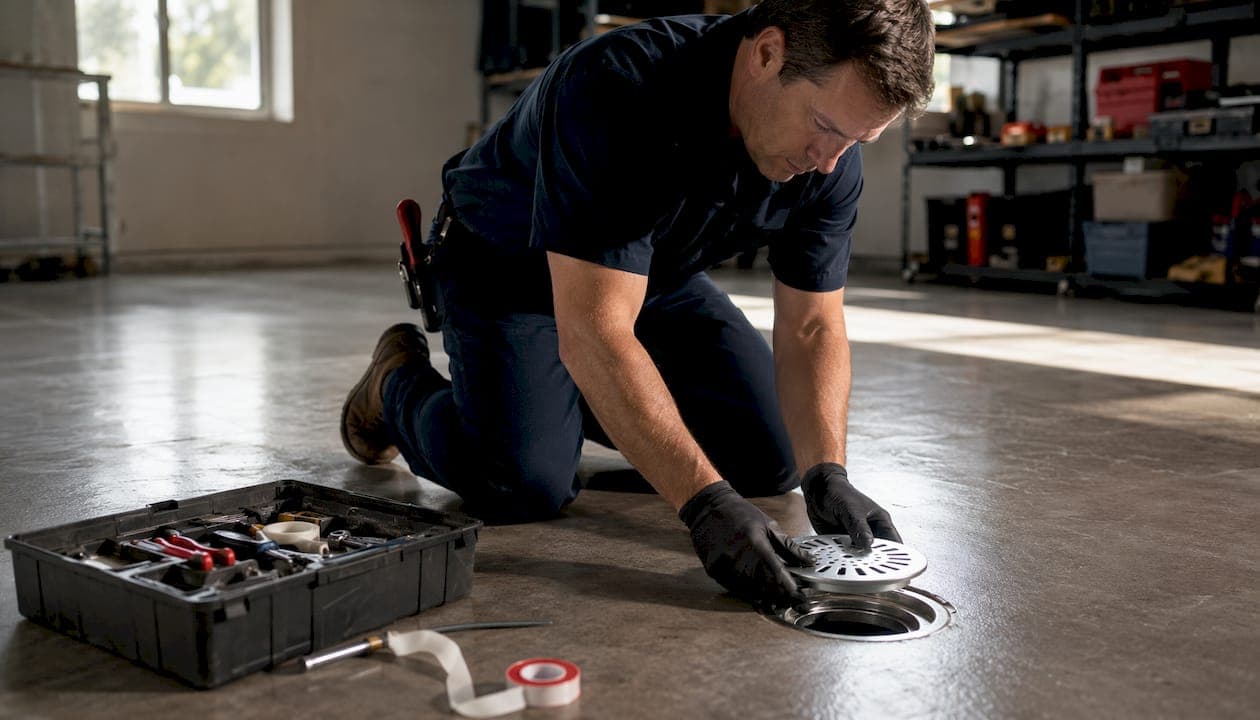
A floor drain is a plumbing fixture recessed into the floor with a floor-level strainer, designed to collect and safely dispose of wastewater from cleaning, spills, and leaks. According to the 2018 International Residential Code, a floor drain must have a minimum waste outlet diameter of 2 inches (51 mm) to meet plumbing standards. The HUD NSPIRE Standard defines it simply as an opening in the floor that drains water into the plumbing system, carrying it away from the built environment.
You'll find floor drains in:
- Basements near water heaters and washer/dryer units
- Garages to handle vehicle fluid spills and wash-down water
- Utility rooms and laundry areas where appliance leaks are common
- Commercial kitchens, locker rooms, and restrooms where frequent floor washing is routine
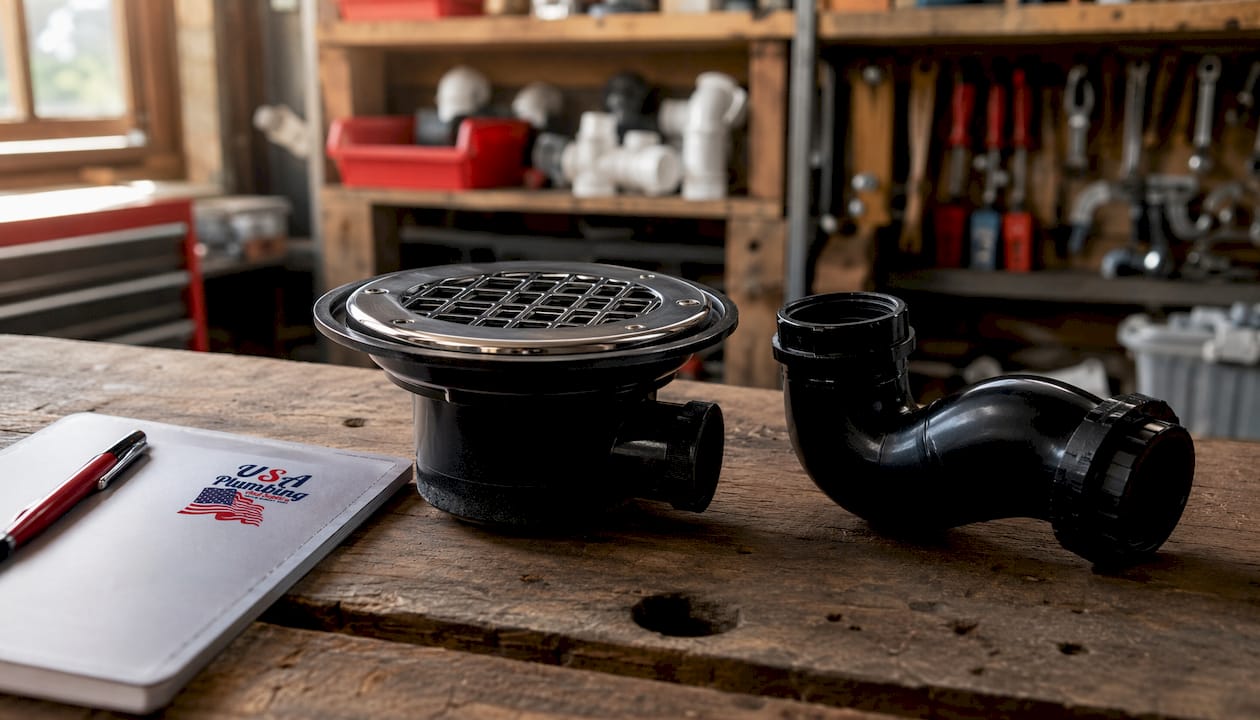
Every floor drain assembly shares three core components: a strainer or grate, a body recessed into the floor, and a trap that holds a water seal to block sewer gases from entering the building.
Table of Contents
- Why floor drains matter for your home or facility
- What types and materials of floor drains should you know about?
- How sizing and installation affect your floor drain's performance
- How to maintain your floor drain and fix common problems
- What experts say about floor drain safety and plumbing integration
- Usaplumbingseptic keeps your floor drains working right
- FAQ
- Key Takeaways
Why floor drains matter for your home or facility
Floor drains do more than move water. They actively protect your property, your health, and the people inside your building.
Standing water on a floor creates immediate slip-and-fall hazards. A properly installed drain removes that water before it becomes a liability, which is why floor drains are standard in both residential basements and industrial settings. Beyond safety, floor drains prevent moisture from sitting long enough to feed mold and mildew growth, protecting indoor air quality over time.
The benefits stack up quickly:
- Water damage prevention in basements, garages, and utility spaces
- Slip hazard reduction by eliminating standing water on hard floors
- Mold and mildew control by removing moisture before it accumulates
- Appliance leak protection near water heaters, washing machines, and HVAC units
- Easier floor cleaning in commercial kitchens and locker rooms
- Sewer gas blocking through the trap's water seal
Pro Tip: Don't wait for a flood to think about your floor drain. Running a gallon of water down the drain every few months keeps the trap seal intact and prevents sewer odors from creeping into your home.
Facility managers in commercial kitchens and food processing environments rely on floor drains to meet health code requirements. A drain that fails inspection can shut down operations fast.
What types and materials of floor drains should you know about?
Floor drains come in several configurations, each suited to a specific environment. Choosing the right type upfront saves you from early failure and expensive retrofits.
Common types:
- P-trap floor drains are the most common in residential settings, using a curved pipe section that holds water to block sewer gases
- Drum traps are older, larger traps sometimes found in older homes; they hold more water but are harder to clean
- Cleanout-equipped drains include a removable plug that lets you access the trap for inspection and clog removal
The material you choose affects how long the drain lasts and how well it holds up to its environment. Cast iron, PVC, and stainless steel are the three most common options.
| Material | Corrosion Resistance | Durability | Best For |
|---|---|---|---|
| Cast iron | High | Very long-lasting | Basements, older construction |
| PVC | Moderate | Good for light use | Residential, low-traffic areas |
| Stainless steel | Excellent | Long-lasting, easy to clean | Commercial kitchens, industrial floors |
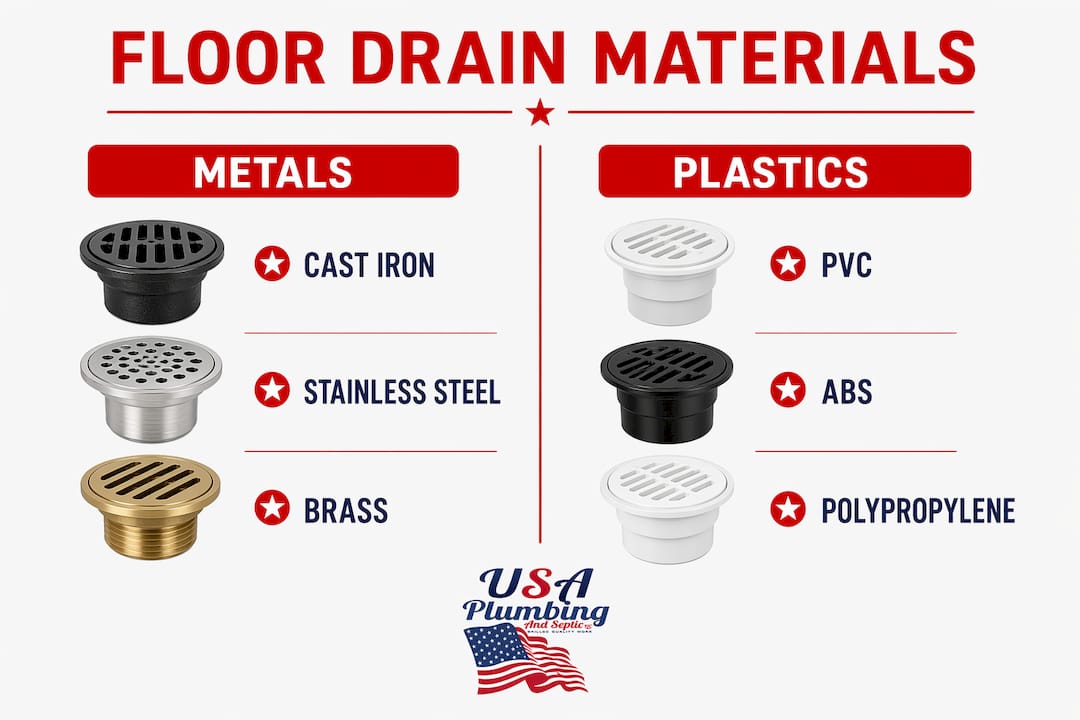
Stainless steel handles chemical exposure and heavy foot traffic better than PVC. Cast iron is reliable in residential basements but can rust if the coating is damaged. PVC costs less and installs easily, making it a practical choice for light residential applications.
How sizing and installation affect your floor drain's performance
Get the sizing wrong and the drain either backs up under heavy flow or sits oversized and collects debris. The minimum outlet size for a floor drain is 2 inches, per plumbing standards, but higher-volume applications often require a 3- or 4-inch outlet.
Floor drains come in a variety of diameters suited to different applications, with mid-range sizes often used in residential settings. A professional assessment is recommended for sizing based on expected liquid volume, particularly in commercial or industrial settings where improper placement causes early failure and cleaning difficulty.
Installation best practices:
- Slope the surrounding floor at least 1/8 inch per foot toward the drain to ensure water flows to it naturally
- Place the drain at the lowest point of the floor, away from high-traffic walking paths when possible
- Use the correct material for the environment, especially in areas with chemical exposure or heavy equipment
- Install with future access in mind; the cleanout plug should be reachable without moving fixtures
- Verify local code compliance before pouring concrete around the drain body
Pro Tip: Before the concrete sets, confirm the drain body is perfectly level with the finished floor surface. A drain that sits even slightly high or low will either collect debris around its rim or create a tripping hazard.
Connecting the drain to the right part of your building drain system matters too. Floor drains typically tie into the sanitary sewer line, not the storm drain, since they carry wastewater.
How to maintain your floor drain and fix common problems
Most floor drain problems come down to neglect. A little routine attention prevents the issues that turn into expensive service calls.
Routine maintenance checklist:
- Pour water down the drain every 1–3 months to refresh the trap seal
- Remove and clean the strainer or grate regularly to prevent debris buildup
- Inspect the cleanout plug to confirm it is present and seated properly
- Check for slow drainage, which signals a partial clog forming in the trap or downstream pipe
- Look for odors near the drain, which usually point to a dried trap or missing cleanout plug
Diagnosing a clog is straightforward once you know the method. Remove the cleanout plug from the drain body. If water flows out, the clog is in the trap itself. If no water flows, the blockage is downstream in the drain line. That distinction tells you whether a simple trap cleaning will fix it or whether you need to snake the line further.
Pro Tip: Replace the cleanout plug immediately after clearing any clog. A missing plug vents sewer gas directly into your building, and that gas includes hydrogen sulfide, which is both hazardous and foul-smelling.
For commercial drain maintenance, a scheduled inspection program beats reactive repairs every time. High-use environments like restaurant kitchens need monthly cleaning at minimum.
What experts say about floor drain safety and plumbing integration
The trap is the most critical and most misunderstood part of a floor drain assembly. It holds a water seal that physically blocks sewer gas from traveling back up through the drain opening. When that seal dries out or the cleanout plug goes missing, sewer odors enter the building through the drain.
Floor drains connect to the home's drain-waste-vent (DWV) system, which routes wastewater to the sanitary sewer or a sump pump pit. The vent portion of that system equalizes air pressure so water flows freely and trap seals stay intact. A floor drain without a proper vent connection can siphon its own trap dry, defeating the gas barrier entirely.
Key expert recommendations:
- Maintain the water seal by running water down infrequently used drains every few months
- Never leave a floor drain without its cleanout plug, even temporarily
- Choose stainless steel or cast iron in any environment with chemical exposure or heavy use
- Have a licensed plumber verify trap depth and vent connections during any new installation
- Inspect floor drains as part of any pre-purchase home inspection, since missing plugs are a common defect
A dried trap or missing cleanout plug is one of the most common causes of sewer odor complaints in both residential and commercial buildings. Addressing it takes minutes; ignoring it can mean months of odor problems and potential health concerns.
Understanding how floor drains fit into your residential plumbing system as a whole helps you catch problems early and make smarter decisions about installation and upgrades.
Usaplumbingseptic keeps your floor drains working right
When a floor drain backs up, smells, or needs a proper installation, you want a licensed plumber on the job fast, not a weekend guessing game. Usaplumbingseptic provides 24/7 residential and commercial plumbing services across Bullhead City, Fort Mohave, Mohave Valley, and Laughlin, with experienced plumbers equipped to handle everything from drain cleaning and trap repairs to full floor drain installations.

We go the extra mile on every job, whether that's a quick cleanout plug replacement or a complete drain system inspection before you finish a basement. Our team understands local plumbing codes and knows how to size and place drains correctly the first time. For homeowners and facility managers who need reliable answers and dependable service, Usaplumbingseptic is your trusted partner. Check out our plumbing essentials guide for Mohave County residents, or call us now to schedule service.
FAQ
What is the purpose of a floor drain?
A floor drain collects and removes wastewater from floor cleaning, spills, and leaks, preventing standing water that causes slip hazards, mold growth, and water damage.
Is a shower drain considered a floor drain?
A shower drain functions similarly but is classified separately. Floor drains are general-purpose fixtures installed in utility areas, garages, and basements, while shower drains are specific to bathing enclosures.
Are floor drains connected to the sewer?
Yes. Floor drains typically connect to the home's sanitary sewer line or a sump pump pit to safely carry wastewater away from the building.
What is the difference between a floor trap and a floor drain?
A floor drain is the complete fixture, including the grate, body, and trap. The floor trap refers specifically to the curved pipe section beneath the drain that holds a water seal to block sewer gases from entering the building.
Key Takeaways
A floor drain is a recessed plumbing fixture with a minimum 2-inch outlet that removes wastewater, blocks sewer gas, and protects your property from water damage.
| Point | Details |
|---|---|
| Minimum outlet size | Plumbing standards require at least a 2-inch waste outlet for all floor drains. |
| Trap seal is critical | The water seal in the trap blocks sewer gas; dried traps and missing plugs are the top cause of drain odors. |
| Material choice matters | Cast iron suits basements, stainless steel handles chemical and heavy-use environments, PVC works for light residential use. |
| Diagnose clogs by cleanout plug | Water flowing from the removed plug means a trap clog; no flow points to a downstream blockage. |
| Usaplumbingseptic for local service | Usaplumbingseptic provides 24/7 floor drain installation, cleaning, and repair across Bullhead City and the surrounding area. |