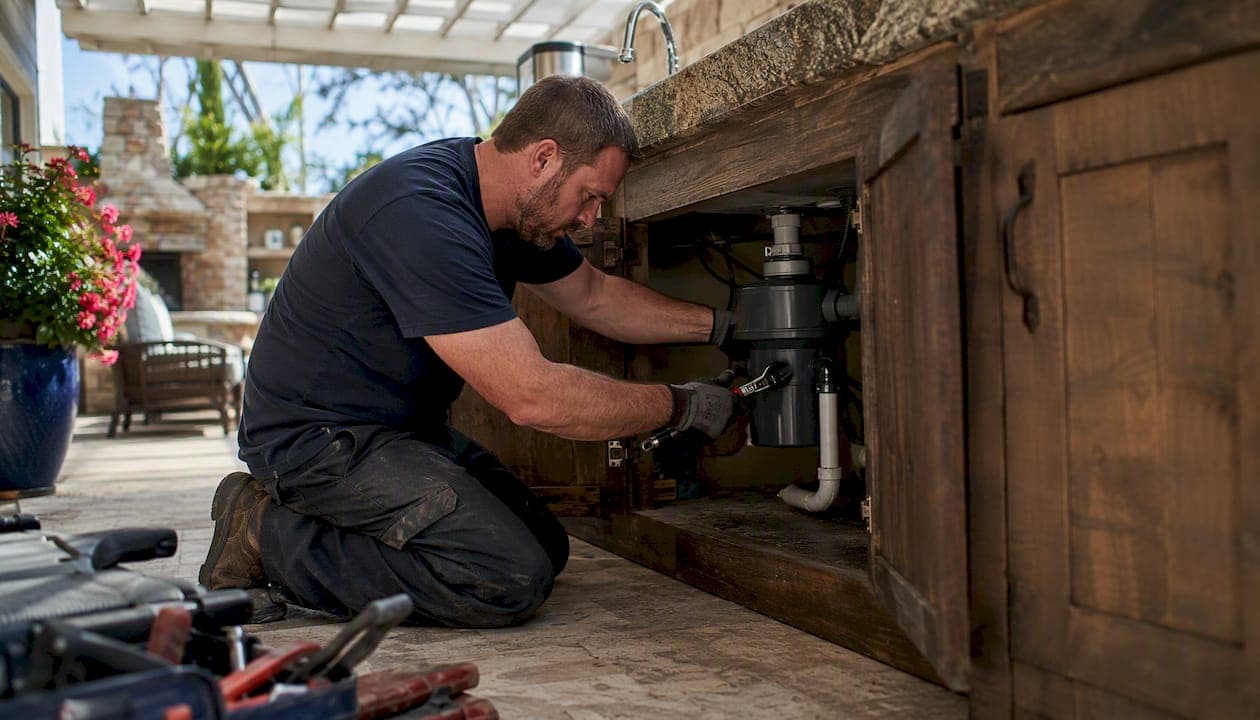
The most common garbage disposal problems fall into five categories: clogs and jams, power failures or humming, slow drainage, leaks, and foul odors. Before troubleshooting any of them, cut the power. Flip the wall switch off, unplug the unit under the sink, or shut off the circuit breaker, and keep your hands out of the unit no matter how tempting it is to reach in.
Here's what you're about to learn:
- How to tell a jam from a clog, and clear either one safely
- Why your disposal hums but won't spin, and what that means for the motor
- The leak sources you can fix yourself versus the ones that mean replacement
- When it's time to stop troubleshooting and call a licensed plumber
Pro Tip: Keep a 1/4" Allen wrench taped inside the cabinet under your sink. It's the single most useful tool for disposal problems, and you don't want to be hunting for one at 9 p.m. with a sink full of water.
Key Takeaways
Most common garbage disposal problems trace back to improper food waste, a jammed flywheel, or a downstream drain clog, and nearly all of them start with cutting the power before you touch anything.
| Point | Details |
|---|---|
| Cut power first | Switch off, unplug, or flip the breaker before inspecting or reaching near the unit. |
| Jams need the Allen wrench | Free a stuck flywheel through the bottom hex hole, then clear debris with tongs, never your hand. |
| Never use chemical drain cleaners | They damage internal seals and gaskets and often make the underlying problem worse. |
| Bottom leaks mean replacement | A leak from the housing itself signals seal failure, not a fixable gasket issue. |
| Expect 5 to 10 years of service | Frequent resets, burnt smells, or repeated jams past that range point toward replacing the unit. |
| Call Usaplumbingseptic for the rest | Licensed technicians in Bullhead City, Fort Mohave, Mohave Valley, and Laughlin handle repairs and replacements DIY can't. |
Table of Contents
- Safety Checklist Before You Touch the Disposal
- Common Garbage Disposal Problems: Clogs and Jammed Flywheels
- Garbage Disposal Not Working: Power, Humming, and Burnt Motors
- Slow Drains and Backups: Is It the Disposal or the Pipe?
- Garbage Disposal Leaks: Where to Look and What You Can Fix
- Foul Smells: Cleaning and Deodorizing Without Damaging the Unit
- How Long Does a Garbage Disposal Last?
- When to Stop Troubleshooting and Call a Professional
- Preventing Garbage Disposal Problems Before They Start
- Sources
- FAQ
Safety Checklist Before You Touch the Disposal
Every disposal repair starts the same way: kill the power. Switch it off at the wall, unplug the cord under the sink, and flip the breaker if you're not sure the switch alone cuts it. Don't trust the reset button to protect you. It resets an overload, but it does not guarantee the unit is de-energized.
- Confirm power is off at the switch, not just the reset button
- Unplug the under-sink cord if your unit has one
- Wear work gloves and use tongs or pliers, never your fingers
- Keep kids and pets away from the open drain while you work
Pro Tip: Run the disposal switch after you think you've cut power. If nothing happens, you're clear to start working.
Common Garbage Disposal Problems: Clogs and Jammed Flywheels
Clogs and jams are the most frequent reason homeowners call a plumber, and the usual culprits are fibrous vegetable peels, starchy pasta and rice, grease, bones, fruit pits, and the occasional dropped spoon, according to BobVila. Overloading the chamber with too much food at once causes the same jam even with safe ingredients.
A jam means the flywheel is physically stuck. A clog means water and debris are backed up in the drain line. Here's how to handle a jam:
- Cut power completely and confirm it at the switch.
- Insert the 1/4" Allen wrench into the hex hole on the underside of the unit.
- Work it back and forth until the flywheel turns freely.
- Remove any visible debris with tongs or needle-nose pliers, never your hand.
For a straight clog, try these before calling anyone, using tips from this quick-fixes guide for garbage disposals to troubleshoot effectively:
- Plunge the drain (block the other basin first if you have a double sink)
- Use a wet/dry vacuum on the drain opening for stubborn blockages
- Snake the branch line with a sink auger if plunging doesn't clear it
Never pour a chemical drain cleaner into a disposal. These products can eat away at rubber gaskets and seals, and the damage often costs more to fix than the clog itself, per Family Handyman.
Tools worth keeping on hand: a 1/4" Allen key, a plunger, a sink auger, needle-nose pliers, and a bucket with rags for the inevitable mess. Prevention beats repair here. Feed scraps in gradually with the water running, keep grease in a jar instead of the sink, and run ice cubes with rock salt through the unit weekly to scrape the blades clean.
Garbage Disposal Not Working: Power, Humming, and Burnt Motors
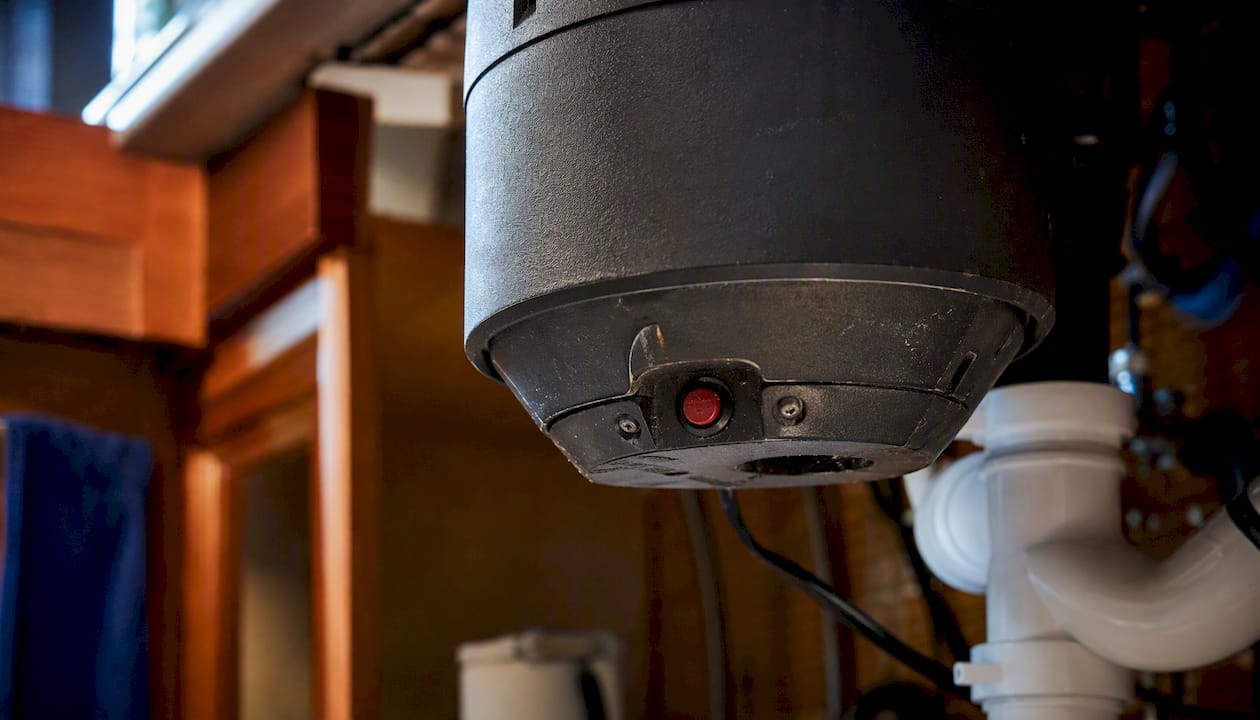
If your disposal not working question comes down to total silence, start simple. Confirm the unit is plugged in, press the red reset button on the bottom, and check both the wall switch wiring and the circuit breaker, as recommended by Martha Stewart.
A hum without spinning almost always means a jammed flywheel that's still receiving power. Cut power immediately and free it with the Allen wrench, the same way you'd clear a jam. Running a humming disposal for more than a few seconds risks burning out the motor.
Signs the motor itself is dead, not just jammed:
- A burning smell from under the sink
- The unit fails to restart even after a reset
- The breaker trips repeatedly every time you try it
Repeated reset-button presses are often an early warning that the motor is aging out, according to The Spruce, and replacement is usually cheaper than chasing an internal motor repair. If you see damaged wiring, smoke, or a breaker that won't stay reset, stop and call a licensed electrician or plumber.
Pro Tip: A single reset that holds is normal. Three resets in one week is a pattern, not a fluke, and it's telling you something.
Slow Drains and Backups: Is It the Disposal or the Pipe?
A sink that drains slowly isn't always a disposal problem. Run the water with the disposal switched off. If the sink still backs up, the issue is downstream in the P-trap or branch drain, not in the grinding chamber itself, according to Garbage Disposal Guru.
- Plunge the sink first, blocking the second basin if you have a double sink.
- If that fails, place a bucket under the trap and remove the P-trap to clear trapped debris.
- Still slow? Run a sink auger further down the branch line before assuming the disposal needs replacing.
Most slow-drain complaints that feel like disposal failures are actually P-trap or branch-line clogs, a pattern confirmed by ATAS Plumbing. If cleaning the trap doesn't hold, or you notice a sewer smell creeping back into the kitchen, that's a sign of a deeper blockage worth a professional drain cleaning rather than another round of plunging.
- Persistent backups after cleaning the trap
- A sewer smell instead of a food smell
- Multiple fixtures draining slowly at once, not just the kitchen sink
Garbage Disposal Leaks: Where to Look and What You Can Fix
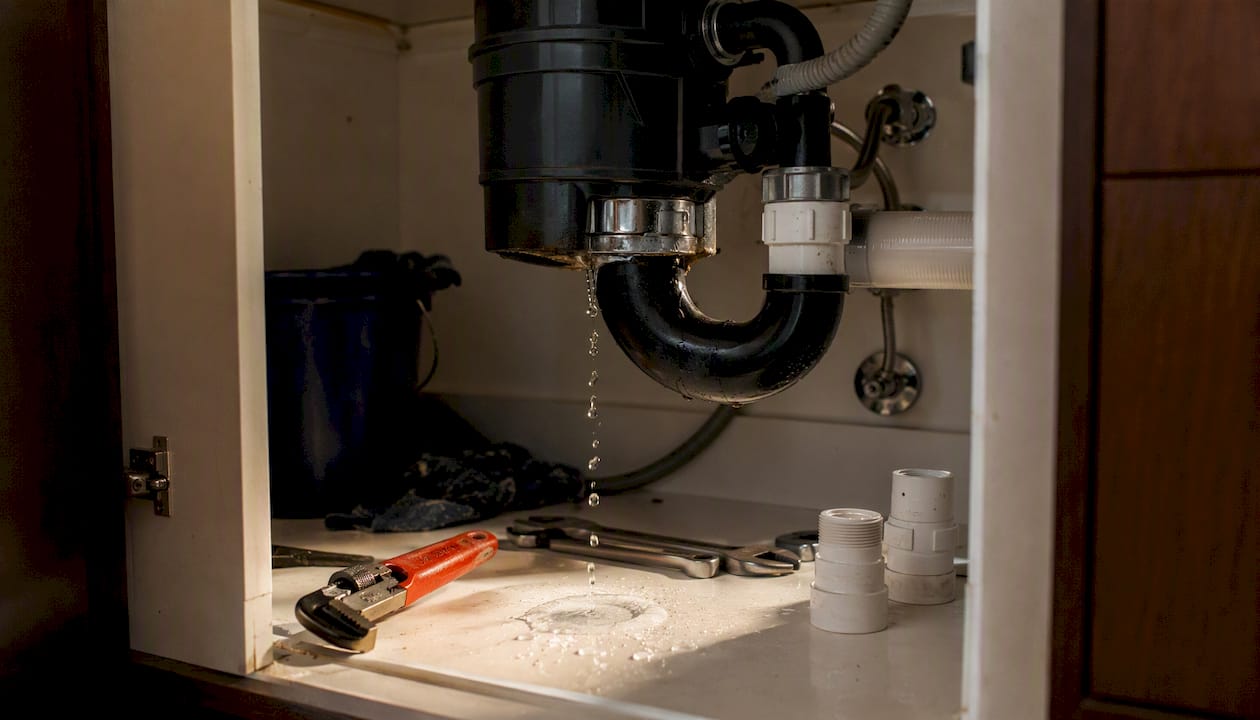
Leaks show up in four spots: the sink flange on top, the dishwasher hose connection, the discharge pipe fitting, and the disposal housing itself. Dry everything off, run water, and watch where the drops actually appear before you touch a wrench.
- Top or side leaks: Retighten the sink flange bolts, replace old plumber's putty, or tighten the hose clamp and discharge pipe fitting.
- Bottom leaks: This means the internal seal has failed. Don't keep running a unit leaking from the housing. It needs replacement, not a patch.
- Small-repair checklist: fresh plumber's putty at the flange, a new dishwasher hose clamp, and a new discharge gasket where the pipe meets the unit.
A leak from the bottom of the housing usually signals internal seal failure and calls for replacement rather than repair, according to ATAS Plumbing.
Pro Tip: Leaks that pool in the cabinet base can rot particleboard fast. Even a slow drip is worth fixing the same week you spot it, not the same month.
Foul Smells: Cleaning and Deodorizing Without Damaging the Unit
Trapped food particles, not the disposal itself, cause most odor complaints. A few safe methods clear the gunk without touching the seals or blades:
- Run ice cubes mixed with rock salt through the unit to scrape residue off the grinding chamber
- Grind small citrus peels (lemon, lime, orange) to cut grease smell and leave a fresh scent
- Pour baking soda down the drain, follow with vinegar, then flush with hot water
Skip the bleach and skip the chemical drain cleaner. Both can degrade rubber seals and gaskets over time, according to Family Handyman, turning a smell problem into a leak problem.
For routine freshening, grind a few citrus scraps and run cold water for 15 to 30 seconds after every use. A monthly ice-and-salt or baking-soda flush keeps odors from building back up, a habit Architectural Digest recommends as standard upkeep.
How Long Does a Garbage Disposal Last?
Most garbage disposals last 5 to 10 years with normal use. Reduced grinding power, frequent resets, a burnt smell, or a leak from the housing bottom are all signs the unit is nearing the end of that range.
Replacement makes more sense than repair when you're dealing with an internal leak, a burned-out motor, jams that keep recurring even after regular cleaning, or a unit that's simply outlived its expected years of service. At that point, continuing to patch a failing disposal often costs more in repeated service calls than swapping the unit outright.
- Internal (bottom) leak: replace, don't patch
- Burnt motor smell or repeated breaker trips: replace
- Unit older than 8 to 10 years with recurring problems: replace
When to Stop Troubleshooting and Call a Professional
Some symptoms mean it's time to put the wrench down. A burning electrical smell, visible smoke, a breaker that trips every time you flip the switch, a leak from the bottom of the unit, an object you can't remove safely, or water damage inside the cabinet all call for a professional, not another YouTube fix.
- Electrical smell, smoke, or repeated breaker trips: call a licensed electrician
- Leaks, persistent clogs, or drain backups: call a licensed plumber
- Anything involving standing water near outlets: stop immediately
If wiring looks frayed or an outlet feels warm, that's outside DIY territory. Check our emergency plumbing checklist for what to do while you wait for help. When you call, have the unit's model number, its age, the exact symptoms, and a quick rundown of what you've already tried. That saves the dispatcher time and gets a tech to your door faster.
Preventing Garbage Disposal Problems Before They Start
Most disposal repairs trace back to a handful of preventable habits. Run cold water while grinding and for 15 seconds after, feed food waste in gradually instead of dumping it all at once, and keep grease out of the drain entirely. Cold water keeps grease solid enough to grind and flush through instead of coating the chamber walls.
Monthly maintenance takes ten minutes and saves you a service call:
- Run an ice-and-salt cleaning cycle to scrape the grinding chamber
- Flush with baking soda and vinegar, then hot water
- Inspect hoses and clamps under the sink for wear or looseness
- Check for unusual vibration, which can mean a loosening mount
Simple habits like these prevent a large share of the failures that generate service calls in the first place, according to The Spruce. For a broader look at how your kitchen drain connects to the rest of your home's plumbing, see our guide on how residential plumbing systems work.
Pro Tip: If your disposal is between 5 and 8 years old and you've had more than one issue this year, it's worth having a plumber take a look before the next failure happens at 11 p.m. on a Sunday.
A Field Note on Disposal Calls
Field service calls follow a pattern: most jams trace back to the same handful of foods, and most panic calls could have waited until morning if the homeowner had just cut the power and checked the reset button first. Usaplumbingseptic sees this across every neighborhood it serves. Follow the safety steps here, but don't hesitate to call in when a fix isn't holding.
Need a Repair Instead of Another DIY Attempt?
Some disposal problems are a five-minute fix. Others, like a bottom-housing leak or a motor that trips the breaker every time, aren't worth chasing yourself. Usaplumbingseptic sends licensed technicians who carry replacement units on the truck, so a dead disposal doesn't mean days without a working sink.

We serve Bullhead City, Fort Mohave, Mohave Valley, and Laughlin with the same technicians handling both plumbing and septic calls, which means one visit can rule out a downstream sewer issue instead of just guessing at the disposal. If your slow drain turns out to be bigger than a P-trap clog, our team can trace it straight through to the sewer line without a second appointment. For anything electrical, leaking from the housing, or simply outside your comfort zone, book a service visit with USA Plumbing and Septic LLC and get a licensed tech out to your kitchen.
Sources
For model-specific instructions, check your manufacturer's support page, such as InSinkErator support. For more general guidance, BobVila, Family Handyman, The Spruce, and Garbage Disposal Guru all offer solid step-by-step references.
- This Is the Biggest Problem for Most Garbage Disposals | BobVila
- Why Your Garbage Disposal Isn't Working—And What You Can Do | Martha Stewart
- How to repair a garbage disposal | The Spruce
- Garbage Disposal Troubleshooting Guide | Garbage Disposal Guru
FAQ
What's the typical lifespan of a garbage disposal?
Most garbage disposals last 5 to 10 years. Frequent resets, a burnt smell, or reduced grinding power before that point are signs the motor is wearing out.
What can I pour down a garbage disposal to unclog it?
Try a plunger first, then ice cubes with rock salt to scrape the chamber, or baking soda followed by vinegar and hot water. Never use a chemical drain cleaner in a disposal.
How do you know if your garbage disposal motor is burnt out?
Look for a burning smell, a unit that won't restart even after pressing the reset button, and a breaker that trips every time you try to run it.
Can you still use your sink if the garbage disposal is not working?
Yes, but avoid running food waste or water with solids through it until it's fixed, since a jammed or dead unit can back up water into the sink basin. If the problem is electrical or the unit leaks, Usaplumbingseptic can get it repaired or replaced quickly.