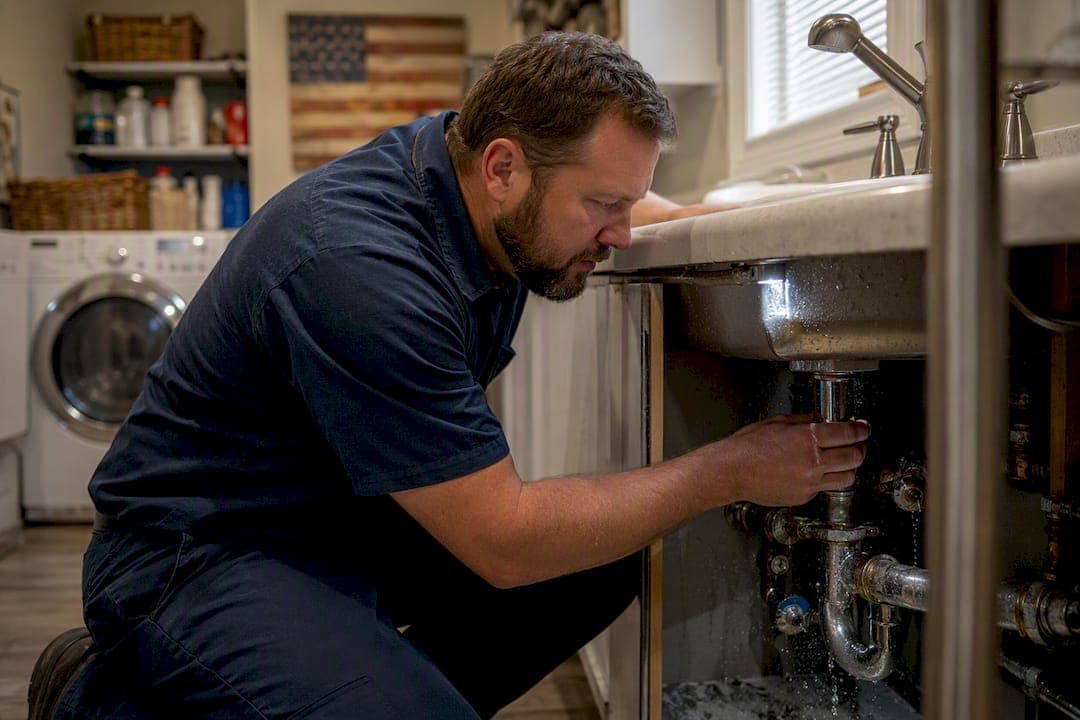
If your water suddenly tastes off, looks cloudy, or the pressure drops right after news of a water main break, stop using it and isolate the fixture immediately. That single move buys you time to figure out whether you have a real cross-connection problem before anyone drinks or cooks with contaminated water. The EPA's cross-connection control guidance treats this as a recurring public health issue precisely because plumbing changes constantly, and ASSE-listed backflow devices exist for exactly this reason: to physically stop dirty water from traveling backward into the pipes that feed your sink.
Watch for these warning signs:
- Unusual taste, smell, or color in tap water
- Sudden pressure loss following a reported water main break nearby
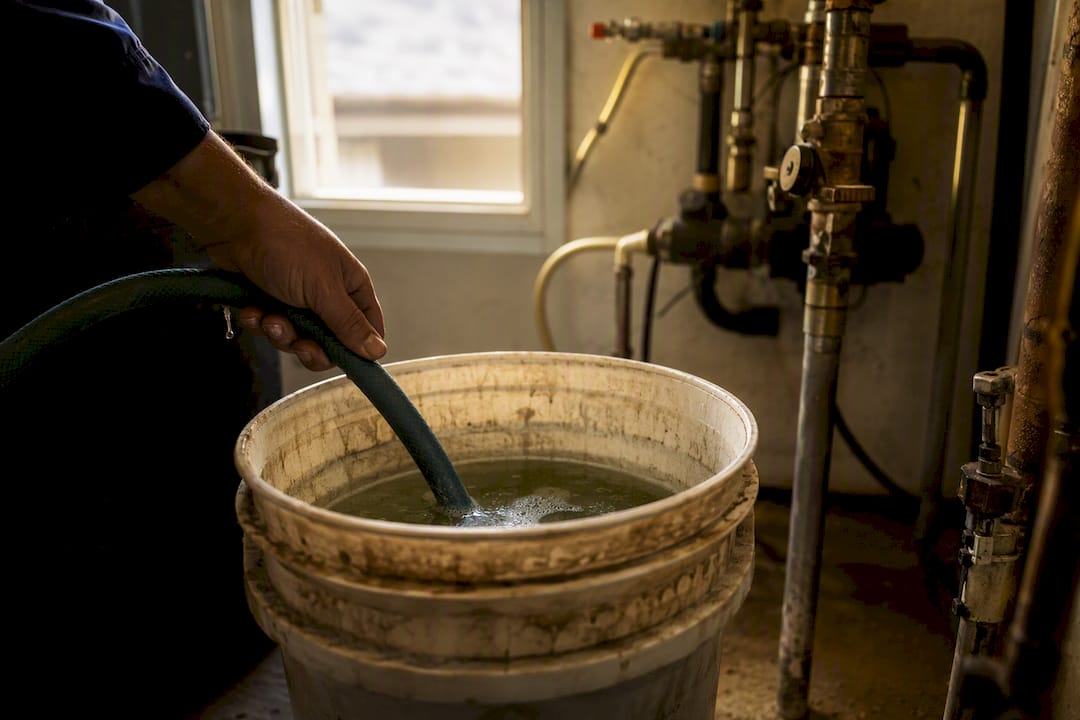
- A garden hose left submerged in a bucket, pool, or chemical sprayer
- Discoloration right after plumbing, irrigation, or boiler work
If any of these show up, shut off the fixture, avoid drinking or cooking with that water, and call a certified backflow tester or licensed plumber before using the line again.
Key Takeaways
Identifying a cross-connection plumbing risk means checking every point where potable and nonpotable water could meet, then matching the right device to the hazard level found there.
| Point | Details |
|---|---|
| Isolate first | Stop using suspected water and shut off the fixture before doing anything else. |
| Check hose bibs | Install ASSE-approved vacuum breakers on every outdoor faucet, the most common household risk. |
| Match device to hazard | Use RPZ assemblies for high-hazard connections like irrigation with chemicals or boiler feeds. |
| Test annually | Certified testers must inspect and document RPZ and detector assemblies on a regular schedule. |
| Call a professional | Usaplumbingseptic handles surveys, device installation, and certified testing across Bullhead City. |
Where to confirm jurisdiction-specific rules
- EPA cross-connection control guidance
- EPA backflow issue paper
- Backflow Authority survey process
- Backflow maintenance guide for property managers
Testing frequency, permit rules, and certification requirements vary by state and utility, so confirm specifics with your local water provider before scheduling work.
This article is general information, not a substitute for advice from a qualified doctor. Consult a qualified healthcare professional about your own circumstances before acting on anything here.
Table of Contents
- What Is a Cross-Connection, and How Does Backflow Happen?
- Where Do Cross-Connections Most Often Show Up?
- How Do You Inspect Your Property for Cross-Connections?
- Which Backflow Prevention Devices Actually Stop Contamination?
- What Should You Do Immediately After a Suspected Backflow Event?
- How Do Local Water Authorities Regulate Backflow Prevention?
- Book a Cross-Connection Survey With a Certified Team
- Sources
- FAQ
What Is a Cross-Connection, and How Does Backflow Happen?
A cross-connection is any physical link between your drinking water pipes and a source that isn't safe to drink, whether that's a garden hose in a chemical bucket, an irrigation line, or a boiler loop. It sounds simple, but it's the root cause behind nearly every plumbing contamination case a technician investigates.
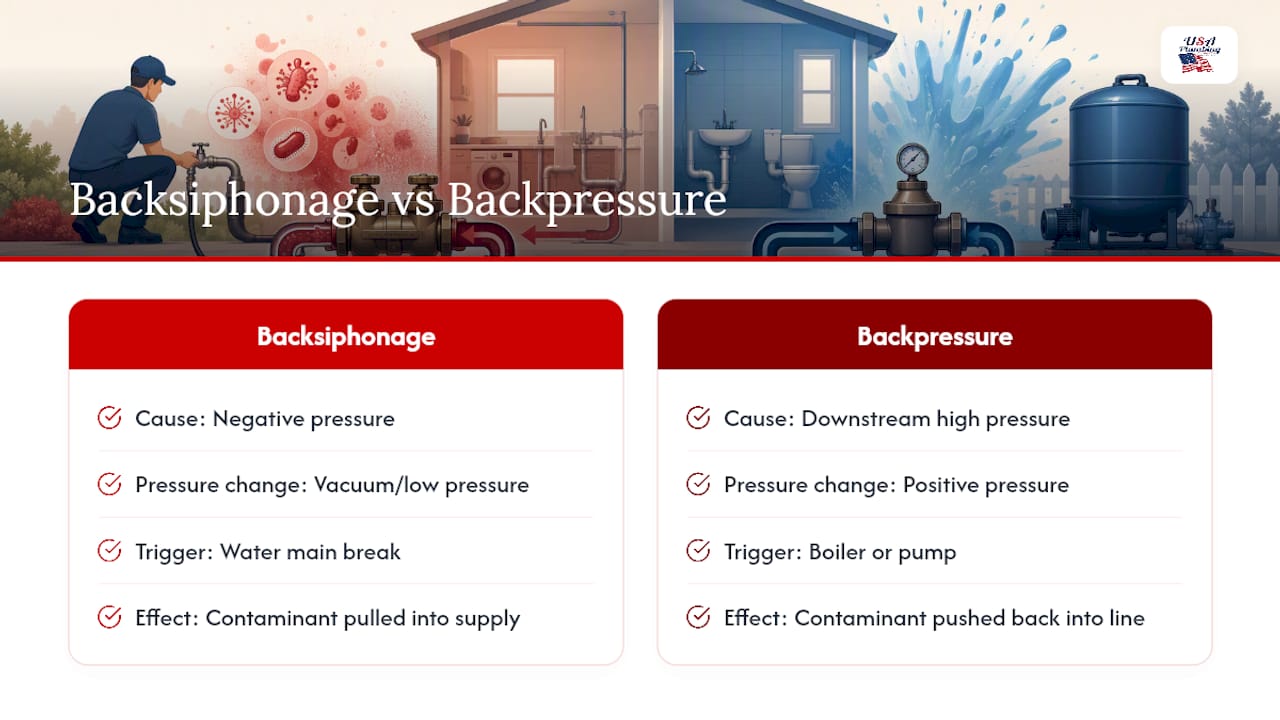
Backflow is what happens when water reverses direction through that connection and pushes contaminants back into the potable supply. The EPA's issue paper on cross-connections and backflow breaks this down into two distinct mechanisms, and knowing the difference matters because each one calls for a different fix.
- Backsiphonage happens during negative pressure events, like a water main break down the street or a fire department pulling heavy flow for hydrants. The sudden pressure drop can literally suck water backward out of a hose, tank, or fixture.
- Backpressure happens when something on the "dirty" side, like a boiler, irrigation pump, or elevated tank, runs at higher pressure than your incoming supply and pushes water the wrong way.
Backflow is hard to catch in the moment because most events last minutes, not hours, and leave no obvious trace once pressure normalizes. That's why prevention, not detection, is where homeowners should put their energy.
Pro Tip: The riskiest cross-connections are the ones you can't see. A boiler feed line without a reduced pressure zone assembly, or a hose left submerged in a pesticide sprayer while you run inside to answer the phone, creates backflow potential with zero visible warning.
Where Do Cross-Connections Most Often Show Up?
Most residential cross-connections cluster around a handful of predictable spots, and knowing them lets you scan your own property in about ten minutes.
- Hose bibs and outdoor faucets, especially with hoses left connected
- Irrigation and sprinkler systems, particularly any tied to fertilizer or pesticide injectors
- Water softener and filtration drain lines
- Boilers and hydronic heating systems
- Sump pumps with backup water-powered ejectors
- Dishwashers and laundry drain hoses without a proper air gap
- Any submerged inlet, meaning a hose or pipe end sitting below the water line in a tub, tank, or container
Small commercial and multi-family properties carry their own set of risks: booster pumps that raise pressure on one side of the system, fire suppression lines tied into antifreeze loops, food-service soda or brewing equipment, and cooling towers that recirculate treated water. A restaurant kitchen has its own plumbing quirks that raise the hazard tier well above what a typical single-family home deals with.
Hazard severity varies by location. An irrigation system feeding a lawn fertilizer injector is a high chemical hazard requiring a reduced pressure zone assembly, while a simple outdoor hose bib without any chemical exposure is a lower-hazard connection that a vacuum breaker can handle.
The garden hose is a common household cross-connection in America. Left running into a pool, a bucket of cleaning solution, or a kiddie pool, it turns your outdoor faucet into a direct path for contamination straight back into your kitchen tap.
The fix costs less than a takeout dinner: install an ASSE-approved hose-bibb vacuum breaker on every outdoor spigot, and never let a hose end sit submerged.
How Do You Inspect Your Property for Cross-Connections?
Walk your property in this order, since it mirrors how a certified surveyor actually works a site and catches the highest-risk areas first.
- Check outside faucets. Confirm every hose bib has an ASSE-approved vacuum breaker installed, and make sure no hose end is submerged in a container, pool, or sprayer.
- Trace the service entry. Follow your main shutoff and look for any tie-ins added after the original installation, especially anything feeding irrigation or outbuildings. A basic understanding of your home's plumbing layout makes this step much faster.
- Walk the interior distribution lines. Look at dishwashers, laundry connections, and water softener drains for proper air gaps rather than direct hard-piped connections.
- Inspect mechanical systems. Boilers, water heaters with chemical treatment, and any pump systems need scrutiny, since these commonly involve backpressure risk.
- Note any fire suppression tie-ins. Antifreeze loops or chemical additives in a sprinkler system demand a dedicated RPZ, no exceptions.
A few signs mean you should stop the DIY checklist and call a professional:
- Visible discoloration, chemical odor, or unusual taste in your water
- A confirmed water main break reported in your area recently
- Boiler chemical feed systems without a visible backflow assembly
- Irrigation systems tied to fertigation or pesticide injection
- Any mechanical tie-in you can't identify or trace confidently
A certified surveyor follows a phased process, checking the service entry, interior plumbing, mechanical systems, and fire protection in sequence, then hands you a written hazard report along with documented test records you'll want on file for future inspections or a home sale.
Which Backflow Prevention Devices Actually Stop Contamination?
Use a physical air gap wherever it's practical. That's the simplest, most reliable form of protection because there's no mechanical part that can fail. Where a hard plumbing connection exists, you need an ASSE or AWWA-approved mechanical assembly sized correctly for the hazard level.
- Hose-bibb vacuum breakers protect every outdoor faucet for a few dollars each and take five minutes to install.
- Atmospheric vacuum breakers (AVB) work for low-hazard, non-continuous pressure applications like some irrigation zones.
- Double check valve assemblies (DCVA) handle low to moderate hazard situations, such as fire lines without chemical additives.
- Reduced pressure zone assemblies (RPZ) are required for high-hazard connections, meaning anything involving chemicals, boilers, or fertigation, and they're built to protect against both backsiphonage and backpressure simultaneously.
RPZ and detector assemblies generally require testing on an annual basis by a state-certified tester, with results filed as recordkeeping documentation your local utility can request at any time. This is a requirement the Washington State Department of Health outlines for approved device types.
Irrigation backflow assemblies typically require a plumbing permit, and professional installation keeps your warranty intact and your system code compliant, something a look at Arizona's commercial plumbing code requirements makes clear for property managers juggling multiple buildings.
Pro Tip: Hose-bibb vacuum breakers and maintaining clear air gaps are jobs any homeowner can knock out in an afternoon. Anything involving an RPZ, a boiler tie-in, or annual certified testing belongs to a licensed plumber, full stop, since these devices affect code compliance and insurance coverage.
What Should You Do Immediately After a Suspected Backflow Event?
- Stop the pressure differential if you can. Shut off the fixture or system feeding the suspected cross-connection.
- Isolate or remove the connection entirely. Disconnect the hose, pump, or line causing the reversal.
- Stop drinking or cooking with the water until the line is tested and cleared.
Contact your local water utility or health department to report the suspected event, then call a certified backflow tester and a licensed plumber to inspect and repair the connection. For larger incidents affecting multiple properties, utilities often follow EPA public notification guidance to alert residents.
Your utility or certified tester will advise on flushing, sampling, or professional cleaning specific to what entered the line. Save every test report and repair record; you'll need that paper trail for future inspections, insurance claims, or a home sale.
How Do Local Water Authorities Regulate Backflow Prevention?
The Safe Drinking Water Act sets the federal baseline, but states carry out enforcement through local water utilities and cross-connection control programs, which is why requirements can look different from one county to the next.
- Surveys are commonly triggered by new construction, a change in property use, or a suspected contamination incident.
- Utilities generally require written hazard reports and documented test results on file, not just a verbal confirmation that "it's fine."
- Vetting a certified tester means confirming their state certification and asking for sample test records and repair logs from past jobs.
- Costs and timelines for surveys, device installation, and annual testing vary by property size and hazard tier, so property managers should budget for recurring testing, not a one-time expense.
Programs with structured inspection and recordkeeping requirements consistently prevent contamination events before they happen, which costs far less than responding to one after the fact. Confirming your local rules with your water utility before scheduling work saves you from a failed inspection or a wasted permit fee. For Arizona property owners specifically, understanding how local codes intersect with state requirements helps you avoid surprises when a permit application lands on a reviewer's desk.
Why proactive cross-connection control beats waiting for a problem
I've watched too many property owners treat backflow prevention as an afterthought, something they deal with only after a utility flags it or a tenant complains about brown water. That's backward. Every renovation, every new water softener, every boiler swap is a chance to introduce a fresh cross-connection nobody planned for. USA Plumbing and Septic LLC handles cross-connection inspections and backflow prevention installations across the Bullhead City area, and the pattern is consistent: the properties that schedule testing on a calendar, not just when something looks wrong, are the ones that never end up isolating a fixture in a panic at 9 p.m. We install the devices, run the certified tests, and file the reports with local utilities so you're not chasing paperwork after the fact.
Book a Cross-Connection Survey With a Certified Team
Usaplumbingseptic runs on-site cross-connection surveys, installs ASSE and AWWA-approved backflow prevention devices, and handles certified annual testing with reports filed directly to your local utility, so you're never stuck chasing documentation yourself.
Whether you spotted a submerged hose in the backyard or your property manager just flagged a boiler tie-in with no visible protection, our licensed plumbers can inspect the connection, install the right device for the hazard level, and pull the permit if the job needs one. We handle emergency calls around the clock and schedule routine surveys for landlords and commercial properties throughout Bullhead City, Fort Mohave, Mohave Valley, and Laughlin. If a minor leak or aging fixture is part of the picture, our guide on what minor water leaks actually cost you is worth a look too. Ready to get a survey on the calendar? Schedule your plumbing service with USA Plumbing and Septic LLC and get a certified technician out to your property.
Sources
- Cross-Connection Control Best Practices Guide
- Cross-Connections and Backflow — EPA issue paper
- Cross-Connection Survey: What It Is and What to Expect | Backflow Authority
FAQ
What is the difference between backsiphonage and backpressure?
Backsiphonage happens when negative pressure, like a water main break, pulls contaminated water backward into the supply, while backpressure occurs when a downstream source, such as a boiler or pump, pushes water back at higher pressure than the incoming line.
How do I know if my home has a cross-connection?
Walk your property checking hose bibs, irrigation lines, boilers, and drain connections for missing air gaps or vacuum breakers, and call a certified surveyor if you find unidentified mechanical tie-ins or chemical feed systems.
How often do backflow prevention devices need testing?
RPZ assemblies and detector check valves generally require annual testing by a state-certified tester, with results filed as part of your recordkeeping and often reported to your local water utility.
Can Usaplumbingseptic install and test backflow prevention devices?
Yes, USA Plumbing and Septic LLC installs ASSE and AWWA-approved backflow devices, performs certified testing, and files reports with local utilities for homeowners and commercial properties in the Bullhead City area.
What should I do if I suspect contaminated water in my home?
Stop using the water immediately, isolate the affected fixture, and contact a certified backflow tester or licensed plumber before resuming normal use.