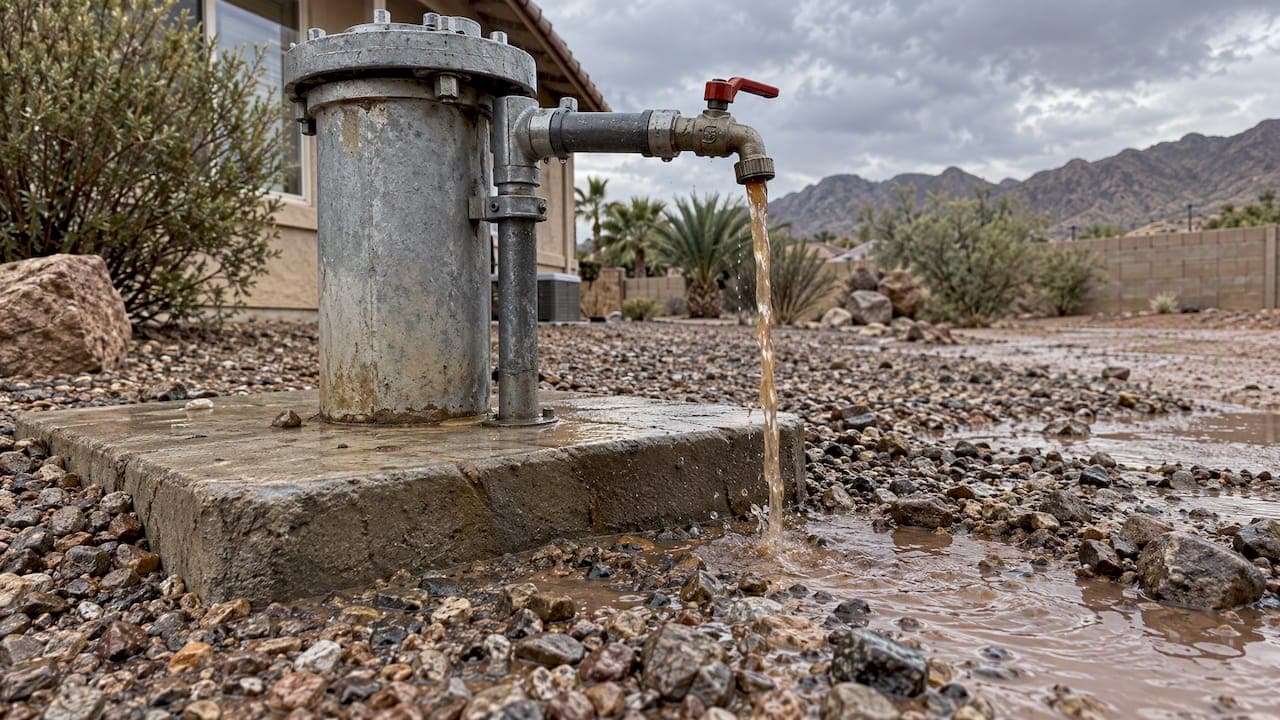
Brown well water is a symptom, not a diagnosis. Most often it comes from iron, manganese, stirred-up sediment, tannins or rusting pipes. Sometimes it means surface water is getting into your well, and that is the case you must not ignore. Color alone cannot tell you whether the water is safe. A lab test can. Below we explain how to narrow down the cause, what to do in the first hour, and when to call a licensed plumber.
TL;DR
- Brown, yellow or reddish water often means iron. Dark brown or black staining often points to manganese. Test to confirm either one.
- Brown water after a flood, a heavy storm or a sudden change in the well is a contamination warning. Stop drinking it and get it tested.
- Sediment can clear within hours. Iron and manganese do not clear on their own and need treatment.
- Use a certified laboratory and follow its sampling instructions exactly. In Arizona, the state health department lets you search licensed labs.
- If the color is in the hot water only, or only at one tap, the problem may be your water heater or plumbing, not the well.
Table of Contents
- What to do first when well water turns brown
- What causes brown well water
- Why well water turns brown after rain
- How to tell which cause you have
- Is brown well water safe to drink, shower in or use for laundry?
- How long does brown well water take to clear?
- How to test brown well water
- Fixes that match the cause
- Our perspective: why we start at the pump and tank
- When to call a plumber
- Get brown well water looked at in Bullhead City
- FAQ
- Sources
What to do first when well water turns brown
Stay calm and work through these steps in order.
- Stop using the water for drinking and cooking. Use bottled water until you know the cause. This costs you little and removes the risk.
- Run a cold tap for several minutes. Note whether the color fades, stays the same or gets worse. Fading quickly often suggests sediment or loose rust in the lines.
- Check hot and cold separately. Brown hot water with clear cold water points to the water heater tank or hot-side pipes.
- Check more than one tap. One discolored fixture suggests a local plumbing problem. Every tap suggests the well, the pump, the pressure tank or the main line.
- Think about what changed. Heavy rain, a power outage, a pump repair, a flood, nearby digging or a new well all matter.
- Test the water. The EPA advises private well owners to test right away when they notice a change in water quality. It also suggests contacting your local or state health department about testing and locally common contaminants, especially after flooding or major land disturbance.
If you are in the Bullhead City, Fort Mohave, Mohave Valley or Laughlin area and want a plumber to look at the pump, tank and lines, call us. We work on water well equipment, water lines, water heaters and filtration systems for homes and businesses.
What causes brown well water
Several things can turn the same well brown. Here are the common ones, from most to least frequent in our experience of well and plumbing calls.
Iron
Iron is the usual suspect. Brown, yellow or reddish water may indicate iron, and extension specialists recommend testing for it to investigate. Iron dissolved in groundwater is clear when it leaves the ground. Once it meets air, it oxidizes and forms rust-colored particles. That is why water can look clear in a glass for a minute and then turn cloudy and orange.
Manganese
Manganese behaves like iron but looks darker. A university extension fact sheet explains that red-brown discoloration is often iron, while black or dark stains can be manganese. Both are naturally occurring minerals that oxidize on exposure to air and form visible particles. The two often show up together, so test for both.
Iron bacteria
Iron bacteria feed on iron and leave slime behind. Penn State Extension notes that they can cause an orange or opaque gelatinous film or strands on toilets and sinks, with a musty odor. If you lift your toilet tank lid and find orange slime, that is a strong clue.

Sediment and sand
A failing pump, a lowered water level or a damaged well screen can pull silt and sand into the system. The water looks muddy or tan rather than rusty, and it often settles to the bottom of a clear glass. Sediment can also mean pump wear. If it keeps returning, read our guide to well pump failure signs.
Tannins
Tannins come from decaying plant matter in the soil. They give water a tea-like yellow-brown tint, usually without much sediment. They are more common in shallow wells in wet, wooded ground than in the Mojave Desert, but they can appear.
Corroding pipes and tanks
Old galvanized steel pipe, a rusting pressure tank or a water heater at the end of its life can all release rust. The telltale sign is that the color shows up at certain fixtures or only in hot water. Copper pipes can also fail. If you have had leaks, our article on pinhole leaks in copper explains when to repair and when to repipe.
Surface water getting in
This is the cause that matters most for safety. Cracked casing, a loose or damaged well cap, or poor construction can let runoff reach the well. Brown water that appears suddenly after a storm or flood deserves a test for bacteria, not just a filter.
Why well water turns brown after rain
Rain changes what moves through the ground and what happens around the wellhead. Three things can happen.
- Runoff enters the well. If the casing is cracked, the cap is loose or the wellhead sits in a low spot, muddy water can flow in.
- Water levels and pressure shift. A quick rise or drop in the water table can stir sediment and loosen mineral deposits.
- Soil filtration is overwhelmed. Water that normally takes weeks to reach your well may arrive in hours, bringing particles and microbes.
A state health department in the research we reviewed recommends testing after a heavy rainstorm because it can reveal improper well construction or poor soil filtration. If your well was actually flooded, the EPA is clear: do not drink or wash with the water, and have a well or pump contractor clean and disinfect the well before you turn on the pump.
In our area, brown water after monsoon storms and flash flooding is something we hear about from callers in the Bullhead City and Mohave Valley area. Washes and low ground fill fast. If a wash ran near your wellhead, treat the water as suspect until a lab says otherwise. Our guide to desert climate plumbing challenges covers other ways our climate strains home systems.
How to tell which cause you have
You can learn a lot at the kitchen sink before you spend a dollar.
| What you see | Likely cause | Next step |
|---|---|---|
| Clear at first, turns orange or brown on standing | Dissolved iron oxidizing | Lab test for iron and manganese |
| Dark brown to black stains or particles | Manganese | Lab test for manganese |
| Orange slime in toilet tank, musty smell | Iron bacteria | Bacteria test, then disinfection plan |
| Muddy, settles to the bottom of a glass | Sediment, possible pump or screen problem | Pump and well inspection |
| Tea-colored, little sediment | Tannins | Water test, then targeted filtration |
| Brown in hot water only | Water heater tank or hot-side pipes | Flush and inspect the heater |
| One tap only | Local fixture or pipe | Plumber inspection |
| Sudden brown after storm or flood | Surface water intrusion | Stop use, test for bacteria, inspect the well |
A simple glass test helps. Fill a clear glass, set it on the counter and watch for 30 minutes. Particles that sink point to sediment. Water that darkens points to oxidizing iron. Take a photo at the start and the end so you can show a lab or a plumber.
For a broader look at color coming from the tap, including city-supplied homes, see our article on brown water from your faucet.
Is brown well water safe to drink, shower in or use for laundry?
The color does not decide safety. Iron and manganese alone are mainly a nuisance for taste, staining and plumbing in many cases, but the same brown color can also come from bacteria or runoff that can make you sick. You cannot see the difference.
A practical way to think about it:
- Drinking and cooking: Do not drink it until you know the cause. This matters most for infants, older adults, pregnant women and anyone with a weak immune system. After a flood or sudden change, assume it is unsafe.
- Showering and bathing: If the cause is plausibly iron, sediment or tannins and there has been no flood or storm event, bathing is generally considered low risk. If bacteria or surface water are possible, avoid it, especially with open cuts, and ask your health department or doctor.
- Laundry: Brown water stains. Iron can leave orange marks on white clothes, and bleach can make iron stains permanent. Wait for clear water or use a laundromat for important loads.
- Appliances: Sediment and iron can clog aerators, shower heads, dishwashers and water heater elements.
If anyone in the home has stomach illness after drinking brown water, see a doctor and tell them the water comes from a private well.
How long does brown well water take to clear?
It depends on the cause. These are typical patterns, not guarantees.
- Sediment after a pump restart or a power outage: often clears after running the outdoor spigot for a while, sometimes within hours.
- Pipe rust after plumbing work or a pressure change: often clears after flushing, sometimes a day or so.
- Iron, manganese and tannins: they will not go away by waiting. They return unless you treat the water.
- Iron bacteria: they regrow until the well and plumbing are disinfected, and may need repeat treatment.
- Flood or surface water intrusion: clearing the color is not the finish line. The well must be disinfected and a lab must confirm the water is safe.
A good rule: if the water is still brown after running a cold tap for 15 to 20 minutes, or the color returns within a day, stop waiting. Get a test and call a pro. Run water from an outdoor hose bib first, so you do not push sediment through your indoor fixtures and water heater.
How to test brown well water
The EPA's household well guidance says to use a certified laboratory, ask for specific sampling instructions and follow them carefully, because sampling for different substances needs different techniques. Do not collect from a hose or a tap with a screen or aerator unless the lab says so. Use their bottles.
In Arizona, you can search ADHS-licensed environmental laboratories, including those that run safe-drinking-water methods. Call the lab first and tell them the water is brown. Ask which panel fits.
A sensible panel for brown water includes:
- Iron and manganese
- Total coliform bacteria and E. coli
- pH and total dissolved solids
- Nitrate
- Tannins or color, if the water looks tea-colored
The EPA's baseline for private wells is to test every year for coliform bacteria, nitrates, total dissolved solids and pH, and to test for other contaminants if you suspect them. Well owners carry the responsibility for the safety of their own supply, as extension specialists point out, so annual testing makes sense even when the water looks fine. Routine results also build a record that helps you spot trends later.
For the price of lab work and where to look first, see our guide to well water testing costs. For a general overview of routine testing and what accredited labs check, this well water analysis guide is a good companion.
Fixes that match the cause
Treatment should follow the test result. Guessing wastes money. Extension guidance notes that iron and manganese may be addressed with filters or softeners, while bacteria may require shock chlorination or continuous disinfection.
| Confirmed cause | Typical fix | Who does the work |
|---|---|---|
| Iron or manganese | Iron filter or properly sized softener | Plumber or water treatment installer |
| Iron bacteria | Well disinfection, then ongoing disinfection if needed | Well or pump contractor |
| Sediment | Sediment filter, pump and screen inspection | Plumber or well contractor |
| Tannins | Targeted filtration | Water treatment installer |
| Corroded plumbing | Flush, replace sections or repipe | Licensed plumber |
| Old water heater tank | Flush or replace tank | Licensed plumber |
| Surface water intrusion | Repair casing or cap, disinfect, retest | Well contractor, then lab retest |
A few cautions we give customers:
- Do not pour bleach into the well on a guess. Disinfection has a right dose and a right procedure. Chlorine also bleaches out iron stains in ways that can fool you. Our article on sulfur smell in hot water explains why bleach only buys time.
- Do not buy a filter before you have a test. A filter sized for iron will not fix bacteria, and a softener may be overwhelmed by high iron.
- Watch for hardness too. Many wells in our region also have hard water, which causes scale and shortens appliance life. See hard water plumbing problems.
- Retest after any treatment. The proof is a clean lab result, not clear-looking water.
Our perspective: why we start at the pump and tank
When a homeowner calls us about brown water, the first thing we want to know is where the color shows up. Hot only, one tap, every tap, only after a storm. That one question saves hours and often saves money.
We work on the whole system: the pump, the pressure tank, the water lines, the water heater and the filtration or softening equipment. Brown water is rarely one problem in isolation. A failing pump pulls sediment. A tired pressure tank cycles hard and stirs it up. An old tank heater adds its own rust. If you treat only the color, the cause keeps working in the background.

We also keep the order simple. Test first. Fix the cause. Add treatment sized to the result. Retest. We go the extra mile to explain each step, because you should know what you are paying for. We do not recommend bleach shortcuts, and we will tell you when the right call is a lab or a well contractor before a plumber. Short cycling and low pressure often travel with discoloration, so we also check for them. Our guides to well pump short cycling and low well water pressure show what to look at before you call.
And when water is brown after a flood or storm, we say the same thing every time: stop drinking it, get it tested, and do not turn the pump back on until the well is inspected and disinfected.
— JOHN
When to call a plumber
Call a licensed plumber promptly if:
- The water is brown at every tap and stays that way after flushing
- You see sand or grit in the water, or filters clog fast
- The pump runs constantly, cycles on and off, or pressure drops
- Brown water shows up in hot water only
- You find slime in the toilet tank or a musty smell
- You have a rental or a business and tenants or customers are affected
Call a well contractor and your health department first if the well was flooded or if a lab reports bacteria.
Get brown well water looked at in Bullhead City
We serve homes and businesses in Bullhead City, Fort Mohave, Mohave Valley and Laughlin, with 24/7 emergency service. Our work covers water well equipment repair and replacement, water line repair, water heater repair and installation, and water softening and filtration repair and replacement. Call us or book a visit and tell us where the brown water shows up. We will help you work out whether it is the well, the pump, the lines or the heater. We also serve Kingman and Golden Valley.
FAQ
What do I do if my well water is brown?
Stop drinking and cooking with it and switch to bottled water. Check whether the color is in hot water, one tap or every tap, and think about recent storms, flooding or pump work. Then have the water tested by a certified lab and call a plumber if the problem is in the pump, tank or lines.
Is it safe to shower in brown well water?
It depends on the cause. If the color is likely iron, sediment or tannins and there was no flood, showering is generally low risk, though it can stain skin, hair and fixtures. If bacteria or surface water are possible, or you have open wounds, wait for lab results and ask your health department.
Why is my well water brown after rain?
Rain can push runoff into a poorly sealed well, stir up sediment and speed water through soil that usually filters it. Treat it as a possible contamination event. Test for bacteria and have the casing, cap and wellhead inspected.
How long does it take for brown well water to clear?
Sediment often clears in hours after flushing an outdoor spigot. Iron, manganese, tannins and bacteria do not clear on their own. If the water is still brown after 15 to 20 minutes of running, or the color returns, get it tested.
Sources
- Protect Your Home's Water, US EPA
- What's Wrong With My Water? Choosing the Right Test, NDSU Extension
- Common Drinking Water Problems and Solutions, Penn State Extension
- Iron and Manganese in Private Drinking Water Wells, UMass Amherst
- Household Wells guidance, US EPA
- Protect Your Family: Test Your Well's Water Quality, Rhode Island HEALTH via EPA
- Arizona certified laboratory search, ADHS