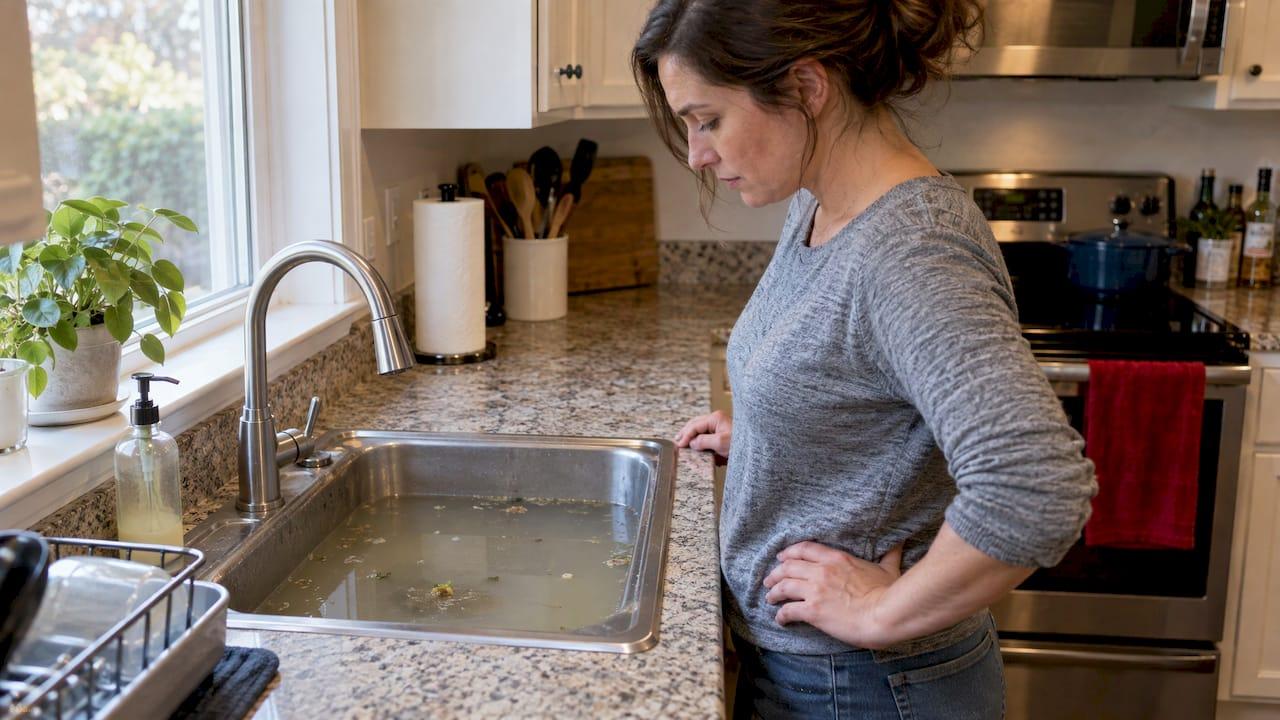
A kitchen sink that clogs again and again is rarely a bad-luck problem. It usually means grease, soap film and food debris have built up on the pipe walls, and each clearing only opens a narrow channel through the buildup. If you are in Bullhead City, Fort Mohave, Mohave Valley or Laughlin, we can clear the full length of the line, not just the part you can reach. Below is what to try first, why the clog returns, and how to keep it away.
TL;DR
- Most repeat kitchen clogs come from grease that cools and sticks to the pipe, then catches food and soap residue.
- Plunge first, then check the P-trap. If water still drains slowly after that, the blockage is deeper in the line.
- Skip chemical drain cleaners. They can damage older metal pipes and harm septic systems.
- A clog that returns every few weeks or months means buildup is still on the pipe walls. That is a job for a professional drain cleaning.
- We handle drain cleaning, sewer line repair and septic system solutions, with 24/7 emergency service.
Table of Contents
- Why a kitchen sink keeps clogging
- Why the clog keeps coming back
- What to try first: a step-by-step fix
- Why a sink can stay clogged when the trap is clear
- Why we advise against chemical drain cleaners
- How to prevent kitchen sink clogs
- When a repeat clog needs a plumber
- Clear the line with USA Plumbing and Septic
- Our perspective
- FAQ
- Sources
Why a kitchen sink keeps clogging
Most sink clogs do not happen overnight. They build slowly as grease, soap scum, hair and debris collect inside the pipes. By the time the water drains slowly, the buildup may already be significant.
The kitchen is harder on drains than any other room because of one thing: fat.
Grease is the main culprit
Grease goes down the drain as a liquid. Then it cools. Hot grease flows like water through the sink drain but congeals once it reaches the horizontal drainpipe, where it sticks to the sides. That is the point at which your sink stops being able to clear itself.
The problem is not limited to homes. An EPA report to Congress on sewer overflows found that grease from restaurants, homes and industrial sources was the most common cause of reported blockages, at 47%. The same guidance explains that grease solidifies, reduces the pipe's capacity and blocks flow.
Picture the pipe as a straw. Every pan you rinse leaves a thin waxy layer. After a few months, the opening is half its original size. A piece of potato peel or a handful of coffee grounds now catches easily, and the sink backs up.
What else adds to the buildup
- Soap residue. Dish soap and bar soap leave a film that combines with grease into a gray sludge.
- Starchy food. Rice, pasta and potato peels swell and stick to the grease already on the walls.
- Coffee grounds and eggshells. They settle in low spots and pack together.
- Garbage disposal habits. A disposal chops food, but it does not make grease disappear. Warm grease coats the grinding chamber and the pipes beyond it.
- Old or damaged pipe. Rough, corroded or sagging pipe snags debris faster than smooth pipe.
In older homes and in the desert communities we serve, mineral deposits from hard water can add to the rough surface inside pipes. If your house has a water softener or filtration system, keeping it in good working order is part of keeping drains clear.
Why the clog keeps coming back
If your sink clogs every few months, the cause is usually one of three things.
- The clog was pushed, not removed. A plunger or a short snake can punch a hole through a blockage. Water flows again, but the grease on the walls stays.
- The buildup is further down the line. The P-trap under the sink may be clean while the horizontal branch pipe inside the wall is coated.
- The daily habit never changed. Grease, starch and grounds keep going down and rebuild the layer.
This explains why a sink can seem fine for a week after a quick fix, then slow down again. The first clearing treated the symptom. The coating on the pipe walls is the actual problem.
What to try first: a step-by-step fix
If your sink is stopped up right now, work through these steps in order. Stop at the step where the water runs freely.
Step 1: Plunge correctly
Remove standing water if you can, and use a cup plunger, not a toilet plunger. Create a seal over the drain opening and plunge rapidly while keeping the plunger under the water level. If you have a double sink, block the second drain with a wet rag first, so the pressure goes into the clog and not out the other side.
Where it goes wrong: plunging a sink that is fully backed up with disposal waste can push debris further into the line. If the water level does not move after several rounds, stop and move to the next step.

Step 2: Check the P-trap
The U-shaped pipe under the sink is the most common chokepoint. Plumbers describe the P-trap as a common place for blockages, and it can often be reached by unscrewing the trap assembly.
- Put a bucket under the trap.
- Loosen the slip nuts by hand, or with pliers if they are tight.
- Slide the trap off and empty it. Expect a foul-smelling, gray, greasy mass.
- Rinse it, check the pipe ends for residue, and reassemble.
- Run water and look for leaks at both nuts.
Where it goes wrong: old plastic nuts can crack, and washers can be misaligned on reassembly. A drip under the sink is a sign the trap is not seated correctly.
Step 3: Look at the disposal connection and the T-fitting
If you have a garbage disposal, the next places to look are the pieces after the trap. A step-by-step guide from This Old House covers disconnecting the elbow from the disposal and checking for clogs, then checking the baffled T-fitting. It also recommends replacing a baffled fitting with a full-sized brass T-fitting without a baffle, then tightening connections and confirming fast, leak-free drainage.
If the disposal itself hums, jams or drains poorly, our guide to common garbage disposal problems explains what each symptom points to.
Step 4: Know when to stop
If the trap is clear and the water still backs up or drains slowly, the blockage is past the part of the system you can reach from under the sink. Further attempts with a plunger or a short tool tend to open a small channel and leave the rest of the buildup in place. This is the step where we take over. Call us for drain cleaning, and we clear the line beyond the trap.
Why a sink can stay clogged when the trap is clear
People often report that the pipes under the sink look clean, or that plunging made things worse. There are a few common reasons.
- The clog is in the branch line. After the trap, the drain runs horizontally to the main stack in the wall. Grease collects in that stretch, out of sight. Finding the trap clear tells you the blockage is further down, not that the drain is fine.
- The vent is affected. Drains need air behind the water to flow freely. A partly blocked vent can cause slow drainage and gurgling that mimics a clog.
- Plunging moved the problem. Force can push loose debris deeper, where it packs against the grease already there. The sink then drains more slowly than before.
- A shared line is backing up. If other fixtures are slow too, or water appears in a tub or washer drain, the issue may be in a main line. Our guides on a main sewer line clog and a clogged sewer cleanout show what to look for.
If you are seeing any of these, a professional can find which of them applies and clear it in one visit instead of several rounds of trial and error.
Why we advise against chemical drain cleaners
Chemical cleaners look like a quick answer for a repeat clog. They carry real risks. Chemical cleaners can damage older metal pipes, pit and weaken pipe surfaces over time, and harm septic systems. If the clog does not clear, the chemicals sit in the pipe, and they are dangerous to whoever opens it next.
This matters in our area because many properties outside the city sewer run on septic systems. A chemical that goes down the kitchen drain ends up in the tank. If you have already used a chemical cleaner, tell the plumber before they open the trap or the line, so they can protect themselves from splashing and burns.
How to prevent kitchen sink clogs
Prevention comes down to what leaves the pan and what reaches the pipe. These habits are backed by city and county wastewater agencies.
Keep fats, oils and grease out of the drain
Miami-Dade County's wastewater program says fats, oils and grease stick to the sides of sewer pipes and harden inside. It recommends wiping pots, pans and dishes before washing so greasy sauces and fats go in the trash. It also says to never pour them down a disposal, sink or storm drain.

The City of Kent makes the same point: fats, oils and grease cool and stick to pipes, and sinks and toilets are not trash bins. It recommends putting cooled grease in the garbage.
A simple routine:
- Pour cooking fat into a heat-safe container or an old can.
- Let it cool and harden.
- Throw it in the trash.
- Wipe greasy pans with a paper towel before rinsing.
Use cold water with the disposal
This Old House plumbing expert Richard Trethewey recommends always running the disposal with cold water. Cold water congeals grease so the disposal can break it up and flush it away, instead of letting warm grease coat the chamber and pipes.
Catch solids with a strainer
A basket strainer in the drain intercepts food scraps, and prevention focuses on removing grease before it enters plumbing and using a sink strainer to catch solids. Empty it into the trash after each meal.
Keep starch and grounds out
Scrape plates into the trash. Do not wash rice, pasta water with heavy starch, coffee grounds or eggshells down the drain. They are small, but they bind to the grease layer.
Watch for the early signs
A slow drain, gurgling or a smell from the sink are the signs of buildup. Acting at that point is simpler than waiting for a full stoppage. Our article on signs your drains need professional cleaning lists what to watch for, and how drain cleaning works explains what happens on a visit.
When a repeat clog needs a plumber
Call for service when any of these apply:
- The sink clogs more than once in a few months.
- The trap is clean but the sink still drains slowly.
- More than one fixture is slow or gurgling.
- Water comes up in another drain, such as a tub, washer or floor drain.
- You have a septic system and the problem is spreading across the house.
- You smell sewage or see wet spots near the wall or floor.
If the problem involves a main line, the cause can also be outside the house. Roots, for example, are a common reason a line keeps blocking, and snaking alone does not solve root problems. Because a plumber can look at the whole line, a repeat problem gets traced to its source.
Restaurants and commercial kitchens
For a business, a kitchen clog stops service. Grease loads are higher, and the local sewer authority also has rules about what leaves a commercial kitchen. We work with commercial customers too. See common restaurant kitchen plumbing issues and how commercial drain maintenance works.
Clear the line with USA Plumbing and Septic
When the plunger and the trap have not solved it, the next step is to clear the line itself. We provide drain cleaning, sewer line repair and replacement, water line and gas line leak detection and repair, toilet and fixture repair, and septic system solutions for homes and businesses in Bullhead City, Fort Mohave, Mohave Valley and Laughlin. Our plumbers are licensed, and emergency service is available 24/7.
If your kitchen sink keeps clogging, book a drain cleaning visit and we will look at the whole line. Contact us through our main site for any service on our list, including emergency calls.
Our perspective
Every week, the same question comes up in different words: why does it keep clogging? The honest answer is that a sink does not clog because of the last thing that went down it. It clogs because of months of small habits that left a layer on the pipe wall.
That is why we think of a repeat clog as a drain-cleaning job and not a one-time fix. Clearing a hole through the middle of a blockage gets water moving. Clearing the pipe so the coating is gone gives you a drain that works as intended.
We also want you to protect your pipes while you wait for us. Keep chemical cleaners out of the drain, and let us know if you have used one. If you have a septic system, that matters even more, because we handle septic solutions and know what the tank has to take.
Our approach is simple: show up quickly, find where the blockage is, clear it, and tell you what to change at the sink so you are not calling again in three months.
JOHN
FAQ
How do I fix a sink that keeps clogging?
Start with a cup plunger, then remove and clean the P-trap. If water still drains slowly after that, the buildup is deeper in the branch line, and you need the line cleared along its length. We do that as part of our drain cleaning service.
Why does my kitchen sink clog every few months?
Grease cools and sticks to the pipe walls, then catches soap film and food. Each quick clearing leaves some of that coating in place, so the opening narrows again. Changing how you dispose of grease slows the process, and clearing the line resets it.
Why is my sink clogged worse after plunging?
Plunging can push loose debris deeper into the line, where it packs against buildup already there. A partial clog in the branch line or an issue with venting can also make the sink behave as if it is still blocked. If it is worse after a few rounds, stop and call a plumber.
Is it safe to use chemical drain cleaner on a recurring clog?
We advise against it. Chemical cleaners can damage older metal pipes and harm septic systems, and if the clog stays, the chemicals remain in the pipe. Tell your plumber if you have used one.
How do I prevent grease clogs in my kitchen sink?
Wipe pans before washing, put cooled grease in the trash, use cold water with your disposal, and keep a strainer in the drain. These are the same steps city and county wastewater agencies recommend.
Sources
- How to Unclog a Kitchen Sink, The Home Depot
- What Plumbers Wish You Knew Before Unclogging Your Sink, Wirecutter
- How to Clear a Clogged Sink Drain, This Old House
- How to Prevent Sink Clogs, This Old House
- How to Keep Your Garbage Disposal Running Smoothly, This Old House
- National Pretreatment Program: Controlling Fats, Oils, and Grease, EPA
- Fats, Oils, and Grease (F.O.G.), City of Kent
- Fats, Oils and Grease, Miami-Dade County