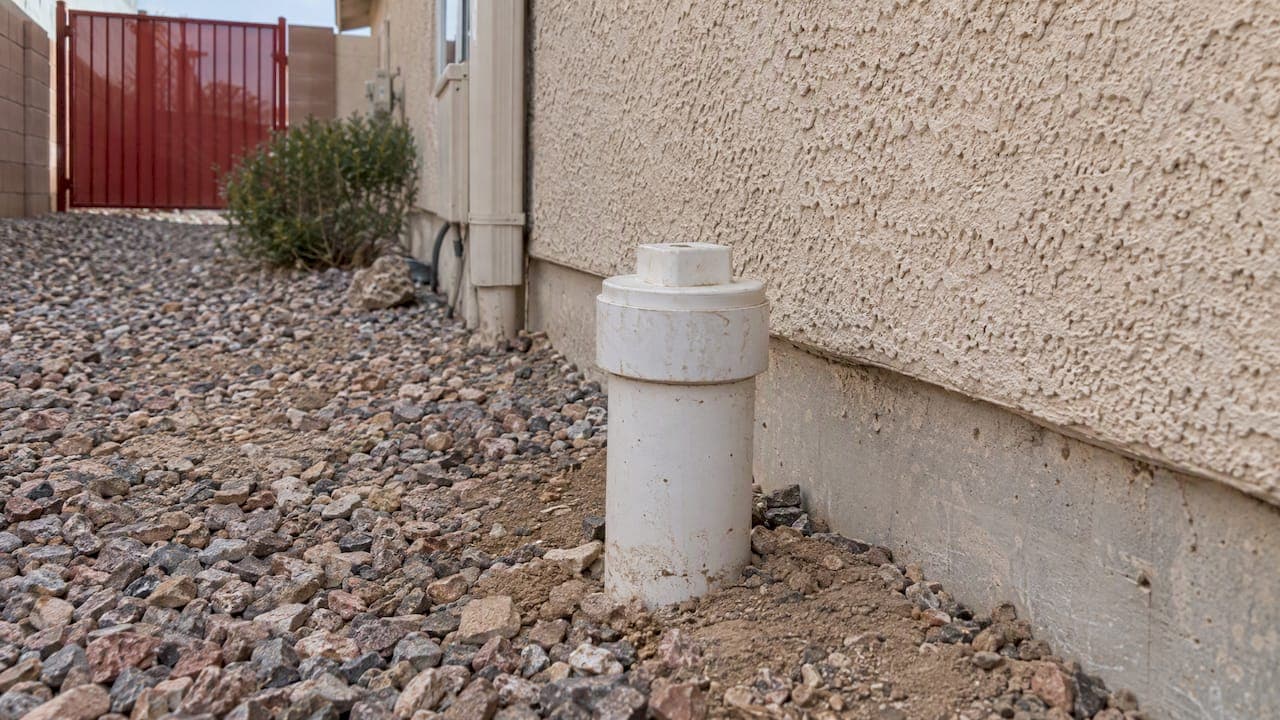
If your sewer cleanout is clogged, the blockage is in your main sewer line, or the line is full enough to push water up into the cleanout. Stop running water in the house. Look at the cleanout from a safe distance without opening it. Then call a licensed plumber. If the cleanout cap is under pressure or water is rising in it, do not open it. That is the one situation where a quick DIY try can turn a clog into a sewage spill.
We are USA Plumbing and Septic LLC. We serve Bullhead City, Fort Mohave, Mohave Valley and Laughlin, and we are on call 24/7. Below is what a clogged cleanout means, how to tell whose problem it is, what you can safely check yourself, and when to stop and call us.
TL;DR
- A cleanout is a capped access pipe on your sewer line. If it is full or overflowing, the main line is blocked somewhere downstream.
- Water that backs up only when you use fixtures usually points to your private line. Sewage that rises when no water is running may point to the public main.
- Do not open a full or pressurized cleanout. Sewage exposure is a health risk, and the cleanup is costly.
- Never climb into a sewer pipe, manhole or pit. Sewer atmospheres can turn deadly without warning.
- Call us for a camera inspection and professional clearing. We take emergency calls any hour.
Table of Contents
- What a sewer cleanout is and why it clogs
- Signs your cleanout or main sewer line is clogged
- Is it your line or the city's?
- How to find your cleanout
- What you can safely check yourself
- When to stop and call a licensed plumber
- How a professional clears a clogged main line
- Perspective: why we start with the camera
- Preventing the next clog
- Need help with a clogged cleanout?
- FAQ
- Sources
What a sewer cleanout is and why it clogs
A sewer cleanout is a capped pipe that gives plumbers direct access to a home's main sewer line for maintenance and clearing blockages. Fairfax County describes it as an access point where the sewer lateral can be serviced, usually 4 inches across with a tight-fitting steel or plastic cap.
The cleanout does not clog by itself. It is a window into the line. When you see standing water, sludge or sewage in it, the line below or beyond that point is blocked. If you want the basics in more detail, see our homeowner guide to what a cleanout is.
Common causes of a blocked main line
Most main line blockages come from a short list of causes:
- Grease. Fats, oils and grease are among the leading causes of sewer overflows, contributing to roughly one in five sanitary sewer overflows in the EPA's report to Congress. Grease cools in the pipe and builds up layer by layer.
- Tree roots. Roots seek out sewer pipe joints and can eventually clog a private building sewer. Roots keep growing after you cut them back, so a repeat clog is a clue. Our article on why tree roots need more than snaking goes deeper.
- Damaged pipe. Fairfax County lists cracked or broken laterals, defective connections and uncapped cleanouts among the causes of sewer problems. A sagging or cracked section catches solids every time.
- Things that do not belong. Wipes marketed as flushable, paper towels, feminine products and similar items snag and build into a mat.
Signs your cleanout or main sewer line is clogged
A blocked main line rarely shows up in one drain. It shows up in several. Watch for:
- Slow drains in more than one fixture, or drains that clog again soon after plunging.
- Gurgling in a tub or shower when the toilet flushes or the washer drains.
- Water or sewage coming up in the lowest drain in the house, often a tub, shower or floor drain.
- Sewage odor in the house or yard. Fairfax County lists frequent clogs, sewage odor and backups as signs a lateral may need repair.
- Water standing in the cleanout, or the cap seeping.
If the tub is already backing up, read our guide on what to do right now about a sewer backup in the bathtub. A smell outside the house has its own checklist in our sewer smell guide.
Is it your line or the city's?
This question decides who pays and who you call first. The rules are set locally, so confirm with your own sewer utility. The general pattern is consistent across the U.S.

The private lateral runs from your building's plumbing to where it connects to the public main. Oshkosh, Wisconsin, for example, says homeowners are generally responsible for the private building sewer lateral up to that connection. Fairfax County says the same thing in its own words: the lateral sits on private property and the owner maintains it, while the county maintains the public sewer.
Quick clues from how the backup behaves
| What you see | What it usually points to |
|---|---|
| Water will not go down any indoor drain | Blocked lateral to your building, per South Davis Sewer District |
| A small, slow or on-and-off flow at a drain | Probably the lateral, per the same district |
| Sewage flows steadily from a drain when no water is running | Possibly the public main |
| Backup only when you run fixtures | A plumber may be needed, per Oshkosh |
| Backup when nobody has used any fixtures | The city main may be involved, per Oshkosh |
These are rules of thumb from public utilities, not a verdict. If you suspect the main, call your city or sewer district's emergency line first and describe what you see. They can tell you whether crews should check the main. If the main is clear, the problem is on your side and we can take over. Our guide Main Sewer Line Clog? Find the Cleanout, Call the City First walks through that order of calls.
Commercial property managers face the same split. Tenants, owners and the utility each have a part, so document everything. See our field guide to fixing a sewer backup in a commercial building.
How to find your cleanout
Knowing where the cleanout is saves time when something goes wrong. Check these places:
- Outside, near the foundation. Outdoor cleanouts are usually near the foundation along the path of the main sewer line. Look for a round cap, often white, black or green, near where the line leaves the house.
- Near the property line. Anne Arundel County says a cleanout is usually a capped pipe near the property line that rises about 4 inches above ground.
- Inside. Indoor cleanouts may be in basements, garages or utility areas. In our desert homes, a garage wall or a laundry area is a common spot.
- Buried. The same county notes a buried cleanout may need a registered plumber to locate and raise it. We can find it and bring it to grade so it is ready next time.
If you have no cleanout at all, the line can still be cleared, but it is harder and slower. Adding a proper cleanout is one of the most useful upgrades we install on an older line.
What you can safely check yourself
You can do a few things without opening anything. They protect you, and they give us useful information.
- Stop using water. No flushing, no laundry, no dishwasher. Every gallon you add has nowhere to go.
- Look at the cleanout cap. Is there water at or around it? Is it wet, seeping or cracked? Note it.
- Check the lowest drain. Is the tub or floor drain bubbling or filling?
- Check neighbors. If the street has the same problem, call the sewer utility right away.
- Take photos. They help with insurance and with the utility.
- Keep kids and pets away from any wet area.
Why we advise against opening a full cleanout
A cleanout with standing sewage behind the cap can release a rush of wastewater when you loosen it. That brings sewage onto your lawn, patio or garage floor. South Davis Sewer District warns that sewer backups and overflows can cause serious health hazards, threaten the environment and cause significant property damage. Wear gloves and boots, keep a bucket and towels at hand, and loosen the cap slowly only if you already know the line is not full. If water starts to rise, tighten it back and call.

Never enter the pipe, pit or manhole
OSHA notes that sewer work usually takes place in a permit space where the atmosphere may suddenly become lethally hazardous. Trained entrants need atmospheric monitoring equipment. Do not lean into a pit, lower anything by hand into a confined space or breathe over an open line. Gas can overcome a person in seconds.
What about chemical drain openers?
We do not recommend pouring a store-bought chemical cleaner into a cleanout. It will not clear a main line full of sewage, it sits in the pipe, and it exposes the next person who works on the line. Leave that to a plumber who can check what is in the line first.
When to stop and call a licensed plumber
Call right away if any of these apply:
- Sewage is rising in the cleanout or in a floor drain, tub or shower.
- More than one fixture is backing up.
- You smell sewage inside the house.
- The clog comes back within days or weeks.
- You cannot find the cleanout.
- The line is old, or the yard has large trees near it.
- It is a rental, a restaurant, an office or any commercial building where a backup stops business.
The quick fixes you see online, like a rented machine, often only punch a hole through a clog. If roots, a bellied pipe or a crack caused it, the clog returns. A camera is how you find out. Fairfax County calls CCTV examination the best way to assess the condition of a lateral, and we agree it should come before any decision to repair or replace.
How a professional clears a clogged main line
The method fits the clog. Here is how a typical visit goes.
- Assessment. We ask what you have seen, check the cleanout and confirm the blockage is on the private side.
- Access. We open the cleanout with the right protection and containment. If there is no usable cleanout, we find another access point or install one.
- Clearing. For soft blockages and grease, a drain machine with the right cutter head can restore flow. For heavy grease, scale or roots, hydro jetting uses high-pressure water to scour the pipe wall. The EPA report lists jetting, rodding and chemical root control as sewer cleaning methods that maintain capacity and can reduce overflows. Our posts on how drain cleaning works and how hydro jetting clears commercial drains explain the tools.
- Camera inspection. After the line is clear, a camera shows whether the pipe is cracked, offset, root-invaded or sagging.
- Recommendation. If the pipe is sound, we may suggest regular cleaning. If it is damaged, we explain the repair or replacement options for your line.
We do not publish set prices for these jobs, because the cost depends on the depth, the length, the access and what the camera finds. For general ranges, see our guide to U.S. drain cleaning costs. We will explain the scope of work before we start.
Perspective: why we start with the camera
We see the same pattern on service calls in Bullhead City, Fort Mohave, Mohave Valley and Laughlin. A homeowner clears a clogged cleanout once, it works for a few weeks, and then the line backs up again at the worst time.
Our approach is to clear the line and then look at why it clogged. Sewer line repairs and replacements are part of what we do every day, so we are ready to act on what the camera shows instead of just guessing.
We also cover the full property. Our team handles drain cleaning, sewer line repair and replacement, water line and gas line work, water heaters, and septic system solutions. A blocked main line is often one symptom of a bigger plumbing picture, and one call to one team keeps the work coordinated.
For businesses, a backup means closed restrooms and lost hours. That is why emergency service is at the center of what we offer. We answer around the clock and aim to respond fast.
Our advice is simple. If your cleanout is full, do not wait and do not open it. Call us, and let our licensed plumbers handle it safely.
JOHN
Preventing the next clog
Some clogs cannot be avoided, but many can.
- Keep grease out of the sink. Wipe pans with a paper towel and throw the towel in the trash. Fats, oils and grease are a major cause of overflows, as the EPA report noted above.
- Flush only toilet paper. Everything else goes in the trash, including wipes labeled flushable.
- Watch your trees. Because roots go after pipe joints, a tree or large shrub near the sewer path is worth a camera check. We discuss it in our tree root guide.
- Keep the cleanout accessible and capped. Do not bury it under rock, mulch or a planter. Fairfax County lists uncapped cleanouts as a way rain and debris can enter the system.
- Schedule cleaning if you have a repeat problem. A line that clogs every year or two, or a restaurant and rental with heavy use, benefits from planned maintenance rather than emergency calls.
- Do not ignore a slow drain. It is often the first warning.
Need help with a clogged cleanout?
When the cleanout is full, you need someone who answers the phone and shows up. We handle residential and commercial sewer line clearing, repair and replacement, drain cleaning and emergency plumbing across Bullhead City, Fort Mohave, Mohave Valley, Laughlin and the surrounding area. Our plumbers are licensed and trained, and we serve military and first responders with special offers.

Call now or book your plumbing service with USA Plumbing and Septic. We also work in nearby communities, including Kingman and Golden Valley. For local background, read what to know about plumbing in Mohave County.
FAQ
Can a sewer cleanout be inside the house?
Yes. Indoor cleanouts are often found in basements, garages or utility areas, according to SERVPRO's cleanout guide. In our area, a garage wall, laundry room or utility closet is a common place. If you cannot find one, a plumber can trace the line and locate it.
Is a clogged sewer cleanout my responsibility or the city's?
Usually the private lateral, including its cleanout, is the owner's responsibility, as utilities such as Fairfax County state. The public main belongs to the utility. If sewage backs up when no water is in use, call your sewer utility first. If you are unsure, we can help you sort it out.
Should I open the cleanout cap if it is full?
No. If there is standing sewage behind the cap, opening it can release wastewater onto your property. The risk includes health hazards and property damage, per South Davis Sewer District. Keep water off and call a plumber who has the equipment to contain it.
What causes a sewer cleanout to clog again and again?
The usual causes are grease buildup, tree roots, and damaged or sagging pipe. Roots in particular keep returning because they target pipe joints. A camera inspection finds the cause, so the repair fixes the problem rather than the symptom.
Do you offer emergency service for a clogged sewer line?
Yes. We offer emergency plumbing 24/7 for homes and businesses in Bullhead City, Fort Mohave, Mohave Valley, Laughlin and nearby areas. Call us as soon as you see sewage rising, and keep water use off until we arrive.
Sources
- Sanitary Sewer House Lateral, Fairfax County
- Sewer Maintenance, City of Oshkosh
- Sewer Emergencies, South Davis Sewer District
- Sewer Cleanouts, Anne Arundel County Government
- Sewer Cleanout: What it is and How to Find it, SERVPRO
- 1910.146 App E, Sewer System Entry, OSHA
- 2004 EPA CSO SSO Report to Congress, Appendix L