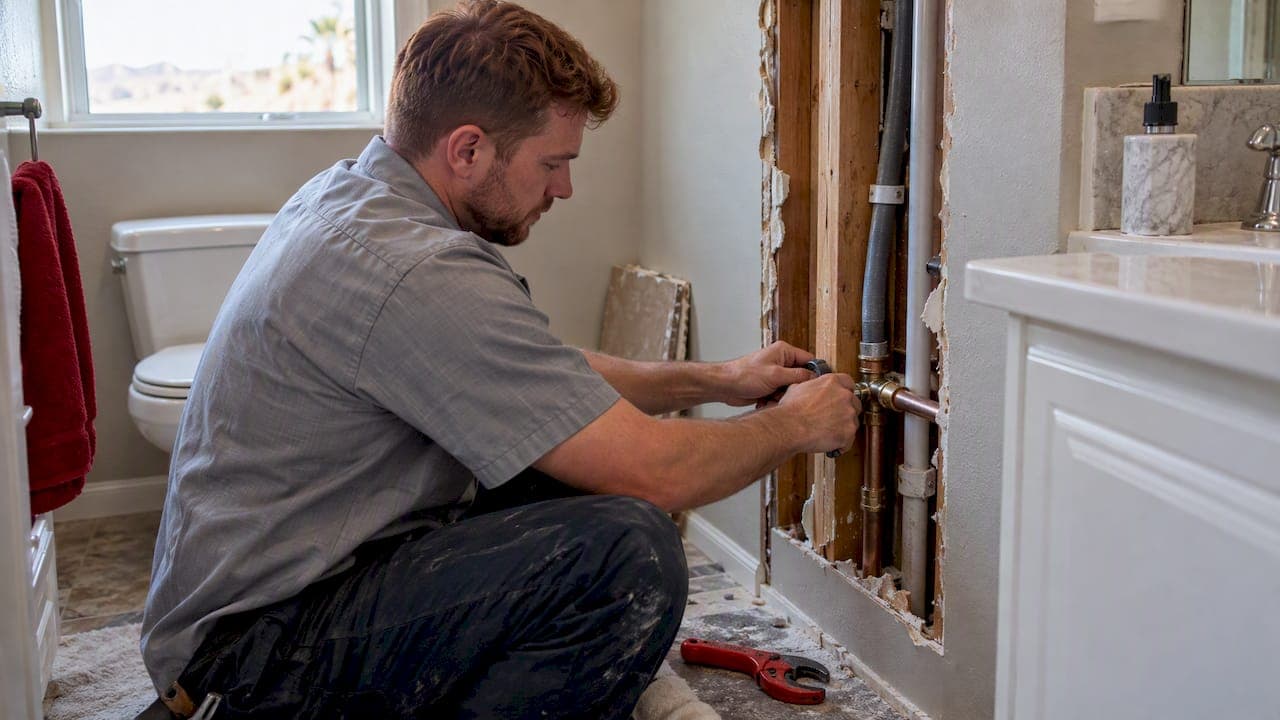
If your home or rental was built between the late 1970s and the mid-1990s and has gray, flexible plastic pipe, plan to replace it. No rule forces you to, but there is no approved way to repair polybutylene itself, and the pipe can fail without warning. A full repipe with modern pipe is the fix most plumbers recommend. This guide shows how to confirm you have it, what the job involves, what drives the cost, and how permits, insurance and selling come into it in Bullhead City, Fort Mohave, Mohave Valley and Laughlin.
TL;DR
- Polybutylene (PB, often called Quest pipe) was made from 1978 to mid-1995. It is usually gray and stamped "PB2110."
- It can flake and crack from the inside, and leaks can happen with no warning, so a slow drip is not the only sign to watch for.
- Replacement is a whole-house repipe, not a patch. Expect access holes in walls, ceilings or floors, and drywall repair afterward.
- Cost depends on fixture count, stories, access and finish work. Get a written, on-site estimate rather than a phone number.
- Check your insurance policy and your sale disclosure duties before a leak forces the question.
Table of Contents
- What polybutylene pipe is and why it was everywhere
- Is polybutylene plumbing bad?
- Repair or replace?
- How a polybutylene repipe works
- What a polybutylene replacement costs
- Permits and code in Bullhead City
- Insurance and selling a home with polybutylene
- Our perspective: replace it on your schedule, not the pipe's
- Book a polybutylene inspection and estimate
- FAQ
- Sources
What polybutylene pipe is and why it was everywhere
Polybutylene is a flexible plastic pipe that was manufactured from 1978 to mid-1995 and is usually stamped "PB2110". It was used widely in residential construction, in Arizona and nationally, because it was cheap and easy to install. Many Quest-branded lines you hear about are simply this same material.
That timing matters here. Much of the housing in the Tri-State area was built or expanded in exactly those years, so we see PB in single-family homes, manufactured homes, rental duplexes and small commercial buildings.
How to identify it
Look where pipe is exposed:
- Near the water heater, on the hot and cold lines
- In unfinished garage or basement ceilings and utility closets
- At the main shutoff and where lines enter the house
- Protruding from walls under sinks and behind toilets
PB is commonly gray, though it also shows up in other colors. Plastic fittings at the joints are part of the picture. If a pipe is flexible, gray and stamped with PB2110, treat it as polybutylene. If you are not sure, a plumber can confirm it in minutes during a visit.
One more point for owners of homes in the right age window: any gray, flexible plastic pipe in an Arizona house built between 1978 and 1995 deserves an expert look right away, even if nothing is leaking.
Is polybutylene plumbing bad?
Yes, in the sense that matters to an owner: it fails, and it tends to fail without much notice. Certain disinfectants can react with the material and make it flake apart. Small fractures deepen over time until water escapes, and leaks can appear without warning, causing flooding and serious interior damage.

The Plastics Pipe Institute traces many historical failures to acetal plastic fittings and to the tubing's poor resistance to hot, chlorinated water. That is why the material was removed from North American plumbing codes.
Warning signs worth acting on
- Unexplained damp spots, stains or bubbling paint on walls and ceilings
- A water bill that climbs with no change in use
- Low pressure that appears at a few fixtures
- Water heater connections that weep or show mineral buildup
- Repeated small leaks at fittings
None of these is required before you replace. PB can look fine from the outside while the inside is deteriorating, which is the reason inspection photos of intact pipe do not settle the question.
Repair or replace?
For polybutylene, replacement is the answer. There is no approved repair method for the material itself, and a full repipe is the recommended approach in Arizona homes that contain it. A single repaired joint does not fix the rest of the lines, which are the same age and the same material.
A spot repair makes sense in only a few cases:
- Active leak, repipe scheduled. We stop the leak and protect the structure so you can plan the repipe properly.
- Short, isolated section. If PB is limited to a small run, such as a single branch, a partial replacement may be possible. A plumber has to confirm that on site.
- Emergency. If a line lets go at 2 a.m., shut off the main and call. Stabilizing comes first, the full plan comes after.
If you own a rental, the math tilts further toward replacing. A single failed line in an occupied unit means tenant disruption, a mitigation bill and possibly a lease problem. Commercial owners should also think about downtime: a burst line in a shop or office can close the doors for days.
How a polybutylene repipe works
A repipe is a planned job, not a surprise. Here is the usual sequence.
- Inspection and estimate. We walk the property, count fixtures, trace the main runs, check the water heater, shutoffs and any water treatment equipment, and look at how we can reach the pipe.
- Material choice. Most residential repipes use PEX. Copper is the other common option, at a higher price. For a plain-language look at how supply pipe materials compare, this overview of water pipe materials explained is a good starting point.
- Permit. The permit is pulled before work starts (more on this below).
- Water shutoff and rough-in. New lines are run to each fixture. Water is usually off for part of the working day, and we plan around that.
- Access and restoration. Property owners should expect access holes cut in floors, ceilings or walls while old pipe comes out and new pipe goes in. Patching and painting are separate line items on many estimates, so ask whether they are included.
- Pressure test and inspection. The new system is tested, the inspector signs off, and water is restored.
A whole-house repipe commonly takes a few days depending on size, and a smaller home or a single-story slab-free layout goes faster. Ask for a day-by-day plan so you know when water will be off and which rooms will be open.
Planning around the work
- Move furniture and valuables away from walls that will be opened.
- Plan for no water during working hours: store drinking water, and know where the nearest alternative restroom is if you run a business.
- Tell your tenants or staff the schedule in writing.
- If you have a well, softener or filtration system, tell us up front so reconnection is part of the plan. We service water well equipment and water softening and filtration systems, so those are handled in the same visit plan.
For a broader view of scheduling and scoping pipe work, see our guide on how pipe replacement planning works.
What a polybutylene replacement costs
We do not publish a flat price, because the same house can land far apart depending on layout. CostHelper's 2026 estimates put plastic repiping at about $1,500 to $8,000 or more, and copper at about $2,500 to $15,000 or more. Treat those as a national ballpark, not a quote for Mohave County.
The factors that move the number:
| Factor | Why it changes the price |
|---|---|
| Number of fixtures | More sinks, toilets, showers and hose bibs mean more pipe and more connections |
| Stories | Upstairs runs take more time and more access work |
| Access | Attic or crawlspace access is cheaper than working through finished walls or around a slab |
| Pipe material | PEX generally costs less than copper |
| Restoration | Drywall, texture and paint add cost if they are included |
| Extras | New shutoffs, pressure regulator, water heater connections and softener reconnection |
The fastest way to compare bids fairly is to ask each plumber for the same things in writing: fixture count, material, brand of fittings, permit and inspection, restoration scope, and warranty. Our broader breakdown is in what a house repipe really costs in 2026, and a similar older-pipe job is covered in what galvanized pipe replacement costs.
Ways to keep the cost under control
- Schedule the repipe before a leak, not after. A planned job avoids mitigation and emergency rates.
- Combine work. If the water heater is near the end of its life, replace it during the repipe.
- Decide on restoration early. Some owners handle patch and paint themselves or with their own contractor.
- Get the scope on paper so bids are comparable.
Permits and code in Bullhead City
A repipe is permitted work. Bullhead City's FY 2026-27 fee schedule lists a plumbing permit issuance fee of $26.74, plus $5.41 each for installation, alteration or repair of water piping and water treatment equipment. Fees are reviewed each fiscal year, so confirm the current amounts with the city before you budget.
The city's building official and the codes it has adopted decide what the inspector looks for. The AZBO directory lists Bullhead City's Development Services Director/Building Official and shows its adopted codes as the 2006 I Codes and the 2005 NEC at the time of that edition. Other Mohave County communities, and unincorporated areas, have their own offices, so your address decides who you deal with.
A licensed plumber pulls the permit, schedules the inspection and fixes anything flagged. That is one reason not to hire an unlicensed handyman for a whole-house repipe. For more on how codes apply to homes, read our plumbing code compliance guide for Arizona homeowners. Commercial owners should start with permit requirements for commercial plumbing work in Arizona and the commercial plumbing code checklist.
Insurance and selling a home with polybutylene
Insurance
Coverage varies by carrier and policy, so read yours. One Florida insurance agency reports that many carriers exclude polybutylene water damage or cap it with a limited buy-back, and that some will not write a home until the plumbing is replaced. Arizona policies differ, so ask your agent these questions directly:
- Does my policy exclude or limit damage from polybutylene?
- Is there a cap on water damage claims?
- Will the carrier give a discount or better terms after a repipe?
Get the answers in writing and keep your repipe invoice and permit records. They help at renewal.
Selling or buying
Under ARS 33-422, Arizona sellers who know about polybutylene piping must disclose it on the Seller's Property Disclosure Statement. Buyers who find it often ask for a repipe at the seller's expense or a price reduction. If you are selling, a completed repipe with permit and inspection records removes a negotiation point. If you are buying, have a plumber price the repipe before your inspection period ends. For legal specifics, talk to your real estate agent or attorney.
Our perspective: replace it on your schedule, not the pipe's
We work in homes and buildings across Bullhead City, Fort Mohave, Mohave Valley and Laughlin, and the pattern is familiar. Owners of PB-plumbed properties are rarely asking whether the pipe is a problem. They are asking when to deal with it.

Our answer is simple: choose the date yourself. A scheduled repipe means a written scope, a permit, a known number of days without water and a clean restoration plan. A failed line means an emergency call, wet drywall and decisions made under pressure. We are a 24/7 plumbing company, so we will be there for the emergency too, but we would rather you never need that call for a pipe you already know about.
We look at the whole system, not just the gray pipe: the water heater, shutoffs, fixtures, well equipment and softener. When you hire us, you get licensed plumbers, a clear estimate and a plan you can follow.
— JOHN
Book a polybutylene inspection and estimate
If you think you have PB, we can confirm it, walk through the repipe options and give you a written estimate for your home or commercial building. We cover Bullhead City, Fort Mohave, Mohave Valley, Laughlin and the surrounding area, including Kingman and Golden Valley. Call now or book your plumbing visit with USA Plumbing and Septic LLC. If water is already coming through a ceiling, call right away and shut off your main.
FAQ
Is it worth replacing polybutylene pipes?
For most owners, yes. Polybutylene can crack from the inside and leak without warning, and there is no approved repair for the material. Replacing it on your own schedule costs less in stress and damage than waiting for a failure, and it can ease insurance and resale issues.
Will homeowners insurance cover polybutylene pipe?
Often only partly, if at all. Some carriers exclude water damage from PB, some cap it, and some require replacement before they will insure. Your policy and your agent decide, so ask before a leak happens.
Can you sell a house with polybutylene pipes?
Yes. In Arizona, a seller who knows about the pipe has to disclose it on the Seller's Property Disclosure Statement. Buyers frequently ask for a repipe or a price reduction, so a permitted repipe before listing can simplify the sale.
How long does a repipe take?
A typical whole-house repipe takes a few days, depending on size, access and how many fixtures you have. Your plumber should give you a schedule that shows when water will be off. Restoration work such as drywall and paint can add time.
Sources
- Polybutylene for Inspectors, InterNACHI
- Arizona Plumbing Guide for Home Buyers & Sellers 2026
- PPI TN-31, Differences Between Crosslinked Polyethylene (PEX) and Other Piping Materials
- How to Replace Polybutylene Piping with PEX, This Old House
- 2026 Cost of Replacing Polybutylene Pipes, CostHelper
- Bullhead City Comprehensive Fee Schedule FY 2026-27
- 2021 AZBO Directory
- Are polybutylene pipes covered by homeowners insurance?
- Water pipe materials explained