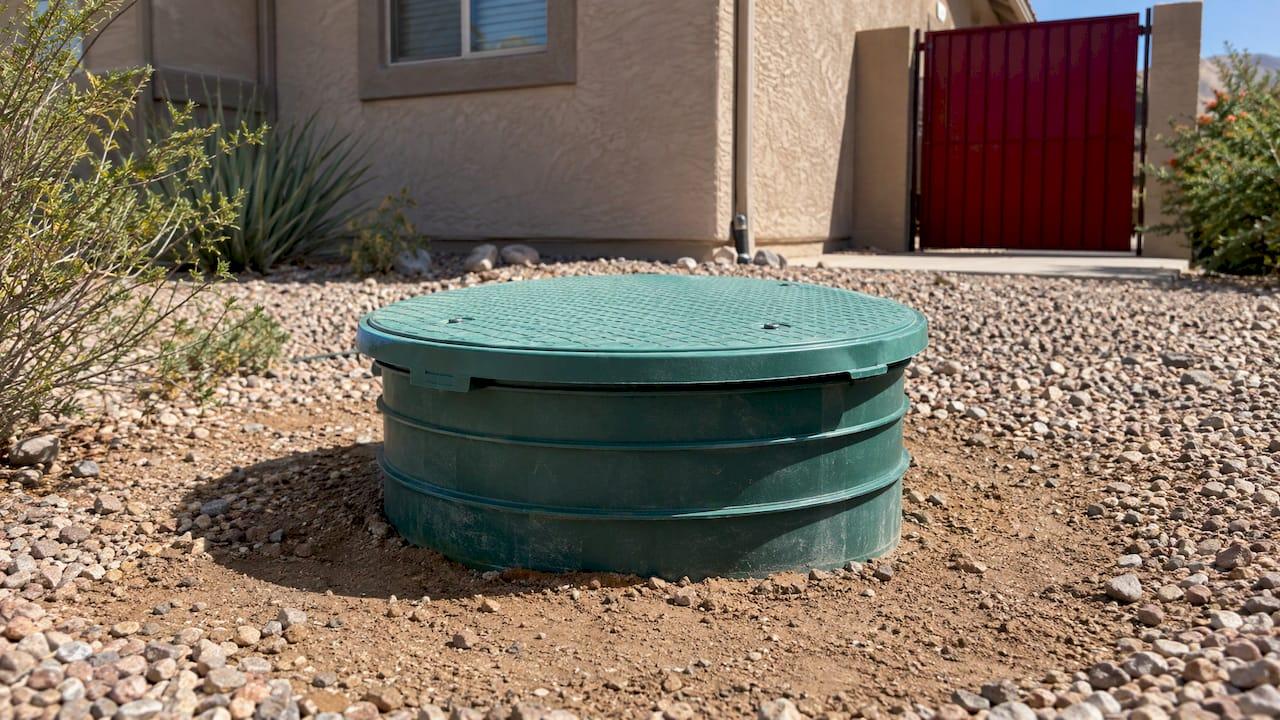
A septic tank riser is a pipe-like collar that brings your tank's access lid up to ground level, so your pumper or inspector never has to dig. If your lids are buried, a riser turns a half-day excavation into a two-minute lid lift. In Bullhead City, Fort Mohave, Mohave Valley and Laughlin, the best way to get one is to have a licensed septic plumber size it, seal it and set the height. That is the work we do at USA Plumbing and Septic LLC, around the clock.
TL;DR
- A riser extends the tank's access opening to the surface, so pumping and inspections need no digging.
- Typical riser diameters run 24 to 30 inches, and the riser must match your tank opening and depth.
- Arizona rules call for at least two access openings of 20 inches or more, reachable within 6 inches of finished grade.
- The watertight seal between riser and tank matters most, and the lid must be locked and rated for its location.
- We install and service septic systems across the Bullhead City area, and we are available 24/7 for emergencies.
Table of Contents
- What a septic tank riser does
- Why homeowners and property managers add one
- What Arizona requires
- Sizes: what fits your tank
- Choosing the lid
- How a riser installation works
- What affects the price
- A good time to add a riser
- Have us install your riser
- FAQ
- Sources
What a septic tank riser does
Your septic tank has one or more access openings, often called manholes, on top. On many older systems those openings sit a foot or two underground. Every pump-out, inspection or repair then starts with finding the tank and shoveling.
A riser fixes that. It is a round, corrosion-resistant well (concrete, PVC, fiberglass or HDPE) sealed to the tank opening and topped with a lid at grade. Michigan's Technical Advisory Council for onsite wastewater says grade-level risers make inspection, maintenance and repairs quicker, easier, safer and less costly. The same advisory notes that a visible lid is a reminder to the owner that a system is there and needs regular care.
That last point is practical. A tank you can see is a tank you remember to pump. Our guide on how often to pump a septic tank explains the schedule, and a riser makes keeping to it easier.
Why homeowners and property managers add one
Faster service calls. When the lid is at the surface, the crew can start work right away. There is no probing for the tank and no yard to repair afterward.
Safer access. A heavy, buried concrete lid is hard to lift and easy to damage. A riser lid that is locked and secured keeps people, pets and children out of the tank.
Better inspections. An inspector can look inside the tank, check the baffles and confirm the water level without opening the ground. If you are buying or selling a property, see how septic inspections work.
Easier alarm and pump work. If your system has a pump chamber or an alarm, quick access matters when something goes wrong. Here is what a septic alarm means and what to do.
For commercial properties, such as a restaurant, a park or a small office complex, the benefit multiplies. Larger tanks are pumped more often, and every minute the crew spends digging is a minute your site is disrupted. Our guide on evaluating commercial septic system capacity covers the planning side.
What Arizona requires
Arizona sets minimum access rules for septic tanks in Administrative Code R18-9-A314. In plain terms:
- The tank needs at least two access openings, each at least 20 inches in diameter.
- Openings and risers must be built so you can reach the opening within 6 inches below finished grade.
- New or replacement tanks need permanent surface markers that show where the openings are.
- A tank under concrete or pavement must have its access openings extended to grade.
The last rule matters if your tank sits under a patio, a driveway or a parking lot. Burying it under slab with no way in is not an option.
If you are building a new system in Mohave County, the county's owner-builder packet lists a model materials list that includes a 1,250-gallon septic tank with an effluent filter and two risers with covers. It also states that construction cannot begin until a Construction Authorization is issued. Discharge cannot begin until a Discharge Authorization is issued after final inspection and a certified watertightness test. The Bullhead City district office is at 1130 Hancock Rd., Bullhead City, AZ 86442.
The county's septic system application also calls for additional inspection risers in the center of trenches longer than 50 feet. That is a detail for drain field layout, covered in our drain field maintenance guide.
Requirements can change, so confirm the current rules with Mohave County Environmental Health before you start any work. Because the county issues the permits and inspects the system, that step belongs to the county. We handle the plumbing and septic work that goes with it.
Sizes: what fits your tank
Riser size depends on the tank opening and how deep the tank sits.
Diameter. Michigan's advisory says typical riser diameters run from 24 to 30 inches. A 24-inch riser is generally enough when the tank top is 24 inches or less below grade. Larger diameters suit deeper tanks and pump installations. The riser must never be smaller than the opening it serves, and in Arizona the opening itself must be at least 20 inches.

Height. You measure from the top of the tank to the surface. Washington State University Extension's riser installation guide says to measure from the ground to the tank top and add 3 inches when the manhole is 26 to 29 inches in diameter. Risers are often built from stacked sections, so depth is the biggest variable in the job.
Material. Concrete, PVC, fiberglass and HDPE are all accepted as corrosion-resistant by the Michigan advisory. Desert sun is hard on plastic, so the lid should be UV-resistant. Our crew can match the material to your site.
Number of risers. Arizona calls for two access openings. A riser on each one means the inlet side and the outlet side can both be reached. WSU recommends fitting all manholes of 24 inches or larger, along with separate inlet and outlet baffle covers.
Choosing the lid
The riser gets the attention, but the lid is what people step on. The Michigan advisory sets out what a good one looks like:
- Waterproof, UV-resistant, corrosion-resistant and non-slip.
- A minimum wheel load rating of 2,250 pounds where the cover ends at grade.
- A durable gasket to keep out odors, insects and water.
- Secured with stainless steel screws that have hex or special-tool heads, since Phillips and slotted heads are not recommended.
- A concrete lid of at least 59 pounds under ASTM C1227, with a secondary safety device such as a grate or net to prevent a fall if the main lid is removed.
The advisory also says this guidance applies to non-traffic areas only. If the tank is in or near a driveway or parking area, the riser and lid need a design for traffic loads. That is a job for a professional, and it is a common situation for commercial properties.
Safety comes first here. A septic tank holds toxic gas and a person can be overcome quickly. Never open or climb into a tank. If a lid is cracked, missing or loose, keep children and pets away and call us right away.
How a riser installation works
Here is the process from start to finish, with the points where it most often goes wrong.
- Locate the tank and its openings. If the tank is already marked or has a record, this is fast. Without one, finding the tank takes probing or a locator, and tanks can be deeper than expected.
- Measure. Get the opening size and the depth from tank top to the surface. A wrong measurement here means a riser that is too short or too tall.
- Choose the riser and lid. Match diameter to the opening and rate the lid for what will sit on it: foot traffic, mowers or vehicles.
- Excavate and clean the tank rim. The seating surface must be clean, or the seal will not hold.
- Seal the riser to the tank. WSU treats the watertight seal as the critical step and recommends a high-strength, fast-setting flexible concrete patch mix. A poor seal lets groundwater and surface water into the tank, which can overload the system and the drain field.
- Set the height. The finished lid should sit slightly above the ground, so water drains away from it, but within Arizona's 6-inch limit from finished grade.
- Fit the lid, secondary safety device and fasteners. Use tamper-resistant stainless fasteners.
- Backfill, grade and mark. Slope soil away from the lid and make sure the location is permanently marked, as Arizona requires for new or replacement tanks.
Risers built from stacked blocks, scrap pipe or wood are not a safe substitute. They are hard to seal and they can collapse or leak. The seal, the depth and the load rating are all details that a licensed plumber works out on site, which is why we recommend having us do it.
What affects the price
There is no single price for a riser. The job depends on:
- Depth of the tank. Deeper tanks need more riser sections and more excavation.
- Number of openings. One riser costs less than two, but Arizona expects two openings.
- Material and lid type. A traffic-rated lid with a safety net costs more than a standard lid.
- Unknown tank locations. If we have to find the tank first, the job takes longer.
- Repairs found along the way. A cracked tank rim or damaged baffle should be dealt with before the riser goes on.
We do not publish prices for septic work, because the depth and condition of the tank decide the scope. Contact us and we will tell you what your site needs. For related budgets, see our guides to septic pumping cost, septic inspection cost and septic tank replacement cost.
There is one more cost to count: the cost of not having a riser. Every future pump-out or inspection that begins with digging is paid for in labor and yard repair. The riser is a one-time job that removes that cost from every visit afterward.
A good time to add a riser
- At the next pumping. The tank is open, the crew is on site and the lid location is known.
- After a septic inspection. If your inspector had to dig to reach the tank, that is your sign.
- When replacing a tank. Arizona's access and marker rules apply to new or replacement tanks.
- When selling or buying. Easy access makes inspections simpler.
- When a lid is cracked, sunken or hard to lift. Replace the lid and add the riser at the same time.
- When you are adding a patio or paving. Tanks under concrete or pavement need access extended to grade.
Our view on risers
We have one view on risers: they belong on every tank. A septic system works quietly for years, and that is exactly why it gets forgotten. A lid you can see and reach changes that. It gets pumped on time, inspected without drama and repaired before a small problem becomes a backup.
We also think the details decide whether a riser is a help or a liability. The seal, the height, the lid rating and the locking hardware are what keep water out and people safe. Our licensed plumbers handle septic systems alongside every other kind of plumbing work, residential and commercial, so a riser job fits with the rest of your system: tank, lines, drain field and fixtures.
If you are in Bullhead City, Fort Mohave, Mohave Valley or Laughlin, give us the call. We are on 24/7, and we would rather set a riser on a calm weekday than dig up a yard at midnight.
JOHN
Have us install your riser
USA Plumbing and Septic LLC offers septic system solutions and installation for homeowners, landlords and commercial property managers in Bullhead City and the surrounding area. Our licensed plumbers are available 24/7, and we also handle sewer line repair, drain cleaning, leak detection and water heaters, so one call can cover your whole property.

To book a riser installation or ask about your tank, visit USA Plumbing and Septic LLC. If you are in the Kingman area, see our Kingman plumbing page.
FAQ
What size septic tank riser do I need?
It depends on the tank opening and the depth. The most common diameters are 24 to 30 inches, and the riser should never be smaller than the opening it covers. Arizona requires access openings of at least 20 inches. We measure on site so the riser fits the first time.
How high should the lid sit?
Arizona requires access openings and risers to be reachable within 6 inches below finished grade. Many installations set the lid slightly above the ground so water drains away. We set the height to suit your yard and the rules.
Can a septic lid riser go under a driveway or patio?
Yes, but it needs the right design. Arizona requires access openings on tanks under concrete or pavement to be extended to grade. Lids in vehicle areas need a rating for that load, since guidance for standard risers covers non-traffic areas only. Call us and we will check your layout.
Does a riser make a septic system smell?
A correctly sealed riser with a gasketed lid is designed to keep odors, insects and water out. A smell near the lid usually means a loose lid or a failed seal, so have it looked at promptly.
Do I need a permit?
Permits for new systems and changes to them go through Mohave County. The county's owner-builder packet lists the authorization steps for new systems. Check with the Bullhead City district office before work begins, and we will take care of the plumbing and septic side.
Sources
- Michigan TAC Advisory: Tank Riser and Lid Assemblies
- WSU Extension: Septic Tank Manhole and Access Riser Installation
- Arizona Administrative Code R18-9-A314, Septic Tank Design
- Mohave County Owner Builder Packet
- Mohave County Residential Conventional Septic System Application