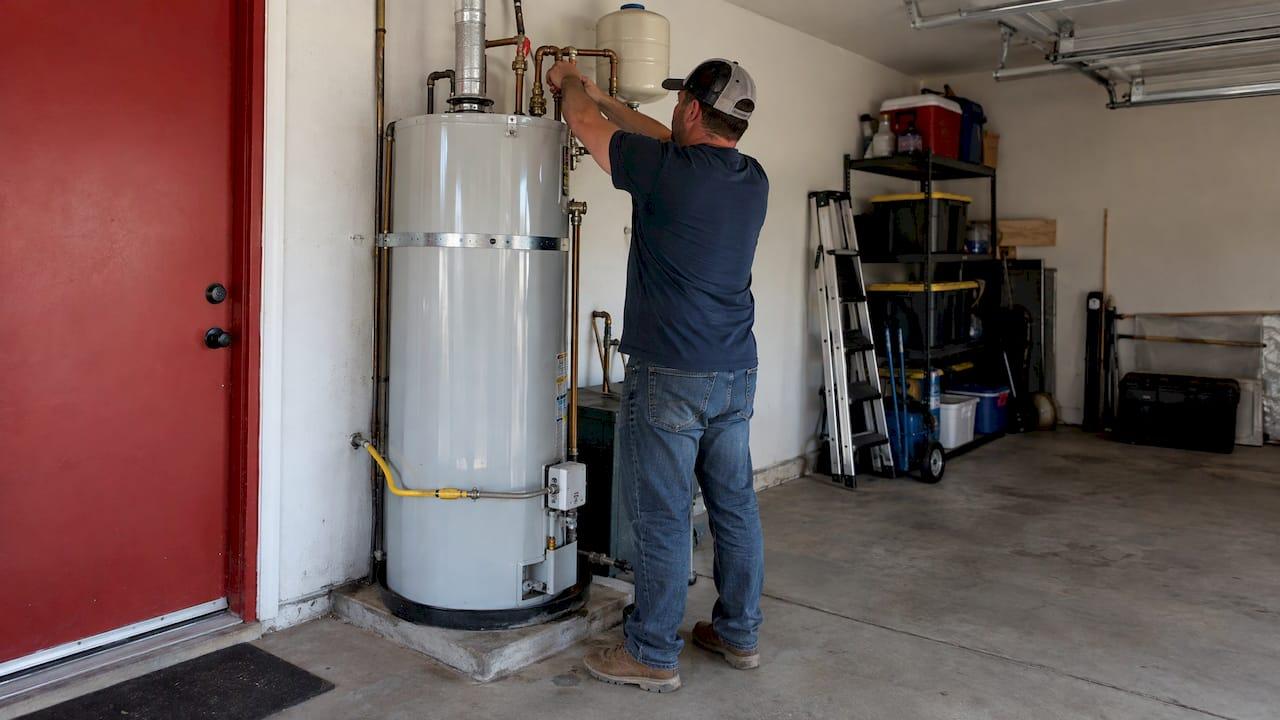
A lukewarm water heater almost always means one of a few things: a failed heating element or thermostat on an electric unit, a burner or pilot problem on a gas unit, a broken dip tube, sediment in the tank, or a mixing or crossover problem in the plumbing. Some of these take two minutes to check. Others involve live electricity or gas and belong to a licensed plumber. If you are in Bullhead City, Fort Mohave, Mohave Valley or Laughlin, we at USA Plumbing and Septic repair and replace water heaters and answer emergency calls 24/7.
This guide shows you how to tell which problem you have, what is safe to check yourself, and what to do when lukewarm water keeps coming back.
TL;DR
- Lukewarm water at one fixture usually means a bad shower valve or cartridge. Lukewarm water everywhere points to the heater or its supply.
- On electric heaters, the usual culprits are a failed lower heating element, a faulty thermostat, a tripped breaker or a tripped high-limit reset.
- Sediment, a broken dip tube and an undersized tank cause water that starts hot and fades to lukewarm.
- Checking the thermostat setting and the breaker is safe. Opening panels, replacing elements and anything involving gas is a job for a licensed plumber.
- If you smell rotten eggs, leave the area and call for help right away. Do not troubleshoot.
Table of Contents
- First, Find Out Where the Lukewarm Water Starts
- Why an Electric Water Heater Turns Lukewarm
- Why a Gas Water Heater Turns Lukewarm
- Causes That Hit Both Electric and Gas Heaters
- Safe Checks You Can Do in Ten Minutes
- When to Stop and Call a Plumber
- Lukewarm Water in a Commercial Building
- What We Do About It
- Get Your Hot Water Back
- Our Perspective
- FAQ
- Sources
First, Find Out Where the Lukewarm Water Starts
Before you blame the heater, work out how far the problem reaches. This one step separates a small repair from a heater problem.
- Run the hot tap at the sink nearest the heater for a minute or two and note how hot it gets.
- Run the affected fixture, such as a shower, and compare.
- Try one or two other fixtures in the house.
If only one fixture is lukewarm and the rest are hot, the fault is local. The usual suspects are that fixture's mixing valve, cartridge or a worn faucet part. If every fixture is lukewarm, the heater itself, its power or fuel supply, or something in the shared hot water plumbing is responsible.
One more clue helps. If the water is hot right at the heater but turns lukewarm at the taps, the trouble sits between them: a valve, a crossover between hot and cold lines, or a recirculation system working against you. If the water is lukewarm right at the heater, the heater is not heating properly.
We repair faucets, fixtures and water heaters, so whichever way this test points, one visit can handle it.
Why an Electric Water Heater Turns Lukewarm
Most electric tank heaters have two heating elements, one near the top and one near the bottom, each controlled by its own thermostat. That design explains a very common symptom: the water is not cold, but it is never really hot, and the supply runs out quickly.
A failed lower element. The upper element heats the top of the tank first, and the lower element does most of the work heating the rest. When the lower one fails, you still get some hot water, but only about the top portion of the tank, so it runs out sooner and may feel weak. Sediment can deposit on elements and reduce heat transfer, as the Building America Solution Center at PNNL explains. That makes elements in neglected tanks wear out faster.
A faulty thermostat. If a thermostat reads wrong or fails, an element may not switch on when it should. The result is water that never reaches the set temperature.
A tripped breaker or interrupted power. Heaters need a dedicated circuit. A tripped breaker, loose wiring or an interruption in electric service can leave the tank partly heated. GE Appliances lists a tripped breaker, inadequate wiring and interrupted service among the reasons for insufficient hot water. If the breaker keeps tripping, read our guide on a water heater tripping the breaker. Repeated trips signal a fault, and resetting it again and again is not a fix.
A tripped high-limit switch. Many electric heaters have a red reset button behind the upper access panel that cuts power when the water gets too hot. It can trip for a reason that needs finding. Because the button sits behind a panel with live wiring, shut off the breaker first, and if you are not comfortable, leave it to us.

Why a Gas Water Heater Turns Lukewarm
Gas heaters share some causes with electric ones, such as sediment, dip tube trouble and sizing, but they add a few of their own:
- A weak or dirty burner flame. The tank heats slowly or only partway.
- A failing thermocouple or pilot problem. The burner shuts off early or cycles badly.
- A thermostat or gas control valve that is not working. The heater cannot hold its set temperature.
- Venting or combustion air problems. These can affect how the burner runs and are a safety issue as well.
Gas work carries real risk. If you smell rotten eggs, which is the odor added to natural gas, do not light anything, do not flip switches, get everyone out and call for help from outside the building. We handle gas line leak detection and repair and replacement in the Bullhead City area. For how gas leak repair works and what to expect, see who repairs gas leaks.
Causes That Hit Both Electric and Gas Heaters
A broken dip tube
The dip tube carries incoming cold water down to the bottom of the tank so it can be heated. If it breaks or cracks, cold water mixes in near the top, right where your hot water leaves. The result is lukewarm water at every tap. A telltale sign is small white plastic bits in your faucet aerators or in the water. Portland Water Bureau guidance names white plastic particles as a sign of dip tube breakdown. Replacing a dip tube means draining the tank and opening connections, so it is a plumber's repair.
Sediment in the tank
Minerals in the water settle at the bottom of the tank over the years. On a gas heater, that layer sits between the flame and the water. On an electric heater, it coats the lower element. Both make heating slower and less efficient, and you may hear rumbling or popping as water boils under the layer. We explain that in why your water heater pops, and how buildup forms and is cleared in cleaning water heater sediment buildup.
PNNL's procedure for flushing a tank involves shutting the cold inlet, draining through the tank valve and continuing until the water runs clear. On an older tank with heavy buildup, the drain valve can clog or leak once opened, so we handle flushing for our customers, along with checking the elements and the anode and tank condition at the same visit.
Hot water used faster than the heater can supply it
If the water starts hot and fades to lukewarm mid-shower, the heater may be too small for your household, or demand may have grown since it was installed: a new bathroom, more people, a soaker tub. Our article on why hot water runs out goes through the causes and the real fixes. When a tank is simply too small, the answer is a correctly sized replacement, which is part of our water heater installation service.
Plumbing problems downstream
GE's list of causes also includes leaking or open hot faucets, long or exposed pipe runs, reversed hot and cold connections and recirculation systems that interfere with each other. A leaking hot tap or a crossed connection at a mixing valve lets cold water sneak into the hot line. This is common after a new installation or a recent repair by someone else. A heater that is lukewarm right after installation, even overnight, often has a connection or dip tube issue rather than a defective tank.
Cold incoming water
GE also notes that colder winter inlet water can make the heater struggle to keep up. In the Bullhead City area, winter is milder than in much of the country, but the effect still shows up in a heater that is already marginal. A tank that kept up in July and falls short in January is often telling you an element, thermostat or sizing issue is waiting to be fixed.
Safe Checks You Can Do in Ten Minutes
These checks do not involve opening live electrical components or touching gas parts.
- Check the temperature setting. The U.S. Department of Energy advises setting residential water heaters to 120°F to balance energy savings with scald prevention. If a dial was bumped to a lower mark, move it back to that setting and wait a few hours.
- Check the breaker (electric heaters). If it is tripped, reset it once. If it trips again, stop and call us.
- Check for leaks. Look around the base of the tank and at the pipes for water. A leaking tank is not something to keep running.
- Compare fixtures. Use the sink-versus-shower test above to see whether the issue is one fixture or the whole house.
- Check for recent changes. A new fixture, a repair or a shutoff valve left partly closed can all change what reaches your taps.
- Note the symptoms. Does it run out fast? Does the water smell? Is there rumbling? Rust or white flakes? What you see helps us arrive with the right parts.
The Portland Water Bureau gives a broader U.S. range of 115°F to 140°F. At 115°F to 120°F, it says, scald risk and energy use go down. Higher settings of 135°F to 140°F may help limit Legionella growth but raise scald risk and should go with anti-scald devices. That is a good reason not to turn the dial up to chase hotter water without understanding why the tank is underperforming. If the heater cannot hold 120°F, something is wrong, and raising the setting only hides it. Children, older adults and anyone with sensitive skin are at greater risk of scalds, so do not raise the setting without an anti-scald device.
If your checks do not fix the problem, our guide to diagnosing a water heater that is not heating walks through the next layer of symptoms, and common water heater problems covers the other faults that show up most often.
When to Stop and Call a Plumber
Stop and call a licensed plumber when:
- You smell gas, or the pilot or burner will not stay lit.
- The breaker trips again after one reset.
- You are not comfortable working near electrical wiring.
- The water has white plastic bits, rust-colored water or a sulfur smell.
- You find water pooling at the tank base.
- The heater is lukewarm after a new installation.
- The problem keeps returning after you correct the setting.
- The tank is making popping or rumbling noises, or the water is hotter than it should be. See what to do when a heater overheats.
Electric heaters must be switched off at the breaker before anyone touches the elements or thermostats. Replacing an element, thermostat or dip tube is a repair for a licensed plumber, and it is quicker and safer than a second guess.
Lukewarm Water in a Commercial Building
For landlords and property managers, lukewarm water is more than an annoyance. It generates tenant complaints, and in a building with several units or a large tank system, the cause can sit in a recirculation loop, a mixing valve or a heater that was sized for fewer people. The same first test applies: is the problem one unit, or the whole building? If it is the whole building, the heater, circulation or a shared valve is where we look.
Plans for commercial and multifamily buildings in the city must follow its adopted codes. Bullhead City's building permit page states that the city has adopted the 2018 ICC codes, and that commercial and multifamily plans from July 1, 2026 must reference the 2024 International Fire Code. If a heater replacement or gas work is on your list, check the city page for current permit requirements. We offer commercial plumbing as well as residential work, so a single plumber can cover your units and shared systems.
What We Do About It
When you call us with a lukewarm heater, we find out whether the fault is the heater, its power or gas, a part inside the tank or the plumbing around it, then repair it or replace the unit. Our services include water heater repair and installation, faucet and fixture repair and replacement, water line leak detection and repair, and gas line leak detection and repair. If a tank is past saving, a properly sized replacement ends the cycle of repeat calls. For those who want to stretch the life of a heater they keep, we have a guide to extending water heater lifespan.
We serve Bullhead City, Fort Mohave, Mohave Valley and Laughlin, and we take emergency calls around the clock.
Get Your Hot Water Back
If the checks above did not bring your hot water back, or you would rather not open an electrical panel or work near a gas line, book a visit. Our licensed plumbers repair and install water heaters for homes and commercial properties in the Bullhead City area.

See our water heater repair and installation services or go to our Bullhead City plumbing page to call or book. For a leak, a gas smell or no hot water at all, call and ask for emergency service.
Our Perspective
Most lukewarm water calls are not mysteries. The heater is telling you something: an element is gone, a thermostat is off, sediment has built up, or the tank no longer fits the household. The costly mistake is treating the symptom. Turning the thermostat up or resetting the breaker over and over can leave the real fault in place and add a scald or electrical risk.
We believe a water heater call should end with a clear answer: what failed, what it takes to fix it, and whether repair or replacement makes more sense. Our plumbers are licensed and trained to handle electric and gas units, plus the water lines, gas lines and fixtures around them. That matters because lukewarm water often comes from more than one place.
For homeowners, landlords and property managers in Bullhead City, Fort Mohave, Mohave Valley and Laughlin, we think the best repair is the one done right the first time. Call us when hot water is not hot enough, and we will go the extra mile to get it back.
JOHN
FAQ
Why is the water lukewarm in only one shower?
When the rest of the house has hot water, the cause is usually that shower's mixing valve or cartridge. These parts wear out and let cold water blend in. A plumber can replace the cartridge or valve without touching the water heater.
Should I turn the thermostat up if my hot water is only lukewarm?
Not as a fix. The Department of Energy advises 120°F for most homes, and higher settings raise the scald risk. If the heater cannot reach 120°F, an element, thermostat, dip tube or sediment problem is more likely, and it needs a repair.
My new water heater is lukewarm. What is wrong?
A new heater that stays lukewarm often has a connection problem, such as reversed hot and cold lines, a faulty dip tube, a tripped breaker or a thermostat setting, rather than a bad tank. Check the breaker and the setting, then call the installer or a licensed plumber to inspect the connections.
Can I wait to fix a lukewarm water heater?
If there is no gas smell, no leak and no repeated breaker trips, you can usually book a regular visit. A weak heater tends to get worse, though, and sediment and failing elements add wear. Call for emergency service if you smell gas, see water pooling or the heater is overheating.
Sources
- Maintaining your water heater, Portland.gov
- Flush Water Heater Tank, Building America Solution Center
- Water Heater: Not Enough or No Hot Water, GE Appliances
- Home Energy Checklist, U.S. Department of Energy
- Building Permit Forms and Information, Bullhead City